


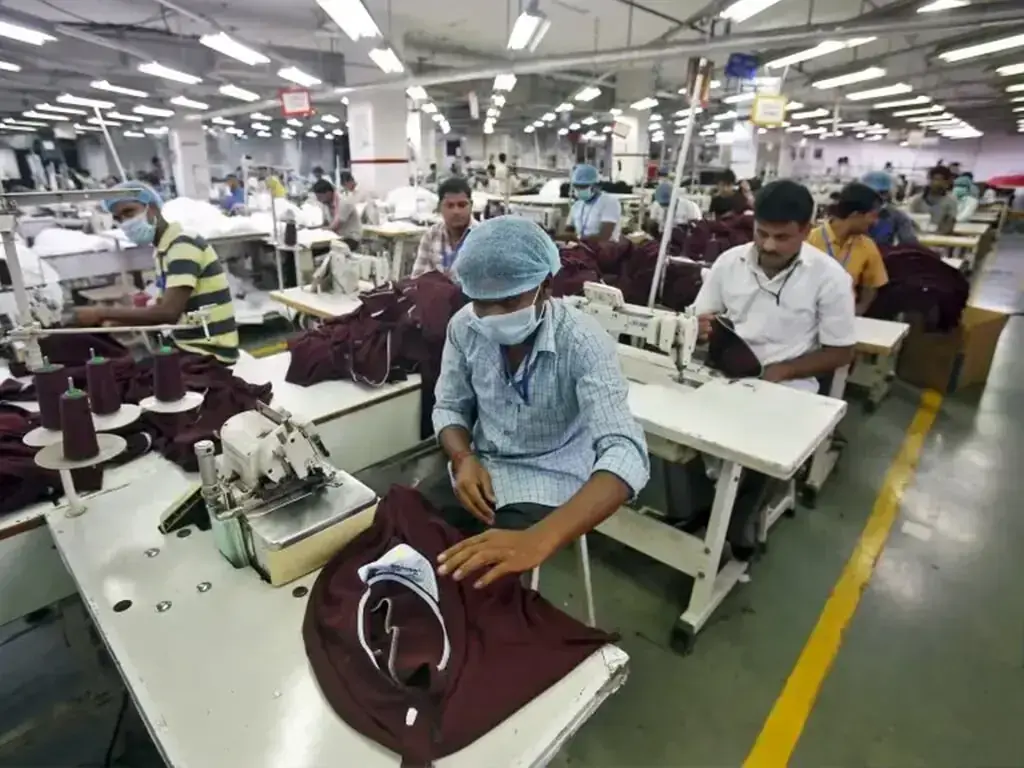

It is an inherent reality, be it a common man or high public office, that we only address an underpinning issue when it is unavoidable. A classic case of staring down the barrel of the obvious, and among many barrels, an obvious one is the secluded nature of occupational diseases in the country. How many of us do understand the concept of occupational diseases? A frank admission would be hardly anyone who doesn’t work around this terminology.
To simplify what occupational diseases are, we can start by looking at a couple of real-case scenarios: How can a female textile worker from Faisalabad conclude that her continuous coughing is not due to the seasonal flu but to the polluted air of the processing floor where she spends at least 8 hours a day? Second, how can a doctor from a modest clinic in Karachi’s Orangi Town diagnose that rashes of a 6-month-old girl are not due to skin allergy from her (thrifted) clothes but because of his father’s occupation as a chemical handler in a factory in the SITE area? These two observations, from hundreds more, merit a reflective question on how we are limiting the structure of health monitoring in the country.
While implementing a project for the International Labour Organization (ILO) Country Office for Pakistan on reducing the health risk for workers in the textile sector of Pakistan from the exposure of hazardous chemicals, it became evident that our current Occupational Safety and Health (OSH) measures are insufficient. The absolute reason is that business enterprises are mainly focusing on reducing the possibility of workplace ‘incidents’ and ‘injuries’, but not taking into account how each day a worker’s health is being compromised, particularly while being exposed to hazardous chemicals. There are labour laws which direct an employer to provide annual health check-ups and to ensure that workplace safety and health is not compromised by regular training, but due to lack of clarity on what is “health and safety” and, above all, its ineffective compliance, the situation is subjectively menaced.
In another case, while visiting one of the Sindh Employees’ Social Security Institution (SESSI) administered hospitals in SITE, we interacted with a textile worker who was suffering from dermatitis. The attending doctor shared how this worker’s condition could have been avoided if someone had provided him with hydrocortisone cream. When this case was shared with other textile mills, the response was that they were ready to provide all the necessary medication, and the cost was not an issue at all, but they had no knowledge that dermatitis is a prevailing occupational disease among textile workers. This begs a serious question: why don’t we have dedicated personnel at the workplace who are aware of the possible occupational injuries and diseases, and can advise the management on necessary precautions? Distressingly, the root cause is a bit more complicated. Even if we appoint a dedicated person with passable credentials, this person would not be able to do much unless she/he is well aware of the prevailing occupational diseases.
If we are actually serious about protecting the workers, we need to make sure that there is at least one personnel appointed by the management who is well aware of the prevailing occupational diseases of their respective sector. If we build an example from the abovementioned case, if there is an increasing number of dermatitis cases among textile workers, then textile and garment factories should start giving awareness to their workers on the diseases and guide them on precautions. The whole case of why occupational diseases are secluded is because they are not detectable. The inductive reasoning is that most people who are diagnosed with lung cancer or chronic kidney disease after retirement were subject to hazardous conditions at work, which led them to this. We often blur this reality, but it needs to be cemented in our stance that a safe and healthy workplace is a fundamental right of all workers, and it should be guaranteed by all employers. Ergo, it will always be a compromise on this right if occupational diseases are not taken into account while revising, implementing, and monitoring OSH policies at workplaces.
Now, as it appears that we have put the responsibility on employers. We need to digest structural reforms. Starting with where will we get information on occupational diseases? The actual baseline task is for the Provincial governments to create a database of prevailing occupational diseases. This may seem like a monumental task, but it is achievable. The Employees’ Social Security Institutions (ESSIs) have the data already; each day, hundreds, if not thousands, of workers and their families visit hospitals and clinics administered by these ESSIs. If each of these ESSIs can start publishing data on sector-wise occupational diseases and their preventive measures, which can be put in place, this practice could go a long way in ensuring workers’ long-term health. Especially for Punjab Employees’ Social Security Institution (PESSI), where the entire system has been digitalized, this practice could start rather soon.
At least 50 percent of the workers visiting these hospitals come with avoidable diagnoses, and this reinforces our recommendation for setting up a National Database for Occupational Diseases, fed by periodic data publication by all ESSIs, which should be validated at the Federal level. These steps, if taken up by mandated Federal Ministries, could provide grounds for adopting ILO Recommendation 194, which concerns with the list of occupational diseases and the recording and notification of occupational accidents and diseases, further complementing Pakistan’s position as it goes ahead with the ratification of two pending international labour standards; ILO C-155 and ILO C-187 concerning safety and health at the workplace.
It is well documented that 2.3 million workers die annually due to occupational injuries and health. In Pakistan, the primary variable that restricts us from definitive and sound policy reforms is the data. We need a progressive iteration to initiate data collection, sorting, and publication. If we are able to do it with occupational diseases, which seems like a low-hanging fruit in spite of usual operational impediment, we can create a more comprehensive health monitoring system in the country with visible data for results.
Copyright Business Recorder, 2026
The writer previously worked for the International Labour Organization
























Comments