




The Monetary Policy Committee meeting is due today. The market is split. Surveys and polls show that roughly half of the analyst community expects the policy rate to be raised by 50-100 bps, while the rest expect SBP to continue with a pause. There is a clear shift in direction from the pre-war view, when the community was divided between no change and a rate cut.
Inflation is creeping up, and to keep expectations anchored, SBP must give the right signal. Market rates have already incorporated a 50-100 bps increase. If the Monetary Policy Committee decides not to increase the policy rate, the market may expect a bigger change in June, and uncertainty may grow. To counter that, SBP needs a measured approach by giving the right signal through a token increase today.
Secondary market yields have already moved up by 100-200 bps for 3M to 5Y papers from their lows in January. Thus, no change may not have much bearing on the government’s borrowing cost, which has already inched up. Treasury pulse suggests that an increase of up to 100 bps may not move the needle. Anything beyond that, however, would surely push rates higher.
Hence, SBP’s decision is mainly about signaling. The optics of the rate change matter. The Monetary Policy Committee has so far exercised prudence. We expect similar behavior to continue. There are uncertainties about how long the ceasefire will hold, and clarity is missing on the outlook for international oil prices. However, it is likely that oil prices will remain above the $80-90 range for the next few months, changing the inflation outlook and adding external account stress.
That is the best-case scenario, as parts of GCC’s energy infrastructure are damaged and supply chains are choked enough to keep prices elevated, even if the Strait of Hormuz were to open today. Thus, inflation is going to move up globally and economic growth will slow down. However, none of the central banks has so far tightened its stance in the aftermath of the war.
That makes a few market participants think that SBP may follow suit and may not be the first one to tighten the screw. However, the impact on Pakistan will be worse than average, as we do not have buffers, either fiscal or external. Nor do we have any strategic petroleum reserves.
Although, due to our geopolitical leverage and better management by the petroleum division, we have not faced shortages, price hikes are amongst the highest in the world, as we do not have fiscal space. Thus, the inflation impact would be higher. Hence, so should be SBP’s response.
In the best-case scenario, inflation in the last quarter of this fiscal year would be around 11-13 percent, while 12-month forward-looking inflation is around 8-10 percent. It is surely moving out of SBP’s medium-term range of 5-7 percent. That warrants continuing with the tightening stance. Some may argue that real rates may be marginally positive on forward-looking inflation and April inflation, where street consensus is 10 percent. Hence, SBP may continue to wait and see.
The other important variable is the external account, as any slippage there could have dire consequences. Doves say that the current account had a $1 billion surplus in March, and the government secured a fresh $3 billion from Saudi Arabia, an extension in the tenure of remaining deposits, and $750 million through a Eurobond.
There is no apparent shortage of dollars in the interbank market. Higher import bills are yet to hit, and the slowdown in remittances has yet to materialize. Thus, doves argue that SBP may not increase the rate prematurely.
Well, the art of policymaking is to anticipate vulnerabilities and act in advance to absorb the shock. High-priced oil L/Cs are opening. Some banks are short on inflows and are being informally asked by the central bank to prioritize imports, i.e., ration non-essential imports. Other banks still have good remittance flows and are still selling dollars to SBP. Exporters have stopped booking forward, as they are uncertain about the future, and sooner or later, the market will feel the brunt.
It is better to anticipate and make PKR more attractive. Currency in circulation is inching up, which suggests that the opportunity cost of holding PKR is declining. This usually happens when real rates are negative and there is pressure on PKR. To counter such expectations, SBP should give a signal of tightening.
SBP must keep its medium-term inflation target as its aim, and seeing it sway away, it should increase rates to tame expectations. IMF may also desire SBP to be hawkish, while Islamabad may want the central bank to maintain the status quo. But no one may force it, and it is a decision of ten members. Two already voted for a rate increase last time, and that number may increase.
Seeing the cost-benefit analysis, the doctor’s order is for a 50 bps increase.
Copyright Business Recorder, 2026
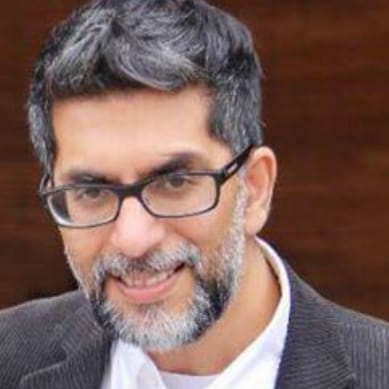
Ali Khizar is the Director of Research at Business Recorder. His Twitter handle is @AliKhizar




















Comments