


Conversion of absence into EOL: Sanction of competent authority indispensable: SC
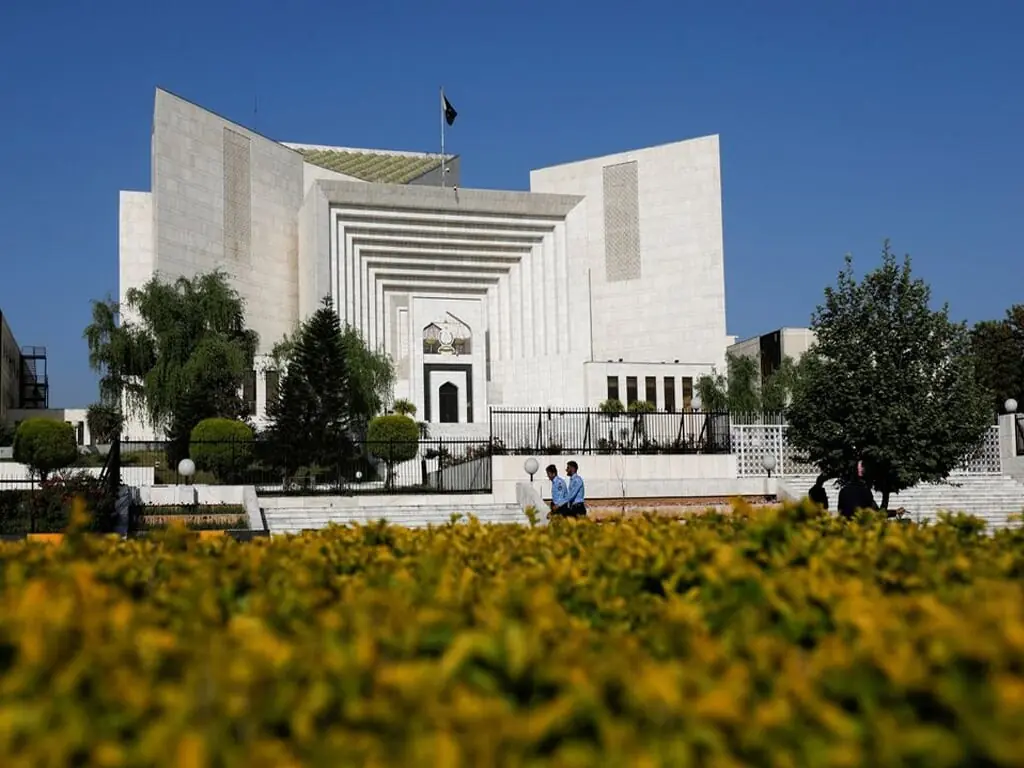

ISLAMABAD: The Supreme Court declared that the entitlement of conversion of absence into Extraordinary Leave (EOL) cannot be claimed automatically or ipsi dixit; the sanction of the competent authority is indispensable.
A two-judge bench, comprising Chief Justice of Pakistan Yahya Afridi and Justice Muhammad Ali Mazhar, set aside the Federal Service Tribunal (FST), Islamabad judgment dated 21 November 2023, and remanded the matter to the FST to decide the Service Appeal of the petitioner (Arslan Ahmed, an officer of the Commerce Ministry) afresh within three months from the date of receiving the copy of this judgment.
Nine-page judgment, authored by Justice Muhammad Ali Mazhar said; “This rule (Extraordinary leave (leave without pay) cannot be said to have been enacted with any injudiciousness or imprudence but it is configured to deal with certain acute cases of absence without leave where the competent authority in certain exigencies and fit cases may accord the advantage of this rule to a civil servant and may exonerate the absence without leave with retrospective effect.” “The exercise of powers under this rule must be backed with a clear administrative order without any ambiguity,” it added.
The transient facts of the case are that the petitioner was granted ex-Pakistan leave with effect from 01 October 2018 to 30 September 2020, but, on expiry of the leave period, he could not join the duty for the reason that the flight operation was closed during the Covid-19 pandemic. Besides that, the wife of the petitioner had also contracted Covid-19 and was seriously ill.
The petitioner was directed to report on 04 November 2020, but he reported back on 27 January 2021 when the flight operations were normalized. The petitioner participated in the inquiry proceedings, and during pendency, the petitioner was given a posting order as Deputy Secretary, China vide letter dated 05 March 2021.
After joining, the petitioner was communicated a notification dated 12 March 2021, whereby the period of his absence was conveyed to be regularized later on. Meanwhile, the wife of the petitioner, who was working at a hospital in England, fell seriously ill in June, 2021, and her eyesight had diminished, therefore, the petitioner had to leave for England in emergency on 26 June 2021 to take care of his wife and kids, hence he applied for leave but the department/ministry, while adopting the provision of Rule 14 of the Civil Servants (Efficiency & Disciplines) Rules, 2020 (E&D Rules), initiated exparte proceedings and all communications were made against the wrong postal/email address of the petitioner.
Finally, a colleague of the petitioner informed him on WhatsApp regarding the exparte disciplinary proceedings, whereupon the petitioner approached the concerned authority, and thereafter, an opportunity of online hearing was provided on 17 March 2022.
Ultimately, the dismissal order from service was passed on 21 October 2022, but at the same time, the period of absence with effect from 27 June 2021 to 06 September 2022 was treated as Extraordinary Leave (EOL). The petitioner preferred a departmental appeal, which was rejected; thenceforth, he also filed a service appeal before the Federal Service Tribunal (FST), which was dismissed vide impugned judgment.
The judgment said, no doubt, the adjustment of EOL with retrospective effect is not a punishment but a medium for the way out to avoid or reconciling two extreme situations. “So for all intents and purposes, when the competent authority aspires to show forbearance to the period of absence in case of any exigency or otherwise inclines to convert the absence into EOL, then the onerous burden lies on it to examine the dossier with proper and independent application of mind whether despite affording the adjustment of absence into EOL, the penalty of dismissal from service should be imposed or not?
The provision contained under Rule 9 (3) of the Revised Leave Rules, 1980, is unequivocal, which empowers the competent authority to grant EOL, but it is not mandatory that this facility or benefit is always contingent on the imposition of a penalty as a condition precedent; it depends on the peculiar facts of each case.
The petitioner was nonsuited predominantly on the ground that the original dismissal order did not contain any adjustment of absence through EOL, but it was inadvertently added by the Deputy Secretary (HRM) while it has been admitted in the concise statement filed on behalf of the respondent No.1 that EOL was approved by Secretary Commerce, therefore as a first fact finding forum, this is a fit case to be tried by the learned FST de novo.
Copyright Business Recorder, 2026




















Comments