


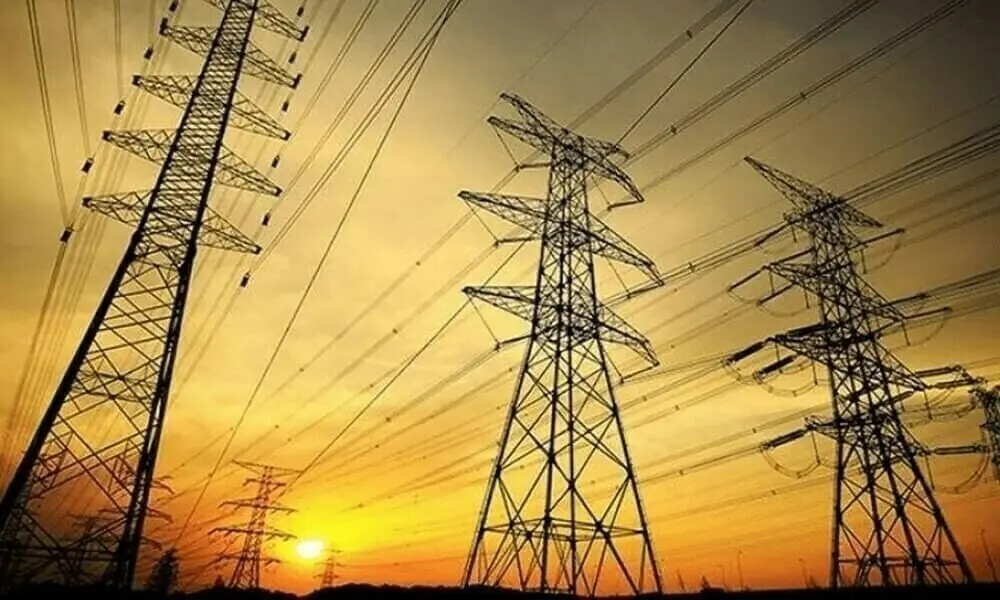

ISLAMABAD: The Independent System and Market Operator (ISMO) has submitted the revised ten-year Indicative Generation Capacity Expansion Plan (IGCEP 2025–35) to the National Electric Power Regulatory Authority (Nepra), presenting four indicative energy availability, growth, and demand scenarios while cautioning that inclusion of any project in the plan does not guarantee its execution.
According to the document, prepared under the provisions of the Nepra Grid Code 2023 (Planning Code PC-4), the System Operator (SO) has developed the revised IGCEP covering the period from 2025 to 2035.
The plan encapsulates the power generation additions required to meet future electricity demand across the country, including both the National Grid Company (NGC) and K-Electric (KE) systems.
READ ALSO: APTMA opposes approval of IGCEP 2025-35 in current form
The report presents the results of a comprehensive generation capacity expansion planning study comprising two key processes: (i) load forecasting and (ii) generation capacity expansion with high-level dispatch optimization. Both processes involve complex statistical and computational analysis conducted using specialized software tools.
Three long-term load forecast scenarios—low (business-as-usual), medium, and high—have been developed based on GDP growth projections of 3.52 percent, 4.95 percent, and 6.37 percent, respectively, over the next ten years. The report notes that the historical load factor of 70–73 percent has declined to around 58–60 percent. To address this, an additional scenario incorporating Demand Side Management (DSM) measures has been developed to gradually increase the load factor from around 58 percent to 70 percent by the end of the planning horizon.
According to projections, under the high-demand scenario, available energy will reach 218,984 GWh with peak demand of 43,069 MW by 2035. In the medium-demand scenario, energy requirements are estimated at 198,963 GWh with peak demand of 39,132 MW. Under the low (business-as-usual) scenario, gross energy demand is projected at 180,605 GWh, or 167,293 GWh excluding net metering, with peak demand of 35,521 MW. In the DSM-based low-demand scenario, available energy remains 180,605 GWh, while peak demand is expected to decline significantly to 28,622 MW by 2035.
The compound annual growth rate (CAGR) for energy and peak demand is projected at 4.4 percent in the high-demand scenario, 3.5 percent in the medium scenario, and 2.6 percent in the low (business-as-usual) scenario. Under the DSM scenario, energy growth is projected at 2.6 percent, while peak demand growth is limited to 0.6 percent.
The least-cost long-term generation expansion plan has been developed using the state-of-the-art PLEXOS software, based on rigorous data modeling and optimisation. The analysis incorporates existing and future generation projects, policy frameworks, contractual obligations, natural resource allocations, provisions of the Grid Code 2023, and assumptions outlined in the National Electricity Policy 2021, along with additional inputs.
For detailed analysis, four planning scenarios with multiple sensitivities have been considered: (i) no capacity addition, (ii) unconstrained capacity addition, (iii) forced capacity addition, and (iv) rationalized capacity addition.
Hourly demand forecasting has been undertaken to account for the intermittency of variable renewable energy (VRE) sources such as wind and solar photovoltaic (PV), particularly in view of the government’s aggressive renewable energy targets.
The IGCEP iteration also includes modeling of candidate transmission lines, including a south-to-centre/ north corridor within the NGC system and an interconnection between NGC and KE, to assess future transmission requirements.
Scenario-wise installed capacity projections for 2034–35 are as follows: low (BAU) demand 62,657 MW; medium demand 66,459 MW; high demand 70,720 MW; no KE candidate transmission line 61,844 MW; KE candidate transmission line by 2031 at 62,341 MW; and KE with 620 MW of committed renewable energy at 42,623 MW.
Copyright Business Recorder, 2026




















Comments