


India forecasts sub-par monsoon after two years of above-average rains
- Currently weak La Nina-like conditions are transitioning to neutral conditions
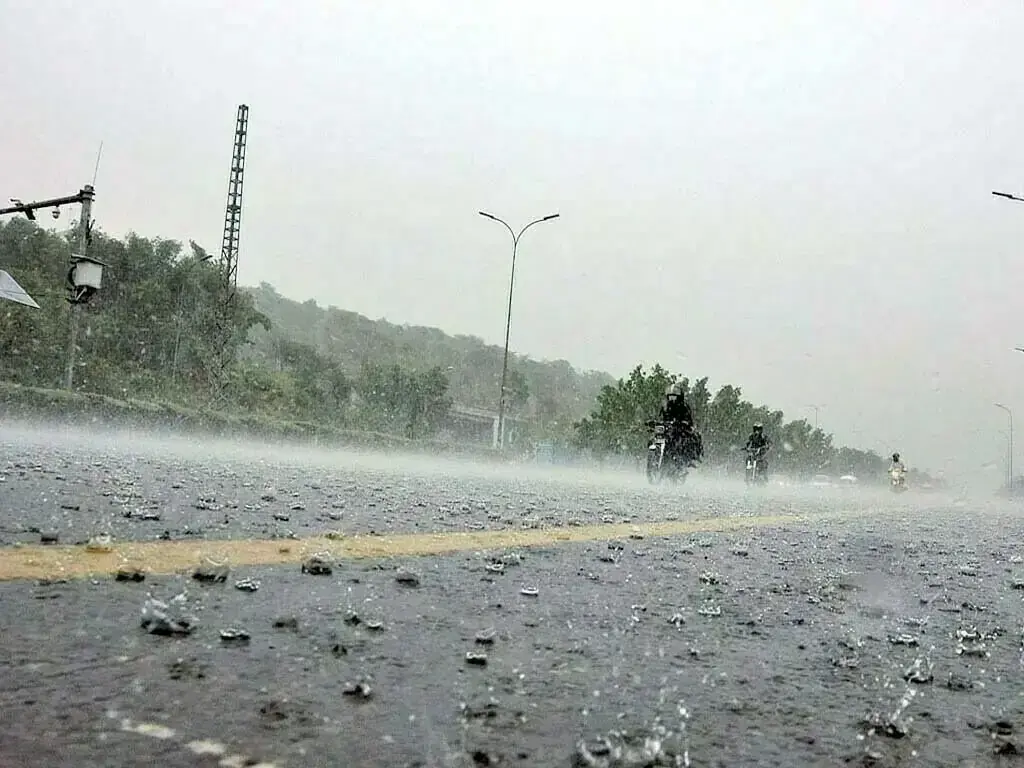

NEW DELHI: India is likely to see below-average monsoon rains for the first time in three years in 2026, the government said on Monday, stoking concerns over farm output and growth in Asia’s third-largest economy as it battles inflation driven by the Iran war.
The monsoon is the lifeblood of India’s nearly $4 trillion economy, delivering almost 70% of the rainfall needed to water farms and replenish aquifers and reservoirs.
The monsoon, which typically arrives over the southern state of Kerala around June 1 and retreats by mid-September, is expected to reach 92% of the long-period average (LPA) this year, M. Ravichandran, secretary in the Ministry of Earth Sciences, told a news conference.
The India Meteorological Department defines normal rainfall as between 96% and 104% of a 50-year average of 87 cm (35 inches) for the four-month season.
“Currently weak La Nina-like conditions are transitioning to neutral conditions. But after June it’s very likely that El Nino will develop,” Mrutyunjay Mohapatra, director-general of the India Meteorological Department, said.
India likely to see weaker monsoon in 2026, Skymet forecasts
El Nino is a weather phenomenon that occurs when ocean temperatures in the central and eastern Pacific Ocean rise above normal, typically resulting in hot and dry weather in Southeast Asia and other parts of the world.
In the past, India has experienced below-average rainfall during most El Nino years, sometimes leading to severe droughts that destroyed crops and forced authorities to limit the export of some grains.
“But in the latter part of the monsoon season, positive Indian Ocean Dipole (IOD) conditions are likely to develop and that will help the monsoon,” Mohapatra said.
The IOD is a climate pattern marked by differences in sea-surface temperatures between the western and eastern Indian Ocean.
A positive IOD, defined by warmer-than-normal waters in the western Indian Ocean, often supports stronger monsoon rainfall in India.
The IMD’s first forecast of rainfall at 92% of the LPA is the lowest in nearly three decades. It will issue an updated outlook for the season in the last week of May.
“This, along with the impending impact of the ongoing crisis in (the Middle East), poses downside risks to India’s GDP growth in financial year 2026-27,” said Aditi Nayar, chief economist at rating agency ICRA.
The government has forecast India’s economy will grow by between 6.8% and 7.2% in the fiscal year that started on April 1.
Lower rainfall forecasts also pose material upside risks to the retail inflation trajectory this fiscal year, with average inflation “could well exceed 4.5%,” Nayar said. Inflation stood at 3.4% in March, data showed on Monday.
India is the world’s biggest exporter of rice and onions, and the second-biggest producer of sugar.
The world’s largest importer of edible oils, India currently fulfils nearly two-thirds of its demand through overseas purchases of palm oil, soyoil and sunflower oil, primarily from Indonesia, Malaysia, Argentina, Brazil, Russia, and Ukraine.
“Lower rainfall is likely to increase India’s edible oil imports and eliminate the possibility of sugar exports in the next season,” said a Mumbai-based dealer with a global trade house.



















Comments