


Unauthorised use of private networks: PHMA urges Nepra action against Discos
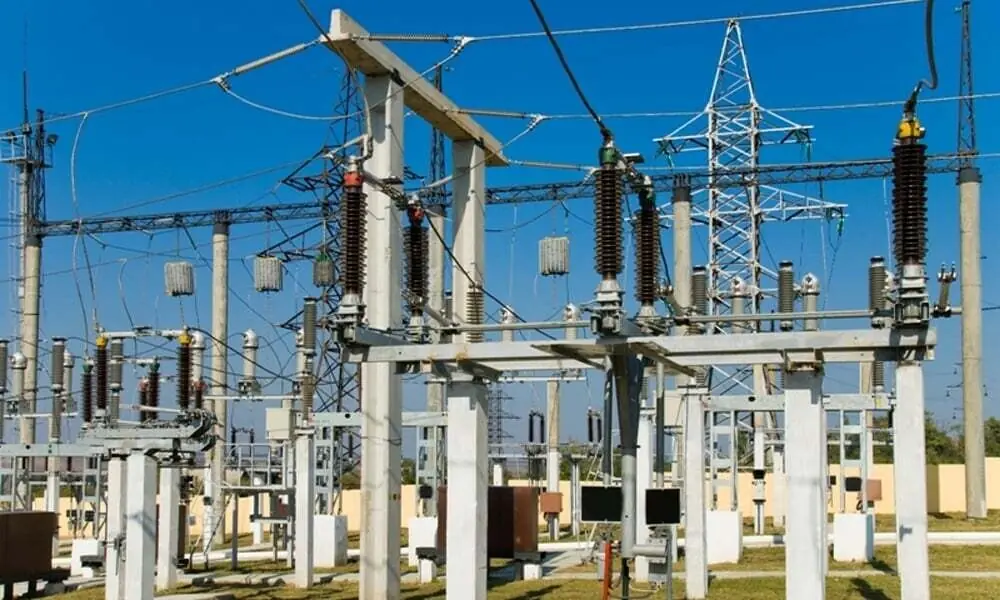

KARACHI: The Pakistan Hosiery Manufacturers and Exporters Association (PHMA) has formally requested the National Electric Power Regulatory Authority (NEPRA) to intervene against what it describes as the unauthorised use of privately owned power distribution systems by distribution licensees (DISCOs) across Karachi’s industrial zones.
The association also challenged a regulatory framework that permits the conversion of private Dedicated Distribution Systems (DDS) into public Common Distribution Systems (CDS) without compensation to the original owners, according to a petition filed on April 10, a copy of which also made available to Business Recorder on Sunday.
According to the PHMA, many factories established in Karachi during the 1970s and 1980s installed private 11kV substations and dedicated distribution systems entirely at their own expense, on their own land, for their exclusive use.
READ MORE: Privately owned substations by DISCOs: KATI urges Nepra to address ‘systematic and unlawful use’
The association notes that this practice was permitted and intended under the applicable regulatory framework at the time.
Over the years, the petition states, DISCOs extended electricity connections to neighbouring consumers through these privately owned substations. The association alleges that these extensions were carried out without obtaining a No Objection Certificate (NOC) from the DDS owner, without any written agreement, and without paying compensation for the use of private land or infrastructure. The DDS owner, according to the petition, was neither consulted nor informed.
The PHMA has identified specific legal provisions it believes have been violated. Clause 2.2 Note (i) of the NEPRA Consumer Service Manual (CSM) states that a DISCO may grant a connection from an existing DDS only if the prospective consumer has obtained a written NOC from the DDS owner.
Additionally, the definition of a DDS in both the CSM and SRO 448(I)/2022 restricts the system to the sole consumption of the original applicant. The association argues that every connection made without an NOC constitutes an unauthorised act by the DISCO and violates both the CSM and the licensee’s own licence conditions.
The petition outlines significant practical consequences for industrial landowners.
When a factory closes, is sold, or the owner seeks to redevelop the property, the DISCO either refuses to relocate the connections it established or demands that the private owner bear the full cost of relocation — a cost the association argues is actually the DISCO’s responsibility.
The petition states that the landowner is thus held hostage on his own property, unable to sell, vacate, or redevelop freely because a public utility has encumbered private land and assets for the benefit of third parties without legal authority.
The petition takes particular issue with Regulation 10 of SRO 448(I)/2022 and corresponding CSM provisions, which permit a DISCO to convert a privately owned DDS into a Common Distribution System (CDS).
The association notes that the regulation explicitly provides that the converted system shall not form part of the distribution licensee’s assets, and that the licensee is not obliged to reimburse the owner.
The PHMA has outlined the practical implications of this arrangement. Private land that was purchased, developed, and maintained by the factory owner, who also pays property taxes, is permanently occupied by a DISCO’s distribution infrastructure serving other consumers.
The infrastructure on that land was funded entirely by the private owner, yet it is converted to public use without meaningful consent and without compensation.
The DISCO earns distribution revenue from all consumers served through this converted infrastructure, while the owner receives nothing — not for the land, not for the equipment, not for decades of use.
The association argues that the current law insulates the DISCO from any reimbursement obligation, creating what it describes as a permanent, uncompensated taking of private property for public benefit.
The petition cites Article 24 of the Constitution of Pakistan, which states that no property may be compulsorily acquired or taken possession of except for a public purpose, by authority of law, and upon payment of compensation.
The association argues that the DDS-to-CDS conversion framework, as currently structured, satisfies none of these conditions when applied to infrastructure built and paid for by private owners. The PHMA has requested NEPRA to take five specific actions.
First, the authority is asked to direct all distribution licensees to identify and report within 60 days all third-party connections established through privately owned DDS without a valid NOC, and to immediately cease imposing relocation costs on DDS owners for connections made without their consent.
Second, the association seeks amendments to SRO 448(I)/2022 to provide that where a DISCO connected third-party consumers through a private DDS without the owner’s NOC, all disconnection and relocation costs shall be borne solely by the DISCO.
Upon the DDS owner giving notice of intent to sell, vacate, or redevelop, the DISCO would be required to complete relocation within 90 days entirely at its own cost. DISCOs would also be required to pay fair and ongoing compensation to owners whose private land and DDS infrastructure is used for third-party supply, whether or not an NOC was obtained.
Third, the PHMA requests that both SRO 448(I)/2022 and the CSM 2025 be amended to require the DISCO to pay full market-value compensation for the DDS infrastructure and fair land use charges before any conversion takes effect. Written and informed consent of the DDS owner would be required as a precondition to conversion.
The converted assets would become part of the DISCO’s regulated asset base, with the owner entitled to ongoing land rental at commercially determined rates.
Fourth, the association seeks a mandate for a standardized stamped NOC before any connection is granted through a private DDS, and a requirement for DISCOs to maintain a publicly accessible register of all connections served through privately owned DDS infrastructure.
Fifth, the petition requests retrospective relief for owners previously charged for DISCO-caused relocation costs, directing refunds within 90 days upon documentary evidence.
The PHMA has expressed confidence that NEPRA will take prompt action within its mandate to protect consumer and stakeholder rights and ensure regulatory compliance by licensees.
Copyright Business Recorder, 2026

























Comments