


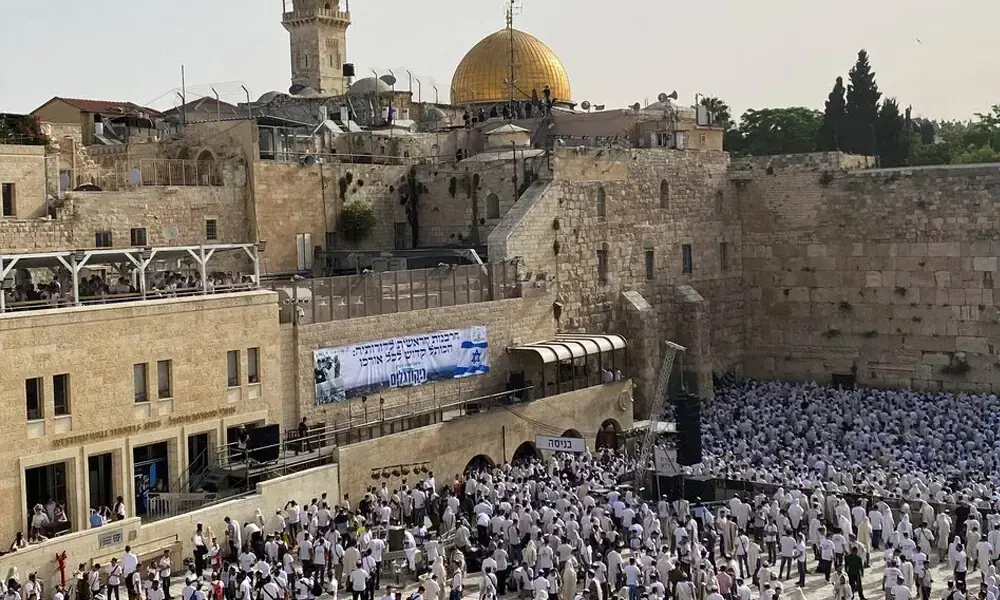
EDITORIAL: Early Thursday morning, thousands of Muslims returned to pray at the Al-Aqsa Mosque compound after a 41-day closure—many visibly overcome with emotion at being able to be there once again. The moment was as powerful as it was telling.
Recurring tensions around Al-Aqsa underscore just how fragile—and increasingly eroded—the longstanding status-quo governing one of the world’s most sensitive religious sites has become.
Under this arrangement, the mosque compound— third holiest site in Islam, known to Jews as the Temple Mount—remains a place of exclusive Muslim worship, administered by the Jordanian-led Waqf, while Israel maintains control over external security.
Yet repeated closures, mounting restrictions, and high-profile incursions signal a steady departure from this understanding with potentially grave implications for regional stability.
The latest shutdown ranks among the longest since 1967. While Israeli authorities cited ‘security concerns’ amid broader regional tensions, including confrontation involving the US-Israel war against Iran, the pattern of actions suggests something more consequential than temporary precaution.
Equally troubling is the repeated entry of Israeli officials into the compound. The actions of far-right National Security Minister Itamar Ben-Gvir—who has entered the courtyards multiple times since taking office in 2023, most recently earlier this week—are widely perceived not as routine visits but as deliberate political signalling.
Such gestures resonate far beyond Israel’s domestic arena; across the Muslim world, they are seen as attempts to alter the site’s religious and historical character. In a region already marked by deep mistrust, symbolism carries immense weight—and here, the symbolism is incendiary.
These developments have drawn strong reactions from Muslim-majority countries, including Pakistan, Saudi Arabia, Türkiye, Qatar, and Jordan. Their concerns reflect a broader consensus: any unilateral change to Al-Aqsa’s status risks igniting wider religious and political tensions.
Pakistan’s Foreign Office, invoking international law and United Nations resolutions, has reiterated a long-standing position that the sanctity and legal status of the Al-Aqsa Mosque must be preserved.
At stake is more than access to the sacred site. The issue speaks to the credibility of agreements, respect for the rule of law, and the already dim prospects for peace. Actions that encroach on religious freedom risk inflaming sentiments and deepening divisions. What is urgently required is restraint, accountability, and a clear recommitment to the status quo.
The sanctity of Al-Aqsa Mosque is not solely a Muslim concern; it is also a test of whether deeply contested spaces can be governed with fairness, sensitivity, and respect.
International stakeholders—particularly those with influence in the region—must play a more active role in ensuring adherence to agreed frameworks. Without such engagement, the cycle of provocation and condemnation will persist, further dimming the already fragile prospects for a just and lasting peace.
Copyright Business Recorder, 2026




















Comments