


Pakistan-Iran trade can hit $10bn, says FPCCI
- Bilateral trade between Pakistan and Iran could soar to $10 billion annually, driven by stronger industrial partnerships and streamlined banking channels
Pakistan and Iran aim to increase bilateral trade to $10 billion annually within 3-5 years by enhancing industrial partnerships, improving banking channels, and simplifying trade procedures.
- Plans to boost bilateral trade to $10 billion annually.
- Strategies for strengthening industrial partnerships and banking channels.
- Opportunities for joint ventures across various sectors.

Pakistan’s top business body on Saturday said bilateral trade with Iran could rise to $10 billion annually within the next three to five years, from the current $2.8 billion, if both countries strengthen industrial partnerships, improve banking channels and simplify cross-border trade procedures.
In a statement released today, Atif Ikram Sheikh, President of the Federation of Pakistan Chambers of Commerce and Industry (FPCCI), emphasised that the current volume of bilateral trade between Pakistan and Iran falls significantly short of its true potential.
Sheikh welcomed the recent engagement of a high-profile Iranian business delegation from Arak Province with FPCCI.
The Iranian delegation was led by Naser Beigi, President of the Arak Chamber of Commerce, Industries, Mines and Agriculture. President FPCCI urged the private sectors of both neighbouring nations to move beyond conventional trade and forge robust industrial partnerships.
Sheikh explained that, according to recent data, the Pak-Iran bilateral trade volume for the fiscal year 2023–24 stood at approximately $2.8 billion, comprising $684 million in Pakistani exports to Iran and $2.1 billion in imports from Iran.
However, recognising the complementary economic strengths of the two countries, FPCCI has outlined an ambitious roadmap to elevate this bilateral trade volume to $10 billion annually over the next three to five years, he added.
Naser Beigi, President of the Arak Chamber of Commerce, Industries, Mines and Agriculture, informed FPCCI that Arak province provides heavy machinery, engineering equipment, automotive parts, agricultural technology, and mining solutions, which are highly complementary to Pakistan’s evolving industrial and manufacturing sectors.
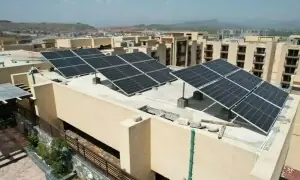
Murad Nemati, Commercial Attaché of Iran in Pakistan, emphasised that the ongoing bilateral business dialogue is aimed at highlighting the robust manufacturing base of Iran’s Arak Province. Opportunities for joint ventures were heavily emphasised across a diverse array of sectors, including agriculture, food processing, petrochemicals, mining, engineering, household appliances, and renewable energy.
Saquib Fayyaz Magoon, SVP FPCCI, highlighted the urgent need for a strategic shift in how the two nations conduct business. Pakistan and Iran are bound by deep-rooted historical, political, cultural, and religious ties – yet our economic cooperation remains vastly underutilised.
He maintained that to transform our mutual political goodwill into meaningful economic cooperation, the authorities must prioritise simplifying trade procedures; establishing formal banking channels and payment mechanisms; and strengthening our logistics and transportation networks. FPCCI will extend all-out assistance to Iranian and Pakistani businessmen seeking to formalise commercial partnerships, he added.











Comments