



A frown. A slouch. A smile. A delay. A policy. A meeting. A session. These are all MOEs, i.e., moments of expressions. These are all MOIs, i.e., Moments of impressions. They are signals. They are symbols. They are cues. They represent style. They present personalities. They are important as they may give intended or unintended signals.
Imagine you write a message to a colleague asking for some urgent information. No response. You re-write. Still no response. That is a signal for you that the person is either slack or indifferent. Signaling is a process of indicating a certain part of your personality and attitude. People form perceptions about you based on what they see, hear, observe, and interpret about behaviours. Many a time when you meet somebody you talk about the aura, the energy, the gestures, the tones, the style. They all signify an impression.
Since signals help in creating impressions, are we all aware and using them to create the impressions we want to create? Often I hear words like “but I did not mean to…”, “That is not what I am…”, “I am shocked at how easily people get offended”, etc. Such sentences themselves indicate that the signals emitting from your interactions are not planned or genuine. That also indicates that you are not on the same frequency as the people who are receiving these signals. Presently, the world is in a state of turbulence. With the geopolitics affecting everybody, the only certainty is uncertainty. People are apprehensive. Companies are struggling. Unpredictability is the new norm. Most of my clients are talking about how businesses are suffering. They are also unsure about what to do in these times. In one of my meetings, the leader heading a division was very frustrated and exclaimed “Look at what is happening to the world and my team is upset that we are not announcing the annual increments”. Of course it is frustrating. Of course it is upsetting. Having said that, I do feel that in such uncertain times some strategic emotion management is required at the top. What normally happens is that the top is already feeling the brunt of the corrosive geopolitical situation. They are worried about the market. They are anxious about the rising costs and falling sales. This pressure then manifests itself in the wrong signaling to the employees. The reaction is normally passive or aggressive. Either avoid the employees or have a lash-out session with them. Both are stress multipliers. What the leaders need to do in such times of uncertainty is to go back to the basics and to build upon the fundamentals:
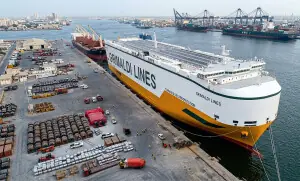
Uncertainty imperative #1— restore connection-The present war and global crisis have really challenged the companies. With the Middle East being the center, most organizations in Pakistan are struggling with supply chain issues, energy issues, etc. It is but natural for the C-Suite leadership to become busy in trying to keep the ship afloat. Most of their time is spent in meetings and preparing for the uncertainties. The middle management in turn are switching to the fire-fighting mode trying to squeeze in more revenues. This creates an over busy/under available leadership culture. This culture creates a disconnect between the top and the bottom. In this gap the grapevine flourishes. That is why it is important that the companies create a connect strategy to reduce this gap. Yes, the C-Suite needs to meet for crisis management; but the connect downwards is very important. To keep the communication intact, working with some CEOs in the present crisis, I have suggested a signaling plan. First is a CEO recorded message to the entire company. This message cannot be a random, all is ok, type. It has to be carefully crafted and considerably rehearsed. The tones and body language are key connect elements. The content of the message needs to be such that it gives hope but not hype. It needs to be in a style that is easily understood at all levels. It needs to be compelling but not overwhelming. In a company I was recently called in, a small overlooked phrase sent all the wrong signals and instead of reassuring people, pushed the panic button higher.
Uncertainty imperative#2— reduce the chaos-Crisis and chaos are lethal combinations. Companies that go in the knee-jerk mode forget that the present global crisis is on the social media stream of every worker. Left on their own people will become confused and scared. As they see numbers shrinking, they will assume all sorts of scenarios. That is why the C-Suite needs to develop a plan for holding townhalls to give clarity. What I see in companies is a “wait and see” approach. This is fine, but during the waiting time tell people we are there. Debrief them on the approach of the sponsors. Let them ask questions. Many companies avoid holding townhalls in these conditions because they are afraid they have no answers to people’s questions. Even if you have no answers to 70 percent of their queries the act of being upfront and connecting will give positive signals and will settle a lot of raw nerves.
Uncertainty imperative#3— revive consideration signals-The signaling going on mostly is that of disengagement. People are too tied up. Managers are too stressed. Employees are too scared. That is where signaling plays a part. Get them involved. Give them a purpose. At each level and function, ask the team leaders to get the teams together. For example, in the recent energy crisis, instead of announcing energy cost cutting measures I worked with the company to develop teams till the lowest level to do brainstorming and come up with measures at their level of cutting costs. It had a great impact. People came up with very useful suggestions. More importantly, they felt engaged. And, there was ownership. Since they were proposing, they were ensuring its execution too.
Uncertainty is a cancer to productivity. The cure is communication and involvement. Remember COVID. Nothing could be more uncertain, dangerous and financially disastrous as COVID. Remember, it also pushed the boundaries to innovate and go beyond. That is why the current disruption may just be the push you require to think out of the box and do what you have not been doing for a while. The difference between failure and success lies in the leader’s ability to signal this crisis as an opportunity or an adversity.
Copyright Business Recorder, 2026
The writer is a columnist, consultant, coach, and an analyst and can be reached at [email protected]











Comments