


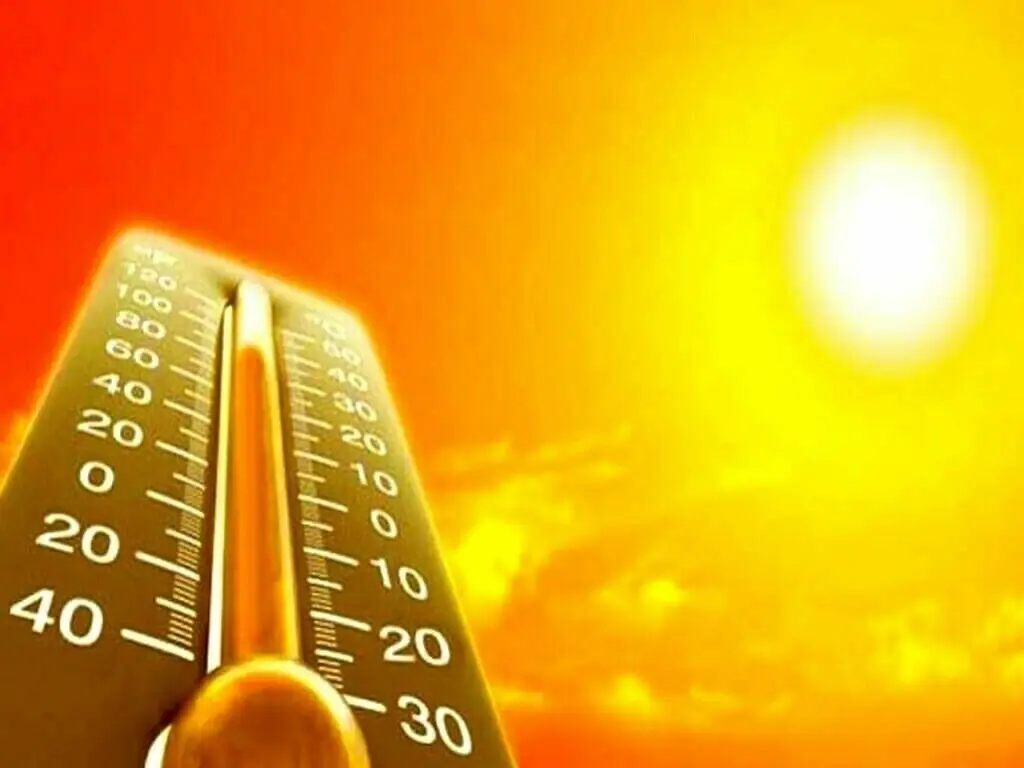
EDITORIAL: Evidence is mounting by the day that Pakistan stands at the centre of an accelerating climate shock.
The United Nations World Meteorological Organisation has confirmed that the Earth trapped a record level of heat in 2025, with global temperatures reaching about 1.43°C above the 1850–1900 baseline and the past 11 years now ranking as the hottest on record. More critically, the Earth’s energy imbalance has reached a new high, driven by greenhouse gas concentrations at levels not seen in at least 800,000 years.
This is not a distant warning. It is a measurable shift in the system. More than 90 percent of this excess heat is being absorbed by the oceans, locking in long-term consequences that will play out over centuries. Sea levels are rising, polar ice is shrinking, and extreme weather patterns are becoming more frequent. The trajectory is already set. The question is how it translates into domestic risk.
Recent projections provide a clearer answer. A study by the Climate Impact Lab estimates that Pakistan could see an increase of 51 deaths per 100,000 people by 2050 due to rising temperatures. The concentration of that risk in urban centres is particularly stark. Faisalabad alone is projected to face an additional 9,400 heat-related deaths annually, while cities such as Lahore, Multan, Peshawar and Rawalpindi rank among the most vulnerable globally. These are not marginal adjustments. They represent a structural increase in mortality risk driven by temperature alone.
Why are Pakistani cities so exposed? Urbanisation is one factor. Population growth has outpaced infrastructure, and dense urban environments tend to trap heat. Limited green cover, inadequate cooling systems and strained healthcare capacity amplify the impact. At the same time, fiscal constraints restrict the scale of adaptation. The current budget allocates roughly Rs85 billion toward climate adaptation, with a significant portion directed toward agriculture. That raises a basic question. Can urban heat risk be managed with a framework that remains largely rural in its allocation?
The financial gap is substantial. Estimates suggest Pakistan will require around USD 152 billion by 2030 for effective adaptation. That figure is not theoretical. It reflects the cost of building resilience against rising temperatures, water stress and extreme weather. Yet global adaptation finance has declined in recent years, even as the scale of the problem has increased. If external support remains limited, how is that gap expected to be closed?
There is also a structural contradiction shaping the global response. The same fossil fuels driving the rise in temperatures remain central to energy systems worldwide. Geopolitical tensions continue to reinforce reliance on hydrocarbons, even as climate indicators deteriorate. Does this not suggest that mitigation and energy security are being treated as competing priorities, rather than part of the same equation?
For Pakistan, this imbalance is particularly acute. The country contributes a relatively small share of global emissions, yet faces disproportionate exposure to climate impacts. This asymmetry has long been recognised in international discussions, but recognition has not translated into sufficient financial or technological support. If the burden of adjustment falls largely on vulnerable economies, what does that imply for long-term resilience?
The forward outlook offers little comfort. Climate patterns remain influenced by cyclical factors such as La Niña, but projections indicate that warming trends will persist, with the possibility of further temperature spikes if El Niño, or the opposite, conditions return. That suggests the baseline itself is shifting upward. Are current policy responses calibrated for gradual change, or for a system that is accelerating?
Preparedness therefore becomes the central issue. Heat-related mortality is only one dimension of the risk. Rising temperatures will interact with water availability, agricultural productivity and urban infrastructure. The effects are likely to be cumulative. Without coordinated planning, pressures in one area will spill into others. Is there a comprehensive framework that integrates these risks, or, are responses still fragmented?
The data no longer allows for ambiguity. The climate system is accumulating heat at a record pace, and Pakistan’s exposure is measurable in both economic and human terms. The remaining question is whether policy will begin to move at the same speed as the problem, or whether the cost of delay will continue to rise alongside the temperature.
Copyright Business Recorder, 2026






















Comments
Comments are closed for this article.