


France rules out broad energy aid despite lower deficit
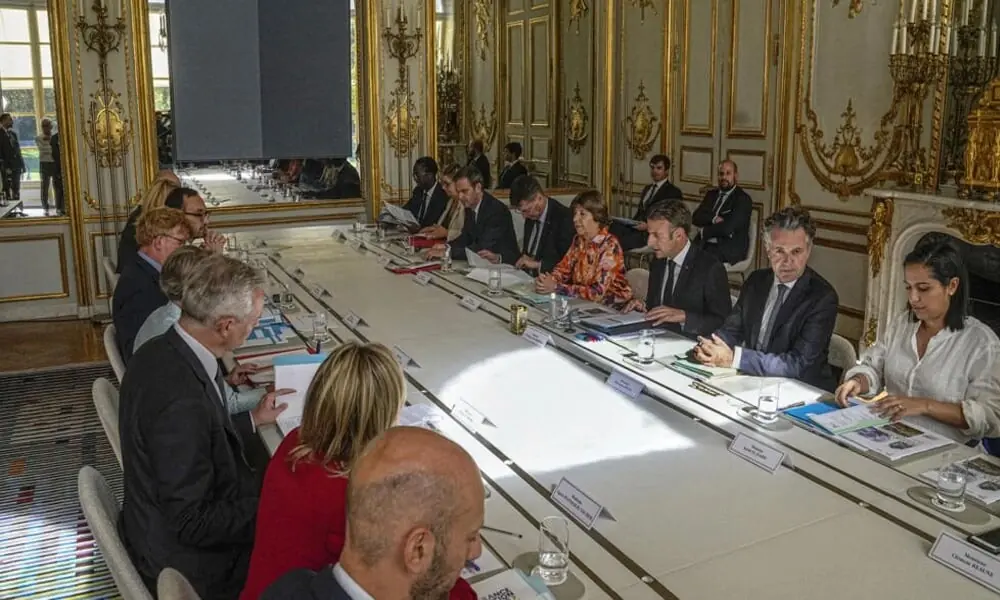

PARIS: French Prime Minister Sebastien Lecornu ruled out on Friday using any fiscal leeway from a better-than-expected budget deficit to provide broad financial support to shield businesses or consumers from rising energy prices.
Lecornu’s minority government is under pressure from opposition parties to roll out fuel tax cuts and other costly measures to cushion the impact of higher oil and gas prices triggered by the war with Iran.
France’s statistics agency INSEE said earlier that the 2025 public accounts showed a fiscal shortfall of 5.1 percent of economic output, down from 5.8 percent in 2024 and better than the government’s last estimate of 5.4 percent. “I’ve seen here and there that some people are saying there’s a windfall. There is no windfall when you’re running a 5.1 percent deficit,” Lecornu told a meeting at the finance ministry.
Lecornu said any support measures had to target sectors most in need and be renewed on a monthly basis, marking a sharp contrast with sweeping energy price caps that badly strained public finances after Russia’s 2022 invasion of Ukraine.
Budget Minister David Amiel said after the meeting that the cost of existing support measures – which so far have focused on farmers, transport firms and the fishing industry – would be fully offset by spending cuts elsewhere.
The French government said its aid measures included 50 million euros
(USD57.6 million) of aid for the transport sector, which would equate to a 20 euro cents handout for small transport firms.
It also announced 14 million euros of aid for the farming sector and five million for the French fishing industry.
INSEE said public sector spending grew by 2.5 percent, slowing from 4 percent in 2024 and eased by lower inflation. Revenue growth accelerated to 3.9 percent from 3.2 percent, as a result of tax increases. The government aims to cut the budget deficit this year to 5.0 percent as part of a broader plan to bring it back into line with the European Union’s 3 percent ceiling by 2029.
INSEE also said that France’s public debt stood at 115.6 percent of GDP in 2025, compared to 112.6 percent in 2024 and the government’s expectation of 115.9 percent in 2025.



















Comments