


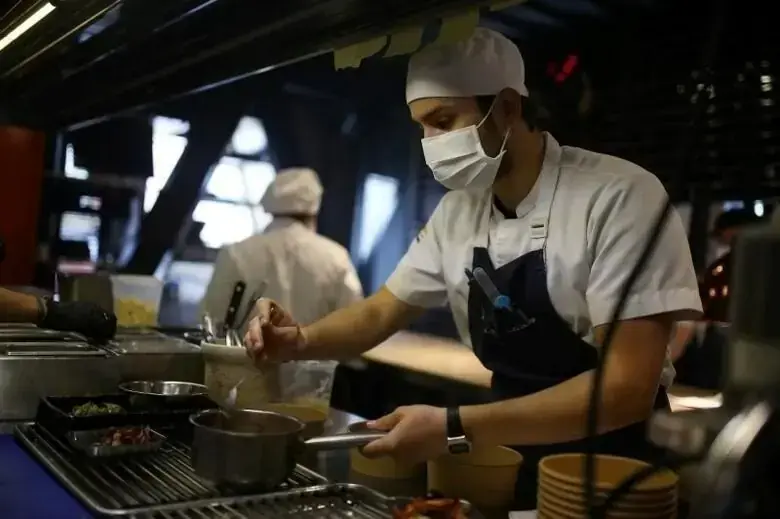
EDITORIAL: At a time when Pakistan’s external sector depends heavily on inflows from abroad, the sharp increase in the demand for Pakistani chefs and cooks in foreign labour markets offers a revealing glimpse into how the country’s workforce continues to sustain the economy in ways that often receive little policy attention.
According to figures from the Bureau of Emigration and Overseas Employment, more than 10,500 culinary professionals secured overseas employment in 2026, compared with about 2,470 in 2020. Such a fourfold increase in just five years signals a notable shift in the profile of Pakistan’s labour exports.
The development comes at a moment when remittances remain one of the country’s most important economic lifelines. Pakistan received around USD 38 billion in remittances during the last fiscal year, with inflows expected to rise further to roughly USD 42 billion in the current year. In recent years, these remittances have even surpassed the value of the country’s total goods exports, underlining how strongly the external account now relies on the earnings of Pakistanis working abroad.
Within this broader migration trend, the rise of culinary professionals stands out. Pakistani cooks and chefs have increasingly found opportunities in foreign markets, particularly in Gulf countries where a growing diaspora and expanding hospitality sector continue to generate demand for skilled kitchen staff. According to the Bureau’s data, thousands of workers trained in cooking and food preparation have secured jobs overseas each year, while waiters and hospitality staff have also maintained a steady presence in international labour markets.
The reasons behind this demand are not difficult to understand. Pakistani cuisine has gradually gained wider recognition in global food markets, especially in regions where South Asian communities have grown in number. Restaurants serving Pakistani and other South Asian dishes have expanded across the Gulf, and Pakistani entrepreneurs have also entered the food and hospitality business in those markets, creating additional employment opportunities for skilled workers from home.
Industry observers note that Pakistani chefs are valued not only for their ability to prepare traditional dishes but also for their adaptability in working with diverse cuisines. The profession has also become increasingly structured in recent years, with training institutes and vocational programmes producing graduates equipped with basic culinary techniques and kitchen management skills. For many young Pakistanis, this pathway offers a viable route to overseas employment and stable earnings.
From an economic perspective, the trend carries clear benefits. Skilled migration generates remittances that help ease pressure on Pakistan’s external account and support household incomes across the country. In a period when foreign exchange inflows remain essential for maintaining economic stability, every new avenue for labour export contributes to strengthening the flow of remittances that underpin the balance of payments.
At the same time, the story also points to a broader reality about Pakistan’s economic structure. The country continues to rely heavily on the export of human capital as a means of sustaining external finances. Labour migration has long served as a safety valve for domestic unemployment while providing foreign exchange that the economy struggles to generate through merchandise exports alone.
In that sense, the rise in demand for culinary professionals reflects both opportunity and necessity. On one hand, it highlights the global competitiveness of Pakistani workers in specialised service sectors. On the other, it underscores the limited capacity of the domestic economy to absorb and fully utilise the skills of its own workforce.
There is also room to build on this success in a more structured manner. Training standards in the hospitality sector can be strengthened further, particularly in areas such as hygiene, communication and professional certification. Improving vocational training programmes would help Pakistani workers secure better positions abroad and enhance the reputation of the country’s labour force in international markets.
Ultimately, the growing demand for Pakistani chefs and cooks is a reminder that the country’s most valuable economic asset remains its people. Their skills, adaptability and willingness to seek opportunities abroad continue to generate the foreign exchange that sustains Pakistan’s economy. Recognising and supporting that potential should therefore remain an integral part of the country’s broader economic strategy.
Copyright Business Recorder, 2026



















Comments
Comments are closed for this article.