


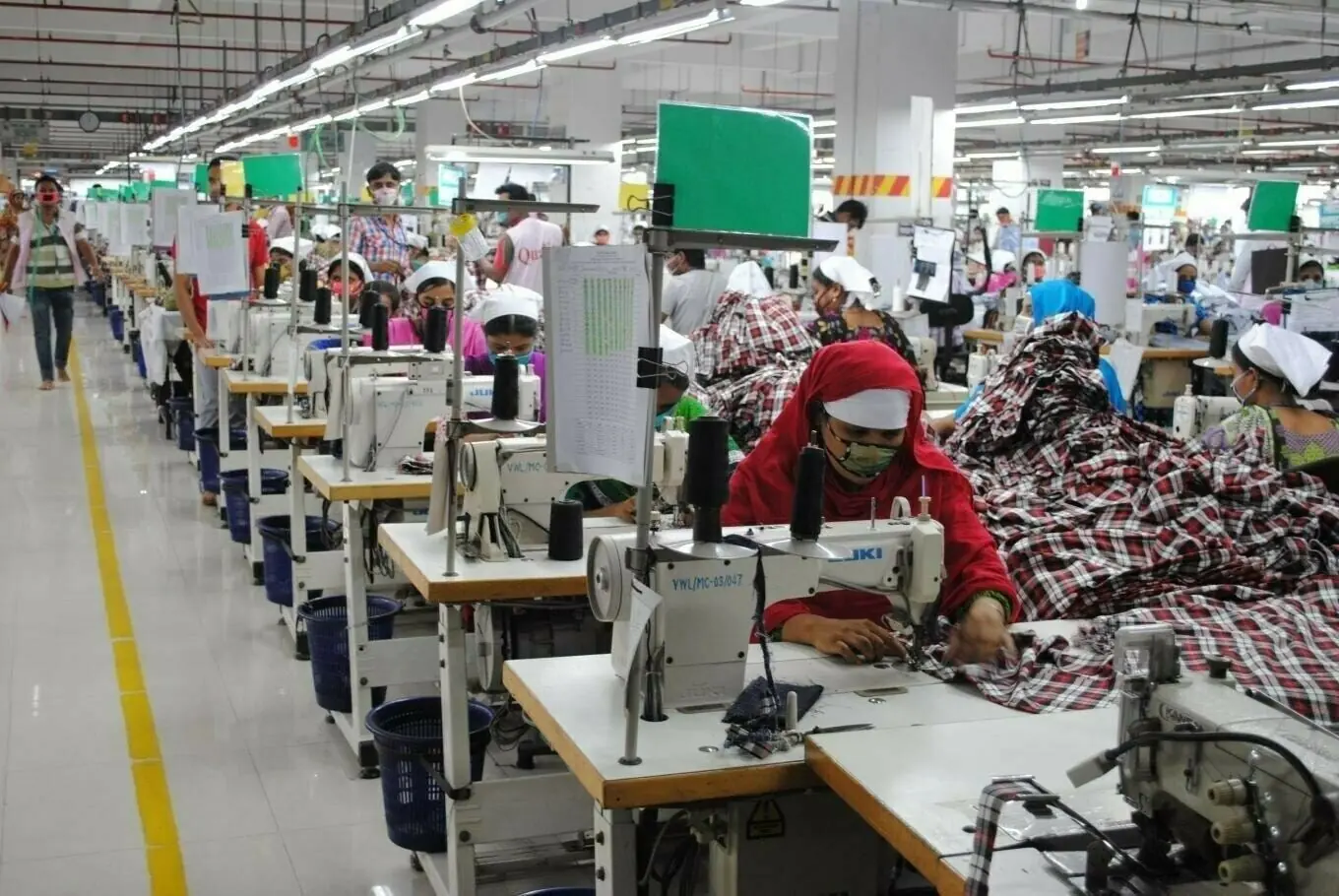

This year’s International Women’s Day carried an uncomfortable reminder for Pakistan. The country ranked last among 148 economies in the World Economic Forum’s Global Gender Gap Index. The result reflects a persistent contradiction in Pakistan’s development trajectory. Educational attainment among women has improved steadily over the past two decades, with rising literacy rates and increasing university enrolment across professional disciplines. Yet economic participation has not followed the same trajectory.
Female labour force participation remains among the lowest in the region, leaving a widening gap between education and employment. Much of the debate that follows focuses on cultural barriers, workplace bias, or safety concerns. These factors matter, but they often obscure a more practical constraint: that participation frequently follows infrastructure.
A 2025 joint study by UNICEF, UN Women, and the Pakistan Business Council found high awareness of family-friendly workplace policies among employers but persistently low implementation, with childcare utilisation remaining limited due to cost, access, and quality. Most unemployed parents surveyed identified the lack of childcare as the primary barrier to workforce participation, with both employed and unemployed parents strongly preferring onsite childcare to support employment continuity.
Earlier IFC research, which remains the most comprehensive employer survey on the subject, found that only 27pc of 140 private sector employers surveyed provide any form of childcare support, despite provincial legislation across Punjab, Sindh, Balochistan, and Khyber Pakhtunkhwa mandating such facilities. Yet every employer that had introduced childcare reported measurable benefits to business performance, with 24 percent reporting a direct increase in profitability after implementing childcare support.
The evidence is straightforward: childcare functions as a productivity-enhancing investment rather than a social obligation imposed on employers. What is missing is not evidence but attention.
Where childcare infrastructure has been introduced, the effects are quantifiable. WAPDA established childcare facilities at its headquarters in 2015 and again in 2018. Between 2010 and 2023, the share of female officers in the organisation rose from 8.12 percent to 15.78 percent. Between 2010 and 2022, only five women resigned; two for family reasons, two to pursue higher education abroad, and one for a career change. For an organisation of that scale, the attrition rate was remarkably low. The policy change that coincided with this shift was the provision of a dedicated childcare facility that allowed employees to remain at work while their children were safely supervised during working hours.
The principle is well established: when practical barriers are removed, participation rises. A recent student-led initiative in rural Bahawalpur, designed by a young researcher working on school-level retention, demonstrated this when sanitation facilities were constructed across four girls’ primary schools. Monthly attendance rose by 6 percent within weeks. The intervention simply removed a barrier that had quietly limited participation, and once that barrier disappeared, attendance rose almost immediately. The same mechanism applies across the life cycle. Infrastructure that allows girls to attend school enables educational participation; infrastructure that allows mothers to leave their children in safe care enables workforce participation. The underlying logic is the same.
The scale of the childcare constraint is now well documented. An Asian Development Bank study found that women with caregiving responsibilities in Pakistan earn 44 to 48 percent less than non-caregivers, with each additional child reducing wages by a further 12 percent. Provincial legislation mandates employer-provided childcare once workforce thresholds are met, yet fewer than three in ten employers comply. For the 70 percent of working women employed in the informal sector, formal childcare is effectively nonexistent. The infrastructure gap is not a matter of awareness but of provision.
Despite this evidence, childcare infrastructure remains limited in scale and uneven in quality. Most formal daycare centres operate in large urban areas and serve a narrow segment of higher-income households. Employer-provided childcare remains concentrated in multinational firms, banks, and a small number of large organisations. For the majority of women employed in informal or lower-income sectors, access to formal childcare remains extremely limited. Provincial legislation mandates childcare provision but lacks the enforcement mechanisms and regulatory clarity needed to translate that mandate into functioning facilities. In practice, childcare remains an obligation on paper rather than a functioning component of labour market policy.
The economic implications extend far beyond individual households. Hospitals invest years training female doctors who later withdraw from practice after starting families, schools lose experienced teachers at the stage when their professional contribution should be expanding, and corporations repeatedly absorb the cost of recruiting replacements for talented employees who exit within a few years. Each departure represents a loss of institutional knowledge, a recruitment cost, and a diminished return on years of educational investment. The cumulative cost is institutional: every trained professional who exits the workforce represents a permanent reduction in the country’s productive capacity.
Recognising childcare as economic infrastructure would fundamentally reshape the policy response. Three interventions are immediately actionable. First, provincial governments must enforce existing childcare mandates with clear quality standards, inspection mechanisms, and penalties for non-compliance. Legislation without enforcement offers little practical change. Second, employers in sectors such as healthcare, banking, education, and services should receive tax incentives to establish on-site childcare facilities or subsidised daycare partnerships. The evidence already demonstrates that such facilities improve retention and productivity. Third, public–private partnerships should be scaled to expand licensed daycare centres in urban districts and industrial zones. Salaries alone rarely offset the cost of high-quality childcare, making employer participation and policy support essential to building a viable system.
The lesson from Bahawalpur remains instructive. When a barrier is physical, the solution is infrastructural. Pakistan has invested heavily in educating women without building the systems required to sustain their participation in the workforce. Childcare is the infrastructure that connects education to employment. Without it, the country will continue to educate skilled women only to lose them to a constraint it already understands and has the capacity to solve.
Copyright Business Recorder, 2026
The writer is an economist and an educationist




















Comments
Comments are closed for this article.