


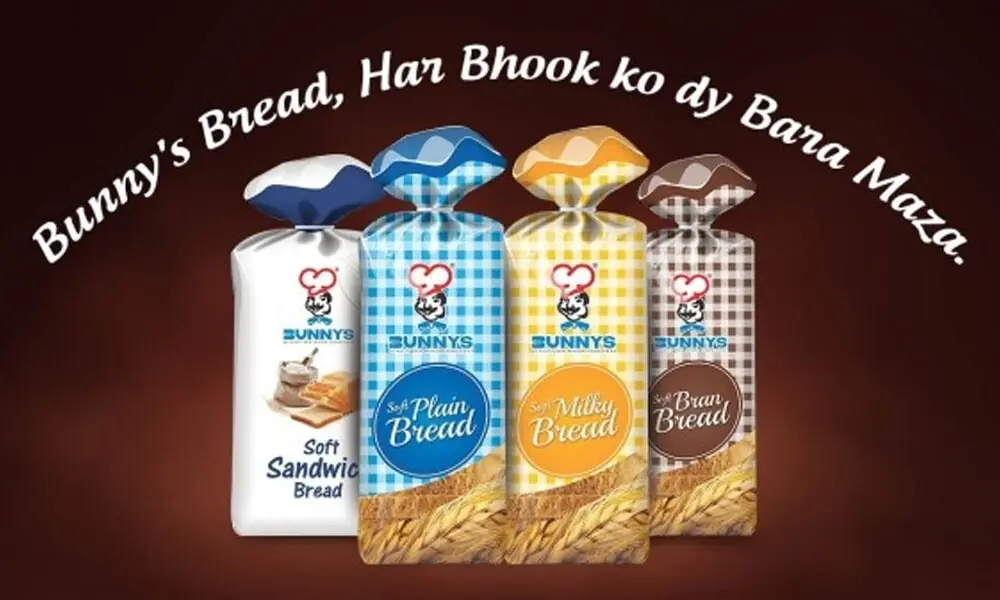

Bunny’s Limited (PSX: BNL) was incorporated in Pakistan as a private limited company in 1980 and was later converted into a public limited company. The principal activity of the company is the manufacturing and sale of bakery and other food products. BNL has its factory located in Lahore, Pakistan.
Its products are sold across the country as well as internationally. The company co-manufactures with some of the leading national and multinational companies including Pepsi Co., Unilever, and Engro etc.
Pattern of Shareholding
As of June 30, 2025, BNL has a total of 66.805 million shares outstanding which are held by 3553 shareholders. Directors, their spouse and minor children have the majority stake of 50.46 percent in the company followed by general public holding 42.02 percent shares. Modarabas and Mutual funds account for 3.81 percent shares of BNL while joint stock companies hold 3.31 percent shares. The remaining shares are held by other categories of shareholders.
Historical Performance (2019-25)
BNL’s topline has shown steady growth over the period under consideration. However, its bottomline ascended only in 2020, 2021 and 2025. The company posted net loss in 2024. BNL’s margins tumbled in 2019 followed by an uptick in 2020. In the subsequent two years, gross and operating margins followed a downward trajectory, while net margin ticked up in 2021 and then plunged in 2022.
In 2023, gross and operating margins considerably recovered; however, net margin continued to descend. BNL’s margins hit their lowest ebb in 2024 followed by a sound recovery in 2025 (see the graph of profitability ratios). The detailed performance review of the period under consideration is given below:
In 2019, BNL’s topline grew by 11 percent year-on-year to clock in at Rs.2,568.87 million. The growth came on the back of increased demand combined with upward pricing strategy. As eating pattern of the people was evolving, people were increasingly focusing towards convenience food which was creating demand for bakery items particularly buns and bread.
Buns and bread are the star products of BNL and contribute profoundly to its overall sales mix. BNL has an installed capacity of 13,500 metric tons in bakery division and 1800 in snacks division. In 2019, the company produced 11,150 metric tons of bakery products as against 10,965 metric tons produced in 2018. Snacks division produced 550 metric tons in 2019 up from 455 metric tons in 2018.
Capacity utilization in snacks division is less due to low demand. High cost of utility, raw materials which mainly included sugar, flour, eggs, milk, cooking oil/ghee etc as well as costly packaging material culminated into 14.64 percent year-on-year rise in the cost of sales. Gross profit marginally grew by 2.16 percent year-on-year in 2019; however, GP margin slumped to 26.80 percent in 2019 from GP margin of 29.12 percent recorded in 2018.
The company made a significant reduction of 58 percent year-on-year in directors’ remuneration in 2019. This coupled with curtailed entertainment expense, charity and donation as well as legal and professional fee trimmed down the administrative expense by 4.81 percent year-on-year in 2019.
Selling and distribution expense mounted by 10.18 percent year-on-year in 2019 owing to higher sales force commission and discounts as well as vehicle running and maintenance charges incurred during the year due to increased deliveries to meet the demand.
Other expense slid by 9.59 percent year-on-year in 2019 due to lesser provisioning for WWF and WPPF. Despite keeping a check on expenses, operating profit shrank by 2.6 percent year-on-year in 2019 with OP margin inching down to 8.31 percent from OP margin of 9.47 percent registered in 2018.
Finance cost grew by 2 percent year-on-year mainly on account of high discount rate. Net profit contracted by 18.66 percent year-on-year in 2019 to clock in at Rs.112.38 million with NP margin of 4.37 percent as against NP margin of 5.97 percent posted in 2018. EPS also slipped to Rs.2.19 in 2019 from Rs.2.69 in 2018.
In 2020, net revenue of BNL posted 8.68 percent year-on-year rise to clock in at Rs.2,791.86 million.
While the closure of restaurants, educational institutions and offices due to COVID-19 produced a dent in the demand of bakery items particularly buns and bread, increased household consumption of the same came to the rescue. Moreover, higher sales made in the initial quarters offset the effect of tamed demand during the COVID quarter.
Overall, BNL produced 11,400 metric tons of bakery items and 565 metric tons of snacks in 2020. High flour cost, energy charges as well as other input cost resulted in cost of sales going up by 7.70 percent year-on-year in 2020.
Yet, gross profit increased by 11.37 percent year-on-year in 2020 with GP margin clocking in at 27.46 percent. This was on account of stable sales volume and upward price revision. BNL hired additional employees during the year, taking the total employee count to 682 employees in 2020 from 669 in 2019.
This pushed the salaries expense up which combined with an uptick in directors’ remuneration pushed the administrative expense up by 3 percent year-on-year in 2020. Selling expense also surged by 5.76 percent year-on-year in 2020 primarily due to vehicle running and maintenance charges coupled with commission and other sales incentives.
High provisioning for WWF and WPPF resulted in 22.33 percent hike in other expense in 2020.
BNL also made Rs.6.6 million worth of other income in 2020, up from other income of Rs.0.41 million recorded in 2019. This was on account of gain on the sale of fixed assets as well as amortization of deferred income during the year.
Operating profit boasted a considerable 27.91 percent year-on-year growth in 2020 with OP margin of 9.78 percent – the highest among all the years under consideration.
Finance cost surged by 44.32 percent year-on-year in 2020 due to higher discount rate for most of the year. Long-term borrowings of BNL also rose during the year as it availed the SBP Refinance scheme for the payment of salaries and wages.
Moreover, the company also installed a gas-based power plant during the year to cut back on its power cost.
Besides, the company also started working on a fully automated production line for buns and bread for which the basic infrastructure was installed in 2020.
Higher finance cost diluted the bottomline growth which posted 13.73 percent year-on-year rise to clock in at Rs.127.80 million in 2020 with NP margin of 4.6 percent. EPS also climbed up to Rs.2.49 in 2020.
Among all the years under consideration, BNL posted the highest topline growth of 27.87 percent year-on-year in 2021. Net sales were recorded at Rs.3570.05 million in 2021.
The gradual resumption of economic activity led to an upsurge in demand. BNL produced 12000 metric tons of bakery items and 765 metric tons of snacks in 2021 to meet the demand.
During the year, the company completed the installation of its duly automated bun line and started working on fully automated cake line and continuous fryers for its snack division.
Cost of sales grew by 29.75 percent year-on-year in 2021. While gross profit climbed up by 22.91 percent year-on-year in 2021, GP margin inched down to 26.40 percent. This was because the company didn’t fully utilize its newly installed production lines which added to its fixed cost.
Administrative and selling expenses grew immensely by 31.55 percent and 21.66 percent respectively in 2021. As of December 2021, the company had a total of 751 employees which greatly drove the salaries expense up.
BNL also upped its advertising and sales promotion during the year to achieve higher market penetration besides providing commission and other sales incentives to pitch sales of BNL products.
Other expense grew by 32 percent year-on-year due to higher provisioning for WWF and WPPF on account on increased profitability.
Other income posted a massive 268.84 percent year-on-year growth on the back of gain on sale of fixed assets coupled with amortization of deferred grant. Operating profit magnified by 24.913 percent year-on-year in 2021, however, OP margin fell to 9.56 percent.
Finance cost provided some breather as it slid by 10.16 percent year-on-year in 2021 due to monetary easing.
This was despite the fact that BNL’s short-term and long-term borrowings considerably increased during the year to meet its working capital requirements and support its expansion plans respectively.
Net profit registered a stunning 39.24 percent year-on-year growth in 2021 to clock in at Rs.177.95 million with NP margin of 4.98 percent. EPS clocked in at Rs.2.66 in 2021 which signifies growth of 6.83 percent as the company issued 30 percent bonus shares during the year which increased its share capital.
The company didn’t pay cash dividend in 2021 keeping in view its investment plans and the associated funds requirements.
2022 brought in another 25.18 percent year-on-year growth in BNL’s topline which was recorded at Rs.4,468.90 million. However, during 2022, the topline growth was driven by upward revision in prices to counterbalance the effect of rising input cost due to domestic floods as well as Russia-Ukraine crisis.
The production slightly inched up to 12400 metric tons in bakery division and 925 metric tons in snacks division in 2022. Cost of sales spiked by 32.37 percent year-on-year in 2022. Gross profit grew by 5.12 percent year-on-year in 2022, however, GP margin drastically fell to 22.17.
The company kept a check on its administrative expenses which grew by a mere 5.15 percent year-on-year in 2022 despite unprecedented inflation.
While salaries expense grew substantially, the company contained directors’ remuneration during 2022 resulting in a small uptick in administrative expense.
Distribution expense grew by 23.65 percent year-on-year in 2022 due to sharp increase in fuel prices while other expense slumped by 34 percent year-on-year in 2022 due to lesser provisioning for WWF and WPPF.
Other income also declined by 55 percent year-on-year in 2022. Gain on sale of fixed assets was the main component of BNL’s other income in the past years; however, the company didn’t sell any of its fixed assets during 2022. Operating profit contracted by 19 percent year-on-year in 2022 and OP margin also stood at its five-year low of 6.18 percent.
Finance cost escalated by 32 percent year-on-year in 2022 due to multiple rounds of monetary tightening during 2022. The bottomline plunged by 21.91 percent year-on-year in 2022 to clock in at Rs.138.96 million with NP margin of 3.11 percent. EPS also plummeted to Rs.2.08 in 2022.
During 2023, BNL’s topline grew by 27.25 percent year-on-year to clock in at Rs. 5,686.62 million. This was due to increase in demand as well as prices. Cost of sales grew by 24.40 percent year-on-year in 2023 due to rising food inflation.
Upward revision in the prices of its products helped BNL achieve a slightly higher GP margin of 23.91 percent in 2023. Gross profit also rose by 37.26 percent in 2023.
While the company was able to cut its payroll expense during the year by keeping its workforce size constant at 758 employees, exorbitant vehicle running, maintenance and insurance charges took its toll on the administrative expense which surged by 12.35 percent in 2023. A steep 42.48 percent year-on-year escalation in distribution expense in 2023 was the effect of higher payroll expense, commission & other incentives to sales staff and also hefty vehicle running & maintenance expense incurred during the year.
Other expense contracted by 2.8 percent in 2023 due to lower provisioning for WWF. Other income also plummeted by 17.72 percent in 2023 due to lower amortization of deferred grant recorded in 2023.
BNL recorded 47.17 percent stronger operating profit in 2023 with OP margin climbing up to 7.15 percent. Finance cost severely rose by 87.58 percent year-on-year in 2023 due to record high discount rate.
While BNL put brakes on its long-term borrowings, its short-term borrowings showed no breather owing to increased working capital requirements. Due to high finance cost, bottomline slid by 5.37 percent year-on-year in 2023 to clock in at Rs.131.505 million with NP margin of 2.31 percent. EPS also plunged to Rs.1.97 in 2023.
While the company’s bottomline had been shrinking of-late due to surging cost and financial charges, it was able to record net profit.
However, in 2024, BNL’s financial performance succumbed to soaring inflation and finance cost and the company ended up making net loss despite reasonable 23.26 percent year-on-year improvement in its net revenues which clocked in at Rs.7,009.26 million in 2024. 29 percent escalation in cost of sales was due to inflationary pressure and high energy cost.
BNL’s gross profit ticked up by 4.72 percent in 2024, however, its GP margin fell down to its lowest level of 20.31 percent. Shrunken pockets of consumers translated into affordability concerns which didn’t allow the company to increase its prices proportionately. This shoved off its margins.
Administrative and distribution expense hiked by 46.94 percent and 15 percent respectively in 2024.
The main drivers of high operating expense were payroll expense, sales commission as well as vehicle running, maintenance and insurance charges.
BNL didn’t book any profit related provisioning, resulting in no other expense. Other income grew by 85.75 percent in 2024 due to gain recognized on the sale of fixed assets.
Operating profit dwindled by 34.37 percent in 2024 with OP margin drastically falling down to 3.81 percent. Finance cost gave no breather and escalated by 30.54 percent in 2024 owing to high discount rate and increased short-term borrowings. This resulted in net loss of Rs.108.129 million in 2024 with loss per share of Rs.1.62.
In 2025, BNL’s net sales ticked up by 5.29 percent to clock in at Rs.7380.35 million. Lower flour prices resulted in 2.51 percent decline in cost of sales in 2025. This resulted in 35.90 percent higher gross profit in 2025 with GP margin recorded at 26.22 percent.
Administrative and distribution expenses surged by 11 percent and 26.69 percent respectively in 2025 on account of higher payroll expense, commission on sales, travelling as well as vehicle running & maintenance charges incurred during the year.
The company increased the capacity of its bakery division from 13,500 metric tons in 2024 to 18,500 metric tons in 2025. The capacity of snacks division was also raised from 1800 metric tons in 2024 to 2200 metric tons in 2025. This resulted in workforce enhancement from 926 employees in 2024 to 1248 employees in 2025.
Profit related provisioning, allowance for ECL and loss recognized on the sale of fixed assets resulted in other expense of Rs.28.10 million in 2025 versus no other expense recorded in the previous year.
Other expense was offset by 406.186 percent higher other income recorded during the year which came on the back of increased gain on sale of fixed assets and gain on the restructuring of loans. During the year, the company had an accrued mark-up liability which was restructured into a long-term loan with no further mark-up chargeable.
According to IFRS-9, the difference between the carrying amount of the original liability and the present value of the restructured liability worth Rs.39.517 million was recognized as gain on restructuring of loan.
BNL’s operating profit strengthened by 110.61 percent in 2025 with OP margin clocking in at 7.61 percent. Finance cost plunged by 26.14 percent in 2025 due to monetary easing and lesser outstanding liabilities at the end of the year. This resulted in a gearing ratio of 28.24 percent in 2025 versus 38.28 percent in 2024.
BNL registered net profit of Rs.309.552 million in 2025 with the highest ever EPS of Rs.4.63 and NP margin of 4.19 percent.
Recent Performance (1HFY26)
During the first half of the ongoing fiscal year, BNL recorded 8.80 percent uptick in its net sales which clocked in at Rs.4011.58 million.
Flour prices slightly increased during the year, however, efficient raw material procurement allowed the company to record 31 percent improvement in its gross profit in 1HFY26 with GP margin clocking in at 30 percent versus GP margin of 24.88 percent recorded in 1HFY25.
Continuous enhancement in product lines, production and distribution capabilities and the recent decision to launch its snack products on the distribution model resulted in 10.75 percent spike in administrative expense and 16.21 percent surge in distribution expense in 1HFY26.
Other expense mounted by 382.39 percent in 1HFY26 probably due to higher profit related provisioning. Other income deteriorated by 88 percent during the period under consideration likely due to high-base effect as the company recognized gain on sale of fixed assets and gain on restructuring of loans in the previous year.
Operating profit enhanced by 62.11 percent in 1HFY26 with OP margin clocking in at 9.42 percent versus OP margin of 6.33 percent recorded in 1HFY25.
Finance cost fell by 42.77 percent in 1HFY26 due to monetary easing. BNL posted net profit of Rs.229.25 million in 1HFY26, up 102.55 percent year-on-year. This translated into EPS of Rs.0.34 in 1HFY26 versus EPS of Rs.0.17 recorded in 1HFY25. NP margin also improved from 3.07 percent in 1HFY25 to 5.71 percent in 1HFY26.
Future Outlook
With steady and price inelastic demand and periodic price revisions, the company can keep its bottomline and margins afloat. Decline in inflation and discount rate will also aid the financial performance of BNL.
Upgrading its plant & equipment to cutting edge technology and planned installation of solar panels and use of biogas may also result in lower conversion cost and stronger margins.
Besides, tapping new product and geographical markets will also provide added advantage to the company.
Copyright Business Recorder, 2026




















Comments