



Pakistan’s latest fuel price shock — with petrol and diesel rising by nearly Rs55 per litre overnight — is not merely another painful adjustment for citizens. It is a stark reminder of a deeper structural weakness that has haunted the country for decades: Pakistan has remained into an energy import trap.
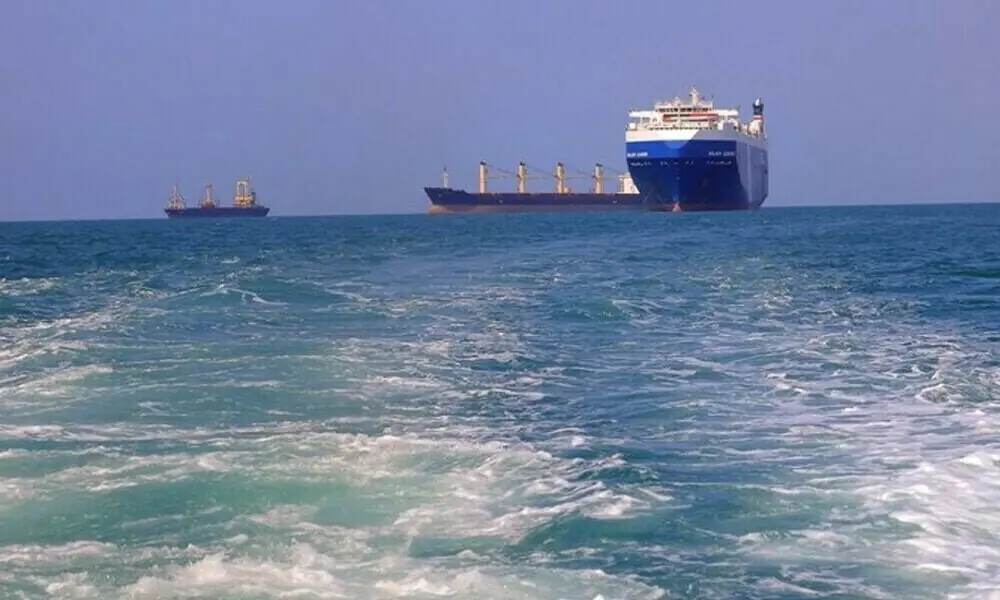
The immediate trigger is the escalating geopolitical crisis in the Middle East following the war imposed on Iran by the United States and Israel, which has caused disruption to oil shipments through the Strait of Hormuz, one of the world’s most critical energy chokepoints. As global oil prices surge and shipping costs rise due to war premiums and security risks, Pakistan has little choice but to pass the increase on to consumers.
But the uncomfortable reality is that Rs55 per litre may only be the beginning.
If the conflict escalates or persists, global energy markets may face further shocks. For Pakistan, the consequences will be immediate: higher transport costs, rising food prices, accelerating inflation and a significant increase in the cost of doing business.
Besides ordinary citizens, Industry will inevitably suffer. Energy is a fundamental input for production, logistics and services. When fuel prices rise sharply the cost structure of the entire economy shifts upward, eroding competitiveness and discouraging investment.
Yet every such crisis raises the same fundamental question: why is Pakistan so vulnerable to global energy shocks?
The answer lies in a structural policy failure.
Pakistan designed its energy system around imported fuels, despite possessing substantial domestic energy resources. In doing so, policymakers largely ignored the most critical principle of national energy planning: energy security.
Over the past four decades, Pakistan’s energy policy has increasingly relied on imported oil, liquefied natural gas (LNG) and even imported coal. While these decisions may have appeared practical in the short term, they collectively created a system that is highly vulnerable to global market volatility, geopolitical conflicts and disruptions in international shipping routes.
This is not merely an energy problem. It is a strategic failure to prioritize energy security, which should have been treated as a national security imperative. A country of more than 250 million people cannot base its economic survival on fuels that must be purchased from volatile international markets.
What makes this situation even more troubling is that Pakistan is not a country lacking energy resources. On the contrary, it is richly endowed with indigenous energy potential.
The Thar coal reserves are among the largest lignite deposits in the world, which have the potential to generate 100,000 megawatts for more than a century. Properly developed, they could supply a substantial portion of Pakistan’s baseload electricity for decades at significantly lower cost than imported fuels.
Pakistan also possesses enormous hydropower potential, estimated at more than 60,000 megawatts, much of which remains untapped.
In addition, the country lies in one of the world’s most favorable regions for solar energy, while the wind corridors of Sindh and Balochistan offer significant renewable power potential.
Given these advantages, Pakistan had a clear strategic option: build its energy system around indigenous resources.
Hydropower and Thar coal could have provided the backbone of reliable base-load power, while solar and wind could have expanded rapidly to meet growing demand and reduce long-term energy costs.
The importance of energy security has been raised repeatedly over the past two decades. Many analysts have consistently argued that Pakistan must reduce dependence on imported fuels and prioritize domestic resources.
Had Pakistan converted a substantial portion of its energy generation to a combination of hydropower and Thar coal, the country’s economic trajectory would look very different today.
The benefits would have been enormous.
Pakistan could have saved billions of dollars in foreign exchange currently spent on importing oil, LNG and coal. Pressure on the external account would have been far lower, reducing the recurring need for IMF bailouts.
Electricity generation costs would likely have been lower as well, benefiting consumers while reducing the cost of doing business for industry.
Instead, Pakistan remains heavily dependent on imported energy, leaving the economy dangerously exposed to global shocks.
Even today, the utilization of Thar coal remains far below its potential. With consistent policy implementation, Thar coal could by now have supplied up to half of Pakistan’s base-load electricity. Instead, its contribution remains only a fraction of what it could have been.
This gap reflects not a shortage of resources but a failure of policy implementation.
Pakistan’s broader governance challenges have also played a role. The country’s problem is not a lack of reform plans or policy proposals.
It is a lack of intent and capacity to implement them.
Energy sector governance has long been plagued by policy inconsistency, opaque procurement practices, poorly managed state-owned enterprises and weak regulatory institutions. These problems have discouraged investment and slowed the development of domestic energy resources.
The deeper constraint is political economy. Meaningful reforms often threaten entrenched interests that benefit from opacity, discretion and weak enforcement. As a result, reforms frequently remain on paper while the underlying system continues largely unchanged.
The outcome is visible today: a country rich in energy resources that remains dangerously dependent on imported fuels.
Every crisis presents an opportunity for course correction. Unfortunately, Pakistan has repeatedly wasted such opportunities in the past, responding with short-term fixes rather than addressing structural weaknesses.
The current fuel price shock should therefore be viewed as another moment for strategic reset.
Pakistan must rethink its energy policy using first-principles thinking.
The starting point should be clear: energy security must become a central pillar of national economic strategy.
This requires redesigning the energy system around indigenous resources.
A strategic combination of Thar coal for reliable base-load power, hydroelectric generation for long-term stability, and renewables — solar and wind — for scalable, low-cost energy can fundamentally transform Pakistan’s energy architecture.
Such a diversified mix would dramatically reduce dependence on imported fuels, save billions of dollars in foreign exchange, lower electricity costs for consumers and industry, and strengthen economic resilience.
In short, energy security built on Thar coal, hydropower and renewables can make Pakistan’s economy viable and competitive.
The latest fuel price shock has once again exposed the fragility of Pakistan’s energy system. The question now is whether policymakers will continue firefighting crises as they arise — or finally take the strategic steps necessary to escape the energy import trap and build a secure, resilient and self-reliant energy future.
Copyright Business Recorder, 2026
The writer, a former managing partner of a leading professional services firm, is a public sector governance and public financial management specialist and has done extensive work on governance in the public and private sectors. He posts on X @Asad_Ashah




















Comments
Comments are closed for this article.