


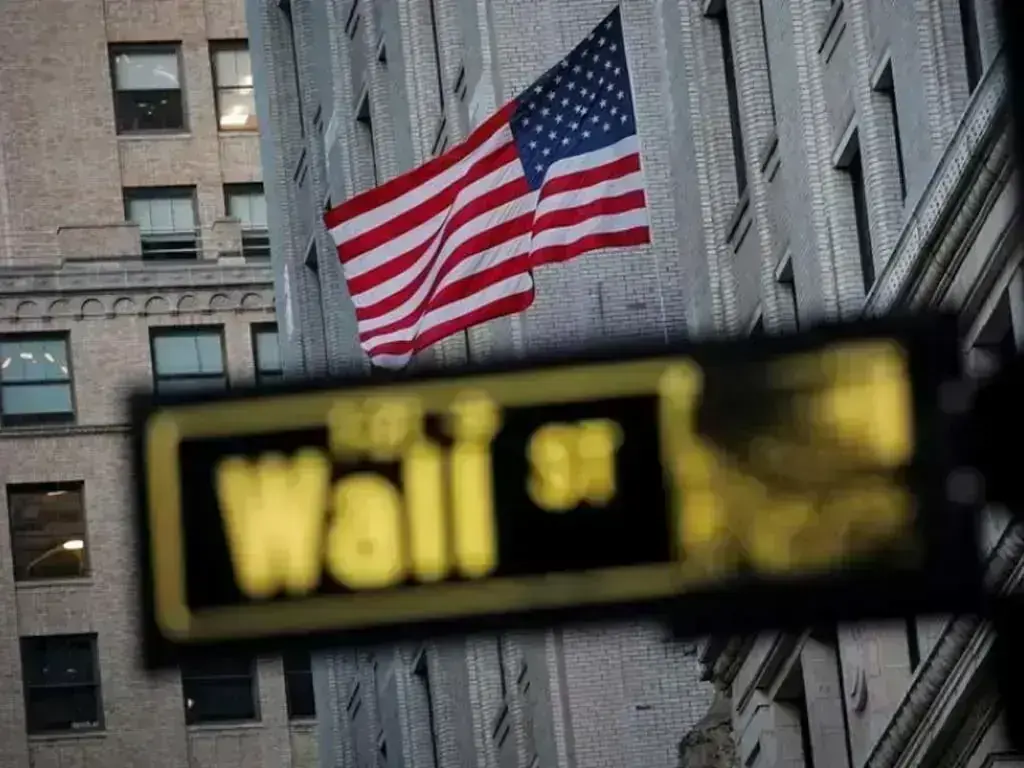

NEW YORK: Wall Street’s main indexes were off session lows on Monday as a rebound in technology stocks softened the blow from investor concerns that soaring oil prices could exacerbate inflation pressures.
Hostilities in the Middle East entered their tenth day and Iran named Mojtaba Khamenei, son of the late Ali Khamenei, as the supreme leader, signaling firm control of hardliners in Tehran.
Crude prices were pinned at USD100, as investors weighed the Group of Seven countries’ decision to not release emergency oil reserves, saying that there was no immediate supply shortfall. Supply concerns lifted prices to nearly USD120 earlier in the day.
The spike in energy prices is likely to fuel stagflation fears, as data last week showed a weakening US jobs market, even as broader economic activity accelerated.
“With oil prices going up 50 percent in a matter of weeks - that’s a displacement this market hasn’t seen in years. So, this market doesn’t even know how to handle these oil prices,” said Dennis Dick, founder and market structure analyst at Triple D Trading. Travel stocks, which were pressured the most last week, were also the hardest hit on Monday.
An index tracking S&P 500 passenger airlines dropped over 2.6 percent, while cruise stocks such as Carnival Corp lost 4.3 percent and Royal Caribbean Cruises fell 2.5 percent.
Big banks, the backbone of any economy, also took a hit with Morgan Stanley down 2.3 percent and Citigroup falling 3 percent.
A prolonged period of higher oil prices could weigh on equities this year, Goldman Sachs said, warning that every one percentage point drop in economic growth could cut S&P 500 earnings by as much as 4 percent.
Technology stocks gained the most among S&P 500’s 11 sectors, rebounding from February’s selloff and helping limit losses on Monday.
Chip company SanDisk gained 3.2 percent, Broadcom climbed 3.2 percent and Nvidia added 1 percent.
At 11:58 a.m. ET, the Dow Jones Industrial Average fell 398.03 points, or 0.84 percent, to 47,103.52, the S&P 500 lost 29.98 points, or 0.44 percent, to 6,710.04 and the Nasdaq Composite lost 14.08 points, or 0.06 percent, to 22,373.60.
Markets face a data-heavy week, including job opening numbers, personal consumption expenditures - the Fed’s preferred inflation gauge - and a second estimate of quarterly GDP. Declining issues outnumbered advancers by a 3.4-to-1 ratio on the NYSE and by a 2.12-to-1 ratio on the Nasdaq.
The S&P 500 posted four new 52-week highs and seven new lows while the Nasdaq Composite recorded 33 new highs and 154 new lows.




















Comments
Comments are closed for this article.