


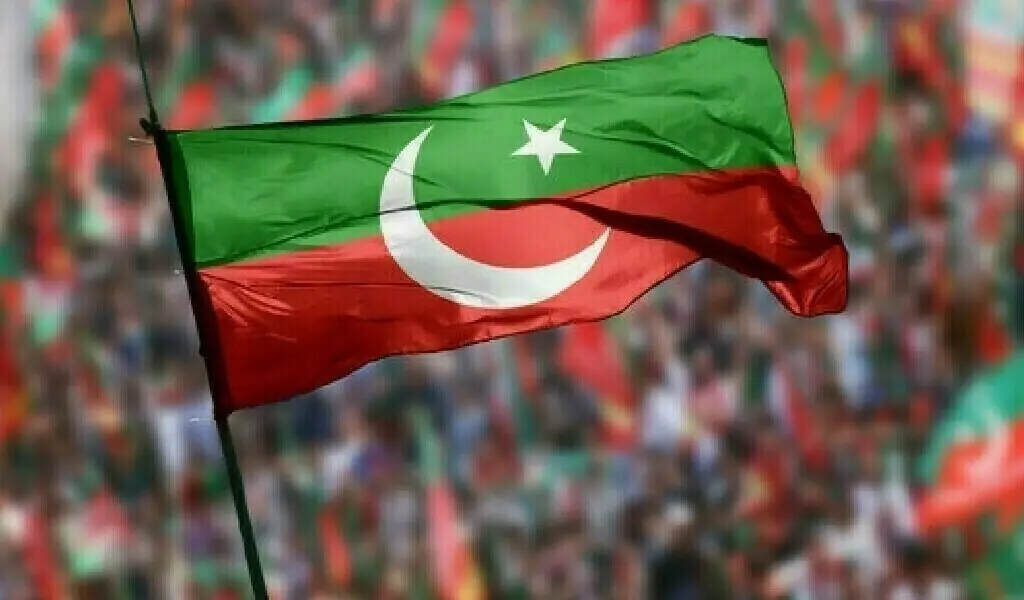

LAHORE: Senior leaders of Pakistan Tehreek-e-Insaf (PTI), currently incarcerated in Lahore’s Kot Lakhpat Jail, have issued a letter urging all stakeholders, including political parties, military leadership, the judiciary, the legal community, and the media, to come together to devise a way forward for the country.
In the letter released by the PTI on Saturday, Shah Mahmood Qureshi, Dr Yasmin Rashid, Senator Ijaz Ahmed Chaudhry, Umar Sarfraz Cheema, and Mian Mahmood ur Rashid emphasised the need for the Tehreek Tahafuz Ayeen-i-Pakistan and the PTI’s political committee to seriously consider the changing national and regional situations. They advocate for a joint session of parliament to decide a course of action.
“At a time when Pakistan faces challenges such as disputes on its western border, a tense eastern border situation, insurgency in Balochistan, and a new wave of terrorism in Khyber Pakhtunkhwa, the most detrimental factor could be a crisis stemming from internal political instability. While external threats may not be our own making, internal unity, harmony, and mutual understanding are essential to confront these challenges,” they stated.
The PTI leaders highlighted that the limited economic stability, achieved through great sacrifices by the people, is now at risk. They noted that friendly Gulf countries, which had planned to invest in Pakistan, are now refocusing their attention due to tensions in the Middle East, particularly the US and Israeli attacks on Iran and Iran’s subsequent retaliation. They also mentioned that a significant portion of Pakistan’s foreign exchange reserves is held by friendly countries; for instance, the UAE’s transition to a monthly rollover of these funds instead of an annual one indicates that accessing these funds could become more complicated in the future.
They further pointed out that global and regional economic uncertainties might impact remittances from overseas Pakistanis. The potential closure of Gulf ports and rising shipping costs could hinder trade and put additional pressure on an already stagnant export sector. Furthermore, escalating oil and gas prices will inflate the import bill, potentially erasing the current account surplus, which could lead Pakistan into another balance of payments crisis, and the desire to reduce dependence on the IMF remains unrealised.
The leaders noted that inflation is rising again, limiting the possibility of interest rate cuts. Pakistan also struggles to create the nearly three million new jobs needed each year, contributing to increasing youth unemployment. Additionally, the agricultural sector is under strain due to rising production costs while prices remain stagnant. Significant poverty reduction is unattainable at the current GDP growth rate.
-“In these circumstances, adhering to traditional governance styles is no longer feasible, and ongoing political confrontation is not in the country’s best interest. It is crucial to set aside differences, restore trust, and move forward with unity and dignity. A unified Pakistan is essential to effectively confront external threats. Members of parliament who advocate for parliamentary supremacy must step forward to assist in resolving the current political deadlock. Internal divisions and external pressures pose threats to Pakistan’s sovereignty, economy, and democracy. Every party, regardless of whether it is in government or opposition, in uniform or holding judicial office, in parliament or among the public, must unite for Pakistan,” they added.
They called on all stakeholders to prioritise the nation’s interests over personal ambitions, political grudges, and institutional egos, asserting that if Pakistan’s affairs are managed wisely, solutions can be found through mutual consent. The country requires understanding, insight, and a healing style of leadership during these challenging times, they added.
Copyright Business Recorder, 2026

























Comments
Comments are closed for this article.