


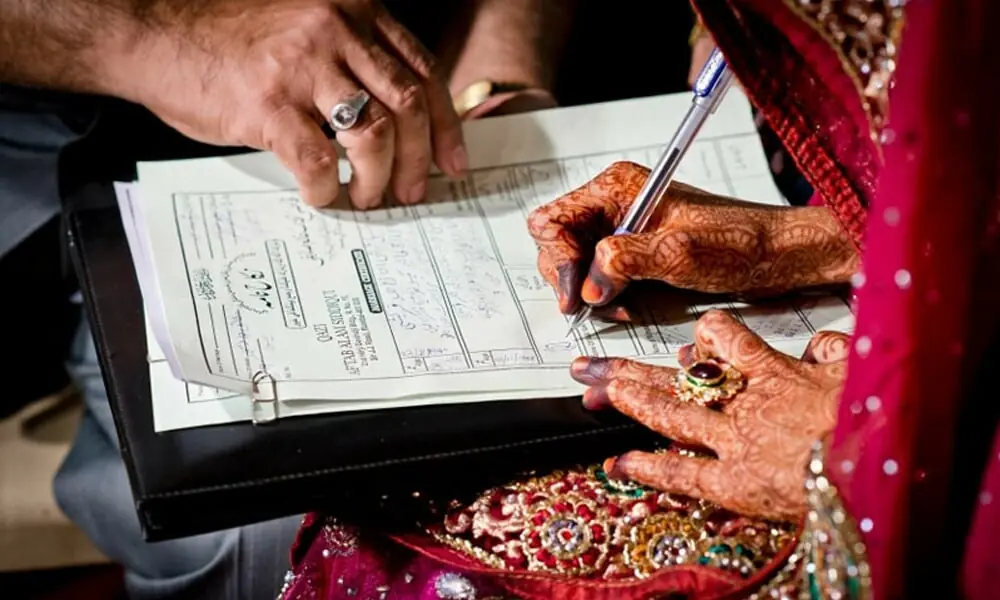
EDITORIAL: The recent notice taken by the National Commission on the Status of Women (NCSW) regarding proceedings before the Supreme Court of Pakistan on the legal parameters of khula (a woman’s right to seek the dissolution of marriage) is both timely and significant. What is at stake is not merely a technical question of family law, but the lived reality of countless women whose access to justice depends on how courts interpret and apply long-settled principles.
The Supreme Court can seek guidance from the Council of Islamic Ideology on questions of Islamic jurisprudence; such consultation can play a constructive role in clarifying complex issues. The NCSW’s key concern, however, is that any reconsideration of khula should reaffirm — not dilute — the settled jurisprudence that already harmonises constitutional guarantees with Islamic legal tradition. Actually, the law on khula in Pakistan is neither novel nor unsettled. It was authoritatively laid down in the landmark decision of the Khurshid Bibi vs Baboo Mohammad Amin case, where the Supreme Court held that a marriage may be dissolved if the court is satisfied that the spouses cannot live within the limits prescribed by Islam. In other words, the judgment recognises khula as an independent ground for dissolution. It does not require proof of cruelty in a narrow or technical sense. Rather, the breakdown of mutual trust, harmony, and the willingness to continue the marriage may itself justify judicial intervention.
Over the decades, courts have consistently treated khula as a no-fault remedy, distinct from fault-based judicial divorce. This distinction is not merely semantic; it carries profound practical consequences. Fault-based dissolution requires proof of specific misconduct — often very difficult to establish, particularly in cases of domestic abuse that occurs within private spaces and without independent witnesses. Conflating khula with physical cruelty-based divorce, therefore, would mean reintroduction of restrictive evidentiary burdens that settled law intentionally moved away from. The likely result would be prolonged suffering and the forced continuation of marriages that have, in every meaningful sense, already broken down.
NCSW Chairperson Ume Laila Azhar has rightly emphasised that marriage in Islamic law is a civil contract grounded in mutual consent and dignity. This conception is deeply rooted in Islamic jurisprudence. A contract that has lost its essential foundation — where one party clearly and consistently expresses unwillingness to continue — cannot be sustained through procedural rigidity without undermining its moral and legal basis. And khula provides a dignified and lawful exit when reconciliation is no longer possible.
The broader constitutional context also cannot be ignored. Pakistan’s legal system is committed to protecting fundamental rights, including equality before the law and the inviolability of human dignity. A restrictive reinterpretation of khula would disproportionately affect women and risk eroding these guarantees. It would also contradict decades of judicial practice that has sought to align family law with both Islamic principles and contemporary understandings of justice.
At its core, the present debate is about preserving coherence in the law. Any clarification that emerges is expected to strengthen a framework that has long balanced Islamic law and constitutionalism.
Copyright Business Recorder, 2026




















Comments
Comments are closed for this article.