


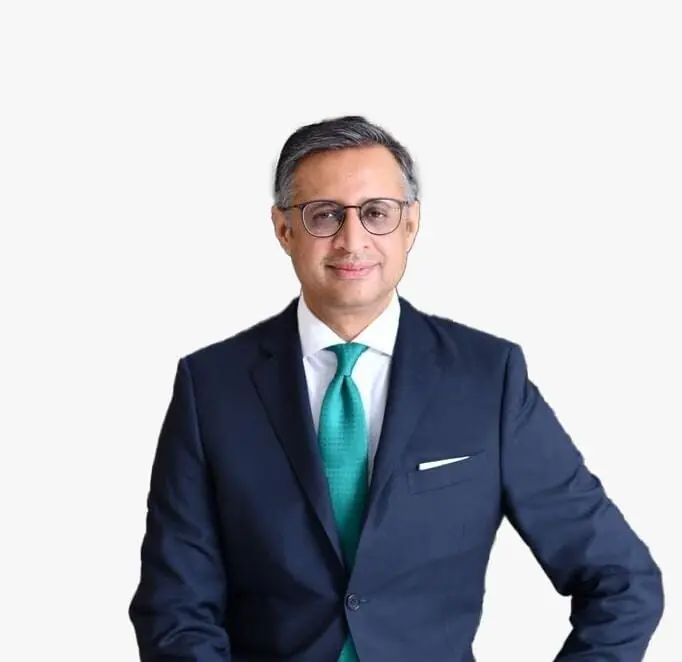

ISLAMABAD: Mobilink Bank has returned to profitability in 2025 following a year of losses through what the management described as a deliberate “balance sheet reset” and structural shift in lending strategy, risk architecture, and capital discipline.
Talking to Business Recorder, President and CEO Mobilink Bank Haaris Mahmood Chaudhary said the bank posted a profit before tax of PKR 3.62 billion on total revenues of PKR 89.5 billion in 2025, reflecting a strong recovery in its financial performance.
“Before 2024, we were operating largely in rollover mode. The macro environment, floods, inflation and high interest rates required liquidity preservation. In 2024, however, we took the hard decision to clean up the balance sheet fully. That meant absorbing stress upfront,” he said.
The clean-up resulted in a reported loss of PKR 3.1 billion before tax in 2024, but Haaris Chaudhary argues it laid the groundwork for recovery.
“We moved from defensive stabilization to what we call ‘Growth with Purpose.’ That meant redesigning our portfolio, strengthening underwriting, and ensuring that every rupee of growth was risk-calibrated,” he said.
He said the bank was historically concentrated in unsecured, bullet-type microfinance and agro-loans, however during 2025 they shifted toward structured, EMI-based lending with greater secured exposure. Secured disbursements expanded sharply during the year, while repeat unsecured lending was curtailed and subjected to enhanced due diligence.
“We prioritized predictability over pace. We would grow, but through structured cash-flow backed products rather than vulnerability to external shocks,” he added.
Unlike previous growth cycles in the microfinance sector, Mobilink Bank’s 2025 expansion was largely deposit-funded. Customer deposits increased by 38 percent, accounting for nearly the entire asset growth. Borrowings rose but remained a small component of the funding mix.
“We made deposit mobilization a strategic priority. Lowering cost of funds was essential to restoring spreads,” Haaris Chaudhary said, noting that funding costs declined by roughly five percentage points year-on-year.
Advances increased 35 percent to PKR 101 billion, while investments rose 55 percent as treasury management was optimized. Net equity grew 86 percent year-on-year, supported by higher retained earnings and fresh capital injections, including USD 35 million from parent VEON over 2024–25.
“The most important enabler of sustainable growth is capital strength. With a CAR of 19.53 percent, we are positioned to scale without compromising resilience,” he said.
He attributed performance gains not only to portfolio restructuring but also to institutional modernization. He said, the bank upgraded its core banking system (Temenos T24), strengthened digital lending platforms, implemented Oracle Financials, and established a centralized Data Lakehouse to enable predictive analytics in credit scoring and risk monitoring.
“We shifted from reactive risk management to predictive oversight. Data visibility now drives underwriting decisions at a granular level,” the CEO said.
The bank invested in operational automation to reduce manual interventions, besides initiating its SOX compliance journey to formalize governance frameworks. However, the CEO emphasized that transformation was organizational before it was technological.
“We aligned leadership around execution discipline. Strategy cascaded into measurable KPIs across risk, collections, deposits, and digital performance. However, technology supports strategy, it doesn’t substitute it,” he said.
The bank’s recovery also coincided with expansion into Islamic banking, women-focused financing, and green lending, segments Haaris Chaudhary describes as commercially anchored rather than purely developmental. Islamic banking operations were launched in Karachi and Peshawar, positioning the bank within a sector that now accounts for roughly one-fifth of Pakistan’s total banking assets.
“Islamic banking is not a side bet. It addresses structural demand and strengthens our deposit franchise,” he said.
Women’s financing grew 41 percent year-on-year to PKR 50.3 billion, with female accounts reaching 19 million (inclusive of JazzCash users). Green financing expanded 57.5 percent year-on-year, supported by solarization of branches and climate-smart agriculture programs.
“These are not CSR overlays. They are integrated into our portfolio architecture and performance measurement,” the CEO said.
Mobilink Bank now contributes an estimated 30 percent of female borrowers within Pakistan’s microfinance sector.
The CEO acknowledged that Pakistan’s improving macroeconomic conditions in 2025 provided an enabling backdrop. Inflation declined significantly from 2023 highs, policy rates were reduced by over 1,000 basis points from peak levels, and GDP growth recovered toward 3–3.5 percent. Lower inflation improved borrower repayment capacity, while easing rates restored lending spreads.
Copyright Business Recorder, 2026




















Comments
Comments are closed for this article.