


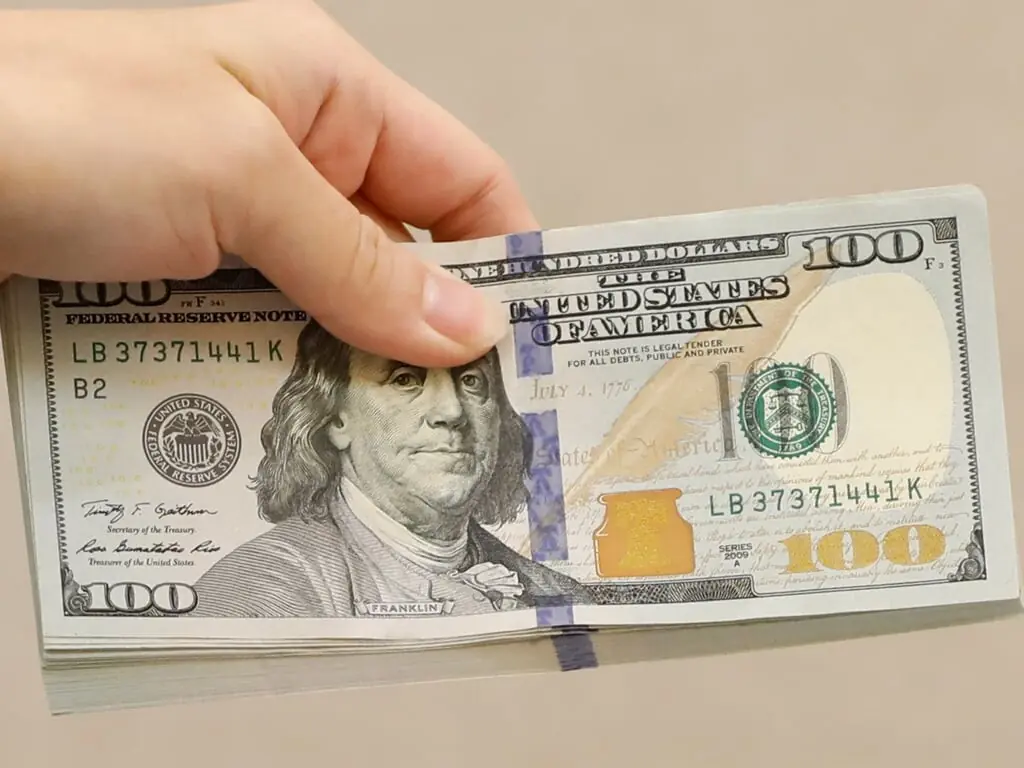

NEW YORK: The US dollar slipped on Wednesday, pulling back from the multi-month highs it touched in the previous session, as investors unwound safe-haven positions on rising hopes that the Middle East conflict may prove shorter-lived than initially feared.
Improved sentiment was underpinned by a New York Times report on Wednesday that Iran’s Ministry of Intelligence had signalled to the US Central Intelligence Agency a willingness to explore talks to end the war, citing officials briefed on the matter.
The report lifted risk appetite and weighed on the dollar.
“Investors are seeing light at the end of the tunnel for the conflict in the Middle East and are unwinding short positions on the currencies most exposed to a sustained commodity-price shock,” said Karl Schamotta, chief market strategist, at Corpay in Toronto.
“Reports of back-channel communications between US and Iranian intelligence organizations are pairing with President Trump’s apparent backpedaling on earlier demands for regime change to reduce the likelihood of a wider regional conflagration.”
In mid-morning trading, the euro edged up 0.1 percent at USD1.1623, having hit its weakest level since late November on Tuesday. That followed data released on Tuesday that showed euro zone inflation accelerated more quickly than expected in February, before the start of the Iran conflict.
The dollar index, which tracks the US currency’s performance against six others, dipped 0.1 percent to 98.93, having earlier reached its strongest level since November 28. Against the yen, the dollar fell 0.3 percent to 157.25 yen. On Tuesday, the greenback had ascended to its highest since January 23, when the New York Federal Reserve reportedly conducted rate ?checks on the dollar/yen pair.
With the Iran war, US economic data on Wednesday took a back seat.
The dollar showed little reaction to data showing US private payrolls increased by the most in seven months in February, though data for the prior month was revised sharply lower.
Private employment rose by 63,000 jobs last month, the largest gain since July 2025, after a downwardly revised 11,000 increase in January.
A report showing US services sector activity surging to more than a 3-1/2-year high in February also had marginal impact on the currency market.
The Institute for Supply Management said its nonmanufacturing purchasing managers index increased to 56.1 last month, the highest reading since July 2022, from 53.8 in January. Economists polled by Reuters had forecast the services PMI easing to 53.5.
The options market shows traders are at their most bearish towards the euro in at least a year, having flipped from an overwhelmingly bullish position just six weeks ago.
Elsewhere, the pound was slightly higher on the day USD1.3363. On Tuesday, it touched its weakest level since December.
Sterling has been hit hard by the prospect of a protracted rise in energy prices given that British inflation, at 3 percent, is still well above the Bank of England’s 2 percent target.
Bitcoin also recovered, along with other risk-sensitive currencies, hitting a one-month peak. It was last up 6 percent at USD72,182.























Comments
Comments are closed for this article.