


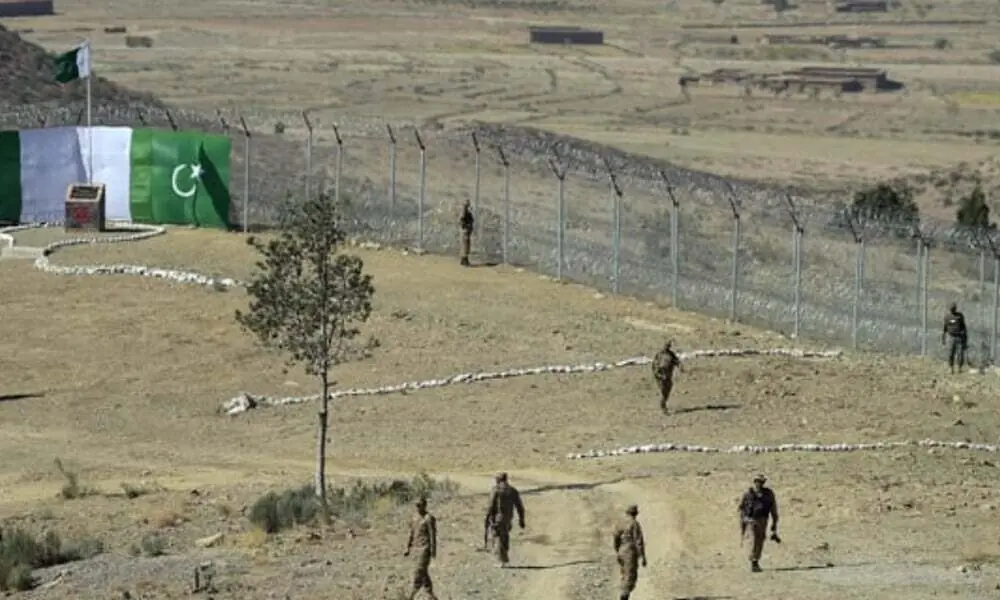
EDITORIAL: By now Kabul should understand that Pakistan’s threshold has shifted. The argument is no longer about past strikes or competing casualty claims; it is about what will and will not be tolerated going forward.
Islamabad’s position has been repeated often enough to qualify as doctrine: Afghan territory cannot be allowed to function as a sanctuary for groups that attack Pakistan. If that condition is not met, responses will follow.
The mistake in much of the current commentary is its backward gaze. It recounts October clashes, weekend exchanges, mediation attempts and retaliatory operations. Those episodes matter only to the extent that they reveal a pattern. The pattern is simple.
Dialogue without verifiable enforcement has failed. Assurances without dismantlement have failed. Temporary ceasefires without structural correction have failed.
Looking ahead, the calculus becomes clearer. Pakistan has signalled that cross-border militancy will carry direct costs. This reflects a recalibrated security doctrine in which deterrence is reasserted through visible action.
Islamabad has concluded, finally, that absorbing repeated attacks while awaiting goodwill from Kabul is strategically unsustainable. The domestic cost of inaction now exceeds the diplomatic cost of response.
The Afghan leadership faces an uncomfortable reality. Sovereignty entails responsibility. When armed groups operate from one’s territory against a neighbour that neighbour will eventually act.
Kabul may dispute the scale, timing or necessity of Pakistan’s strikes. What it cannot plausibly deny is that militant networks hostile to Pakistan have continued to function from Afghan soil since the Taliban’s return to power in 2021. That continuity erodes any claim that the matter is exaggerated or episodic.
What changes now is the margin for ambiguity. Pakistan is unlikely to accept another cycle in which attacks are followed by talks, talks by fresh attacks and renewed appeals for restraint.
The demand for written undertakings and verifiable action was not procedural pedantry; it was an attempt to anchor accountability. Without monitoring mechanisms and demonstrable dismantling of camps, engagement could become theatre.
There are strategic consequences for Kabul if this impasse persists. Border closures disrupt trade and strain already fragile Afghan economic conditions. Sustained confrontation hardens regional alignments.
International actors urging restraint will eventually expect concrete measures from both sides, and the burden of proof regarding sanctuaries will increasingly fall on the host state. Continued denial without demonstrable counterterrorism action narrows diplomatic space.
For Pakistan, the forward posture must combine firmness with discipline. Military responses can degrade networks and restore deterrence. They cannot substitute for a durable framework. Islamabad’s long-term interest lies in a stable western frontier, not a perpetual theatre of limited escalation. That stability requires clarity from Kabul: either act decisively against groups targeting Pakistan or accept that cross-border responses will remain part of the equation.
The region has entered a phase where patience is measured differently. Escalation is undesirable. Yet passivity in the face of sustained violence is equally untenable.
Pakistan has indicated that it will defend its territorial integrity and citizens without hesitation. The seriousness of that commitment should no longer be in doubt.
The choice before Kabul is therefore strategic rather than rhetorical. It can convert dialogue into enforceable cooperation, backed by verifiable dismantling of hostile networks. Or it can continue a posture that invites calibrated but persistent retaliation. The first path restores predictability. The second prolongs volatility.
Something like the recent cycle cannot be normalised. Not for Pakistan, and not for regional stability. The next phase will be defined less by what has already happened and more by whether Afghanistan moves from assurances to action.
Copyright Business Recorder, 2026















Comments