


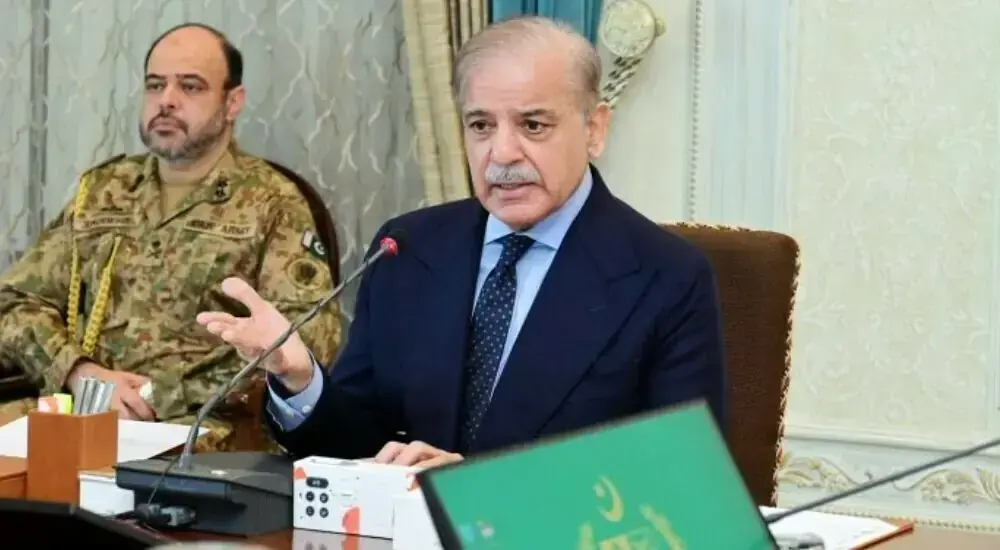

ISLAMABAD: Prime Minister Shehbaz Sharif on Monday constituted an 18-member high-level committee to assess the impact of rising international oil prices on the country’s economy, following the recent US-Israel attack on neighbouring Iran.
A notification issued by the Prime Minister’s Office confirmed that the committee was formed in response to the upward trend in global oil prices, driven by the unfolding regional crisis.
The committee will focus on monitoring price fluctuations and formulating a strategy to mitigate the potential economic fallout for Pakistan.
READ MORE: Pakistan ready to play ‘constructive role for peace’ in Middle East, says PM Shehbaz
According to the notification, Federal Minister for Finance and Revenue, Muhammad Aurangzeb, has been appointed as the convener of the newly-formed committee.
The committee’s members include the Minister for Petroleum, the Minister for Power, the Minister of State for Finance, the Governor of the State Bank of Pakistan, as well as the secretaries of Petroleum, Power, and Finance.
Other members include the Chairman of the Federal Board of Revenue (FBR), the Special Secretary to the Prime Minister, the Chairman of the Oil and Gas Regulatory Authority (OGRA), the Managing Director of Pakistan Refinery Ltd, the Head of the Supply Chain at Pakistan State Oil, the Head of Pakistan LNG Limited, the Managing Directors of SNGPL and SSGC-LPG, along with representatives from the Inter-Services Intelligence and the Intelligence Bureau.
The committee will closely monitor forward and futures prices of petroleum products and evaluate the stability of the supply chain in light of the ongoing regional conflict.
It will also assess the foreign-exchange implications of oil price volatility in both the short and medium term, while recommending measures to ensure uninterrupted petroleum supply and maintain adequate market reserves.
Furthermore, the committee has been tasked with conducting a thorough analysis of the fiscal impact in the event of an extended conflict and evaluating the broader economic consequences for Pakistan.
The committee is expected to meet daily and report to the prime minister, with the flexibility to co-opt additional members if necessary to fulfil its mandate. The Petroleum Division will be responsible for notifying the committee and providing secretarial support.
Oil prices surged, and stock markets in Asia plummeted on Monday after the US-Israeli strikes on Iran sent investors into a panic over the prospects of a prolonged conflict in the crude-rich Middle East.
Brent crude briefly spiked by almost 14%, while West Texas Intermediate surged nearly 12% at the opening of trading following the attack, which resulted in the martyrdom of Iran’s Supreme Leader, Ayatollah Ali Khamenei, and other senior officials.
The strikes have also led to the closure of the vital Strait of Hormuz – through which approximately 20% of global seaborne oil is transported – and the targeting of several ships, exacerbating concerns over oil supply disruptions.
Copyright Business Recorder, 2026




















Comments
Comments are closed for this article.