


Weekly Cotton Review: Prices show upward trend on better trading volumes
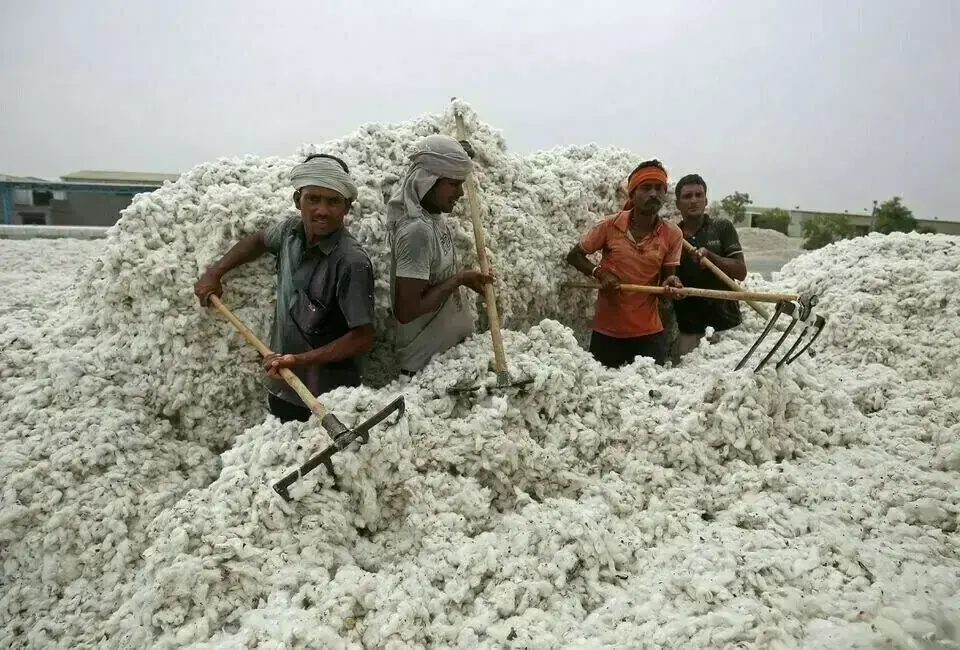

KARACHI: An overall upward trend in the prices of quality cotton has been observed in the domestic cotton market, while trading volumes have also remained relatively better.
However, according to market sources, the availability of quality cotton is declining rapidly, which is likely to put pressure on prices in the coming days. On the international front, cotton prices in New York have also recorded an increase, the effects of which are being felt in the local market, as well.
Separately, on a concerning note for the textile sector, the Federal Board of Revenue has decided to take strict action against textile spinning units for refusing to install video analytics, adding yet another burden on an industry that is already reeling under the weight of a super tax.
Economic expert Syed Mudabbir Shah expressed serious concern over the situation, stating that the FBR, having already crippled the textile spinning sector, is now delivering the final blow to bury it altogether.
In the agricultural sector, the Punjab Department of Agriculture has announced the allocation of 700,000 acres of land for the cultivation of early-season cotton. However, it is worth noting that Pakistan is no longer self-sufficient in cotton production and, due to persistent production challenges, the country has become heavily dependent on imports, which is placing an additional burden on the national economy.
Furthermore, the dispute over the Cotton Exchange Building remains unresolved and the matter has been referred to the honourable court.
As per details, stability in cotton prices has been observed across the domestic cotton market, driven largely by the keen interest of textile mills in procuring quality cotton. As the availability of quality cotton continues to diminish with each passing day, large textile mill groups are moving swiftly to secure whatever quality cotton remains in the market. On the other hand, several ginners who still hold stocks of quality cotton are demanding higher prices, while two major traders are also actively selling cotton in the market. Overall, trading volumes are showing improvement compared to previous days, although business activity is gradually slowing down due to the holy month of Ramadan.
In the agricultural sector, Punjab has drawn up a program to cultivate early-season cotton on 700,000 acres this year. In the fertile regions of Sindh, early sowing takes place as it traditionally does every season. Cotton is planted after the wheat crop has been harvested, and in areas where wheat was not cultivated, early cotton is also being sown to make productive use of the available land.
The country’s textile sector continues to remain in a state of distress, and the All Pakistan Textile Mills Association (APTMA) periodically conveys its grievances to the government; however, these complaints receive no attention, leaving the conditions of textile mills unchanged. All industries have strongly opposed the Super Tax imposed by the government and have appealed for its immediate withdrawal.
On the other hand, the Karachi Cotton Exchange building has been sealed by ETBP with the assistance of the FIA since December 12. A case has been filed in the honourable court, the hearing of which is scheduled for March 4. Due to the sealing of the Cotton Exchange building, the daily cotton spot rate has not been issued since December 12, which has created a sense of uncertainty in the market.
In the provinces of Sindh and Punjab, quality cotton prices are ranging between Rs. 15,300 and Rs. 16,800 per maund, depending on quality and payment conditions.
Naseem Usman, Chairman of the Karachi Cotton Brokers Forum, stated that an overall bullish trend remained dominant in international cotton futures prices. New York cotton futures were trading between 64 and 69 US cents per pound. According to the USDA’s weekly export and sales report, a total of 466,300 bales were sold for the year 2025-26, with Vietnam topping the list by purchasing 144,800 bales, Bangladesh coming in second with 126,400 bales, and Pakistan securing third position with 50,000 bales.
For the year 2026-27, a total of 33,100 bales were sold, with Bangladesh leading the list by purchasing 15,000 bales, Guatemala securing second place with 13,200 bales, and Nicaragua coming in third with 2,600 bales. During the same period, total exports amounted to 172,600 bales, with Vietnam topping the list by importing 51,500 bales, Turkey coming in second with 36,700 bales, and Pakistan securing third position with 20,000 bales.
The Federal Board of Revenue (FBR) has decided to take strict action against textile spinning units that refuse to install video analytics (Digital Eye) systems in their facilities. These measures include import restrictions, sealing of business premises, penalties, suspension of sales tax registration, blacklisting, and other steps.
Sources told Business Recorder that the FBR has decided to take comprehensive measures to enforce video monitoring systems or video analytics in spinning units. All field formations of the FBR have been directed to take strict action against non-compliant spinning units, and these measures will be enforced in the event of non-cooperation by such units.
=Out of a total of 421 registered spinning units, approximately 300 are currently operational, where Digital Eye systems will be fully installed to monitor the movement of undocumented cotton bales. Units that resist compliance will face import bans, fines, sealing of business premises, suspension of sales tax registration, blacklisting, and obstruction in clearance from production sites.
According to details, the FBR had earlier decided to electronically monitor the production of registered units through video analytics from November 1, but the deadline passed without implementation. The deadline was subsequently extended to December 31, 2025, which has also now lapsed.
The total cotton consumption of textile units stands at approximately 13 million bales, of which 5 to 6 million bales come from domestic production and the rest are imported. Around 9 million bales fall within the tax net, while the remainder are consumed locally without payment of sales tax, commonly referred to in local parlance as “gol maal.” The FBR’s objective is to capture this unreported gol maal.
Pakistan’s Federal Board of Revenue (FBR) has declared that it will install digital video analytics systems in all textile spinning units across the country at any cost, setting the stage for a major confrontation with one of the nation’s most critical industrial sectors.
The FBR considers the spinning stage a key chokepoint in the textile supply chain for monitoring the movement of undocumented cotton bales. Officials confirmed that the All Pakistan Textile Mills Association (APTMA) has resisted the implementation of video analytics systems at the spinning level. The FBR had earlier assured textile spinning units of tax credits to cover the installation costs of the surveillance systems, and a joint FBR-APTMA committee had been formed to oversee the rollout. When affected units approached the Lahore High Court seeking relief, the court declined to grant a stay order against the installation. The FBR has now warned that it will proceed with the deployment regardless and will take stringent action against any unit that refuses to comply.
The development comes against the backdrop of a deepening crisis in Pakistan’s cotton sector. A new report released by EMPAK Strategies warns that Pakistan has lost the self-sufficiency in cotton it maintained for decades and is now rapidly becoming dependent on expensive imports, placing mounting pressure on foreign exchange reserves and raising serious concerns about the future of the country’s largest export industry.
According to the report, while Pakistan’s cotton sector showed some signs of recovery during the 2024–25 season, deep structural problems and climate-related pressures continue to pose severe threats to long-term stability. Although cultivated area has increased compared to recent years, it remains significantly below levels recorded a decade ago, reflecting an incomplete recovery following the sector’s prolonged decline. Cotton production this season is estimated at approximately five million bales, representing a modest rebound from the severe losses of previous years. Output had fallen from around seven million bales in 2015–16 to approximately 3.9 million bales in 2022–23, driven by environmental shocks, policy gaps, and shifting cropping patterns. Researchers describe the current recovery as fragile and insufficient to restore Pakistan’s former status as a largely self-sufficient producer. The country is now heavily reliant on imports to meet domestic demand, spending an estimated two to three billion dollars annually on cotton imports.
Cotton analyst Syed Mudabbir Shah has described the FBR’s surveillance drive as “the final blow to bury the spinning sector after already killing it.” He pointed out that Pakistan’s spinning mills already face the most expensive electricity in the region, high borrowing costs, and elevated interest rates. He further noted that among the four major textile nations in the region — China, Vietnam, Bangladesh, and India — no tax authority has installed surveillance cameras inside spinning mills, raising questions about why Pakistan is pursuing a measure that has no regional precedent.
Industry insiders have raised additional concerns beyond the competitive disadvantage. Reports indicate that spinning mills are being asked to pay installation fees of four to five million rupees per unit for the camera systems, even as the FBR has withheld tax refunds owed to the same mills. A spinning mill owner from Karachi warned that just as NADRA data is reportedly available in the market for a few hundred rupees, video footage from inside spinning mills could similarly end up being traded, exposing sensitive commercial information.
Spinning mills guard their production volumes, machinery configurations, and operational methods as closely held business secrets in a fiercely competitive environment. Two mills running identical machinery may produce vastly different output owing to proprietary techniques, and no mill owner is willing to have those methods exposed to competitors or the wider market.
The industry is also grappling with severe closures. A large number of spinning mills have shut down across Pakistan over the past year, with an estimated 30 to 40 mills in Punjab alone on the verge of closure. Industry representatives stress that a single mill operating 20,000 spindles provides direct and indirect employment to more than 3,000 people, making the sector’s collapse a serious threat to livelihoods across the country. Critics argue that 34 government departments have already collectively undermined the spinning industry and question what guarantee exists that FBR officials, once granted camera access to mill premises, will not use that leverage for blackmail.
Copyright Business Recorder, 2026




















Comments
Comments are closed for this article.