


Key amendments to ‘The Qanun-e-Shahadat (Amendment) Bill, 2025’ approved
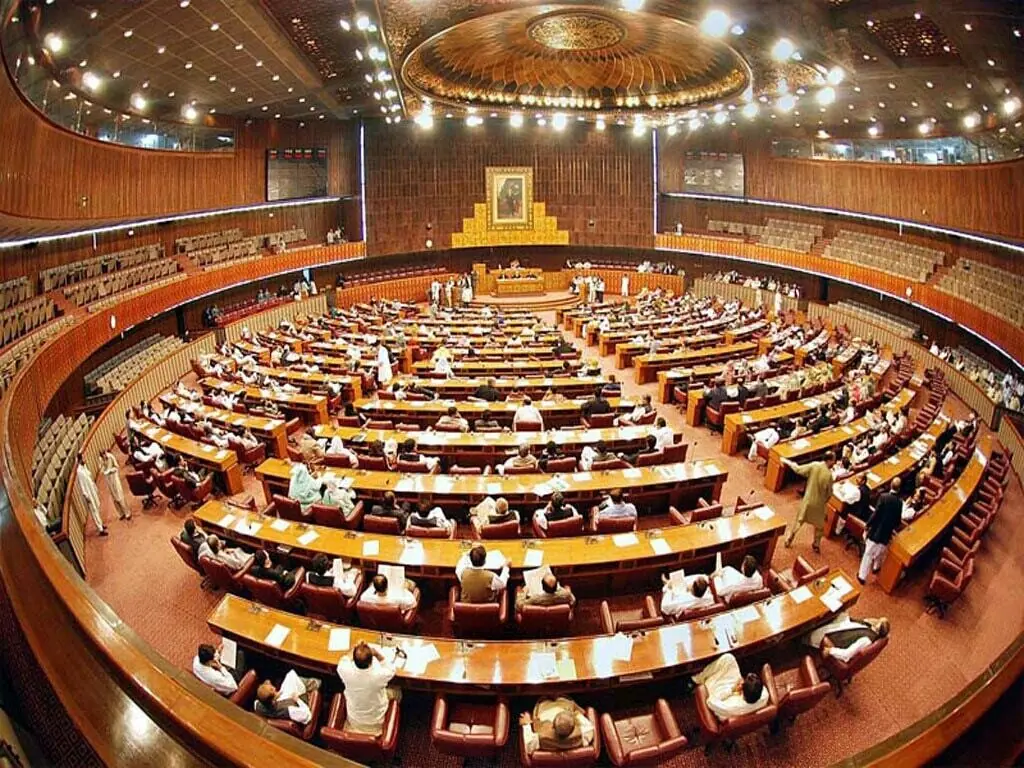

ISLAMABAD: The National Assembly Standing Committee on Law and Justice on Tuesday approved key amendments to “The Qanun-e-Shahadat (Amendment) Bill, 2025, while deferring contentious proposals on alternative dispute resolution (ADR) and constitutional changes to Article 25 amid sharp exchanges over judicial powers, transparency, and equality provisions.
The meeting, chaired by Chaudhry Mahmood Bashir Virk, took up agenda including government and private members’ bills, as well as a review of the Public Sector Development Programme (PSDP).
The committee unanimously recommended passage of Shazia Marri’s “Qanun-e-Shahadat (Amendment) Bill, 2025” after what members described as exhaustive deliberations and consultations with the Ministry of Law.
The revised draft — aligned with the mover’s objectives — introduces amendments to Articles 59, 61, and 84 of the Qanun-e-Shahadat Order. A key point of debate was the definition and scope of “expert” testimony, particularly regarding forensic and handwriting experts.
Some members questioned whether making handwriting experts mandatory in certain cases would create procedural complications. Ministry officials argued that courts already retain the discretion to seek forensic opinions when required and cautioned that sweeping changes to Article 59 could disrupt long-standing evidentiary principles.
Marri, however, maintained that historical practice alone could not justify retaining outdated standards. After a detailed clause-by-clause review, the committee endorsed the amended bill and appreciated the mover’s “constructive engagement.”
The committee deferred further consideration of the “Alternative Dispute Resolution (Amendment) Bill, 2026,” directing the Ministry to submit a comprehensive explanatory note addressing concerns raised by members.
Lawmakers voiced reservations about the extent of discretion proposed for judges in referring cases to ADR mechanisms and questioned safeguards to ensure transparency. Some members argued that Parliament’s authority must not be diluted.
The Ministry responded that the amendments represented a constitutionally permissible delegation of legislative power within defined limits and did not amount to abdication of parliamentary authority. It emphasized that ADR frameworks are increasingly recognized globally as tools to reduce case backlogs and encourage amicable settlements. Despite the defence, the committee postponed the matter to its next sitting for further clarity.
The proposed constitutional amendment to Article 25 — moved by Nafeesa Shah — was once again deferred after it emerged that provincial governments had not responded to repeated communications from the Ministry of Law.
Article 25 guarantees equality before the law and permits the state to make special provisions for the protection of women and children. During the debate, some members argued that the Constitution was already clear and cautioned against amendments that could create unintended implications.
The committee directed that fresh notices be issued to provinces and that input be formally sought from the Ministry of Human Rights before the bill is reconsidered. Representatives of the ministry will be invited to the next meeting.
In a separate briefing on PSDP allocations, officials acknowledged that limited and staggered funding was affecting the timely completion of development schemes, including projects linked to judicial infrastructure and legal facilitation services near the Islamabad High Court.
Members expressed concern that projects often receive partial releases despite approved PC-1s, forcing departments to split schemes into phases and slowing progress. Ministry representatives said priority was being given to projects already approved by ECNEC and CDWP, and that new inclusions in the current fiscal year had been kept to a minimum due to fiscal constraints.
Officials stressed that fund distribution follows a prescribed procedure and that delays are frequently compounded by end-of-year approval cycles and cash flow limitations.
Consideration of the Code of Civil Procedure (Amendment) Bill, 2024 (Section 54-A), and the Legal Practitioners and Bar Councils (Amendment) Bill was deferred due to the absence of the respective movers.
The committee also formally approved the PSDP and recorded appreciation for what it termed strategic institutional reforms undertaken by the Ministry of Law and Justice. Members were informed that Pakistan recently secured the Commonwealth “Access to Justice Innovation Award 2026” in recognition of the ministry’s digital justice initiatives.
Copyright Business Recorder, 2026

























Comments
Comments are closed for this article.