


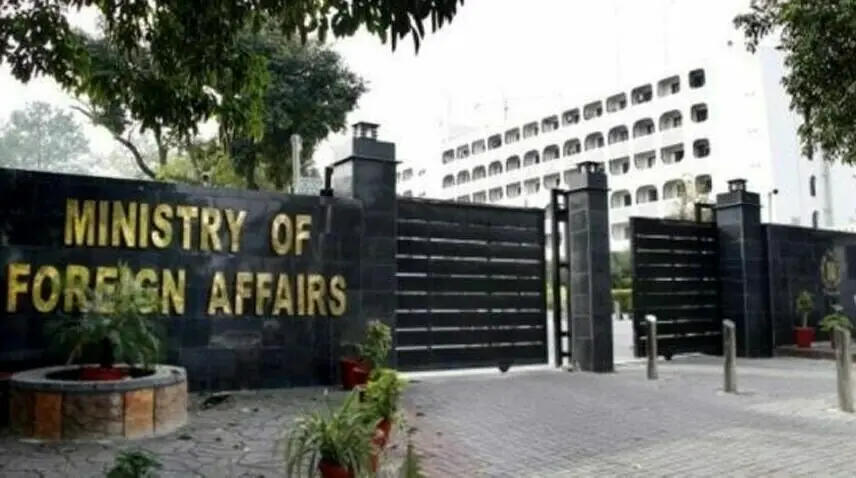

Pakistan’s recent foreign policy trajectory reflects a deliberate attempt to restore diplomatic relevance in a rapidly shifting global order, yet economic results remain limited. Relations with the United States have visibly improved, marked by renewed engagement and positive political signalling from Washington.
Public references by US President Donald Trump and ongoing bilateral consultations have given Islamabad diplomatic space and an apparent edge in political visibility over India at certain junctures. Alongside this, Pakistan has preserved close strategic ties with China and Saudi Arabia, while simultaneously expanding relations with Türkiye, Azerbaijan, Bangladesh, and Belarus. Collectively, these engagements have enhanced Pakistan’s global stature and reduced the risk of diplomatic isolation, but the impact on economic growth and trade remains muted.
Pakistan’s ties with the United States, China, and Saudi Arabia have primarily strengthened its strategic relevance rather than its economic fundamentals. Engagement with Washington has focused on regional stability, counterterrorism, and geopolitical alignment rather than trade or market access. China remains Pakistan’s largest strategic investor under the China-Pakistan Economic Corridor (CPEC), which accounts for approximately $60 billion in pledged investments, though annual disbursements have slowed to around $2–3 billion per year. Saudi Arabia continues to provide financial relief through deposits, deferred oil facilities, and remittances exceeding $8.5 billion annually, supporting Pakistan’s balance of payments but not generating structural economic growth. Consequently, Pakistan’s total exports remain in the range of $30–32 billion, foreign direct investment continues to lag below $2 billion annually, and GDP growth has remained modest at around 3–4% per year over the past two years. The trade deficit continues to hover near $24 billion, reflecting persistent reliance on imported energy, machinery, and intermediate goods.
Beyond these traditional partners, Pakistan has expanded its diplomatic and economic outreach. Relations with Türkiye have been strengthened through 24 bilateral agreements signed in 2025 covering trade, defence, technology, and finance, with an ambitious bilateral trade target of $5 billion over the next few years, up from current levels of $850 million. Engagement with Azerbaijan has emphasised energy cooperation, regional connectivity, and political support, though bilateral trade remains small at approximately $28 million annually, with Pakistan’s exports accounting for $20 million. Trade with Bangladesh has resumed
after more than five decades, beginning with a government-to-government rice export of 50,000 tonnes and formal agreements to expand trade in textiles, cotton, and industrial goods. Bilateral exports to Bangladesh in 2024 are estimated at $778 million, representing a modest but strategic step toward South Asian market diversification. Belarus has emerged as a new partner for manufacturing, agriculture, and labour mobility, with initial trade volumes in the tens of millions of dollars and plans to train and deploy 150,000 skilled Pakistani workers, which could modestly increase remittance inflows and technical collaboration.
Despite these engagements, regional and global dynamics increasingly privilege economic depth over diplomatic visibility. India’s EU and UK trade agreements are expanding market access for Indian goods, particularly in textiles, pharmaceuticals, and IT services, and are projected to boost bilateral trade with the EU by €20–25 billion annually once implemented. This directly challenges Pakistan’s preferential access under the GSP+ scheme, where textiles constitute approximately 60% of merchandise exports, or about $16.5 billion annually. Gulf States, including the UAE and Saudi Arabia, are reorienting partnerships toward investment, technology, and logistics, with India emerging as their primary South Asian economic partner. For example, the UAE accounted for over $10.9 billion in bilateral trade with Pakistan in 2024, yet investment projects such as the Islamabad airport concession were withdrawn in favour of closer engagement with India, signalling that political goodwill alone no longer attracts capital. Russia’s coordination with Gulf producers under OPEC+ and its expanding Asian energy diplomacy further marginalises Pakistan, which lacks leverage in commodity, supply chain, and investment networks.
The contrast between Pakistan’s strategic-first approach and the region’s economic-first model is increasingly stark. Pakistan’s diplomacy prioritises recognition, strategic relevance, and alliance building, hoping economic benefits will follow, whereas regional actors align diplomacy with trade, investment, and production, generating tangible economic returns. The result is that Pakistan gains political visibility and access, while other regional players gain exports, investment, jobs, and fiscal stability. This divergence explains why Pakistan’s global standing has improved rhetorically, while export growth, FDI inflows, and GDP acceleration remain limited.
The central challenge is therefore converting diplomatic capital into economic outcomes. Pakistan’s expanded engagements with the United States, China, Saudi Arabia, Türkiye, Azerbaijan, Bangladesh, and Belarus have enhanced its global stature but have yet to deliver proportional economic dividends. In a world where influence increasingly follows markets rather than strategic alignment, diplomacy alone is insufficient. To convert visibility into sustainable growth, Pakistan must align foreign policy with a coherent geo-economic strategy, focused on export diversification, investment facilitation, regional trade integration, and productivity-led industrial growth. Without such a recalibration, Pakistan risks remaining politically present but economically peripheral, visible on the global stage but absent from the engines of regional prosperity.
Copyright Business Recorder, 2026




















Comments
Comments are closed for this article.