


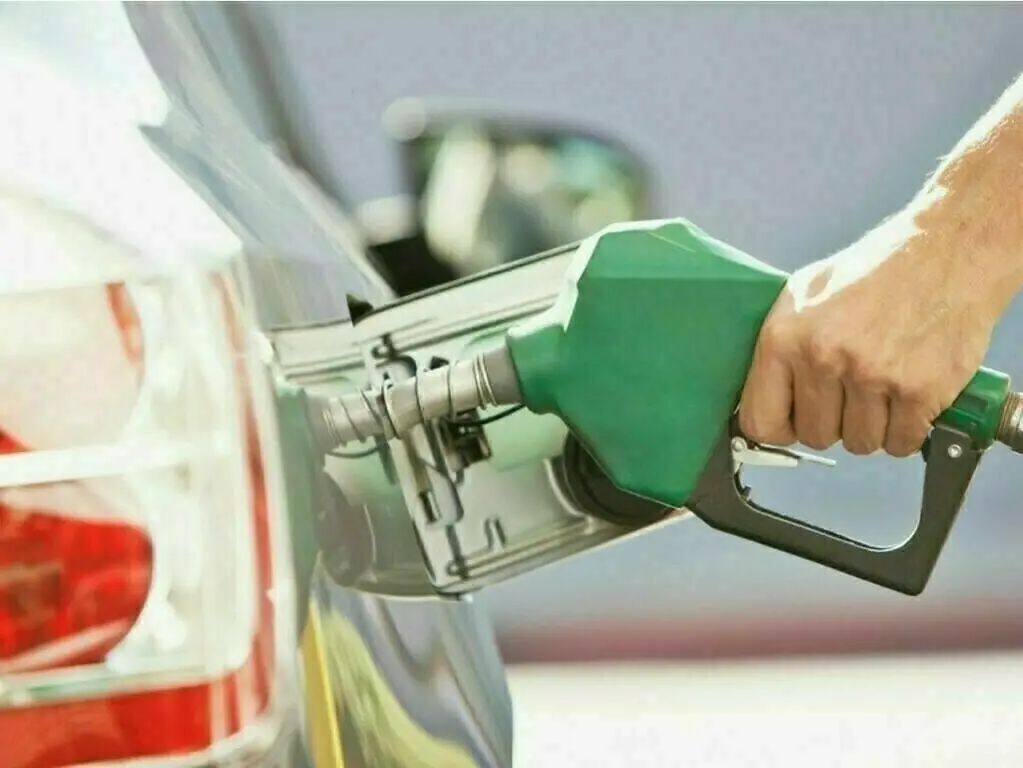
EDITORIAL: Petrol price has been raised by 5 rupees per litre and high speed diesel’s by 7.32 rupees per litre for the next 15 days.
A rise in petrol price raises the cost of transport of both goods and passengers across the board. Given that the holy month of Ramazan is just round the corner, a month which witnesses a massive uptick in the prices of essentials, one would be compelled to assume that the recent rise in prices of petrol and products would be a significant burden on the general public.
The jury is out as to whether the 37 billion rupee Ramazan package announced by the Prime Minister would ease the capacity of the poor to effectively withstand the rise in the prices of POL products, given that it: (i) would be inflationary as it constitutes an uptick in money supply not backed by a rise in output, and (ii) it is unbudgeted, that would require International Monetary Fund’s (IMF’s) approval, as per conditions of the ongoing USD 7 billion Extended Fund Facility programme loan, which stipulate that the government will not extend any unbudgeted subsidies.
The government as usual has attributed the rise in the prices of POL products to the international prices of oil, which remains hostage to geopolitical considerations, given the ongoing conflicts in the Middle East, and the Russian-Ukraine war. What is not highlighted by the government is its rising annual reliance on petroleum levy as a source of revenue, regarded as a low-hanging fruit, which is in effect a sales tax — an indirect tax whose incidence on the poor is greater than on the rich.
Additionally, by crediting the levy under other taxes it is not part of the divisible pool taxes that have to be shared with the provinces as per the National Finance Commission award formula which, disturbingly, all past federal administrations — civilian and military — have supported at the cost of a widening trust deficit with provinces, especially those that are under the administration of opposition parties.
Last fiscal year the government collected 1,161 billion rupees as petroleum levy (revised downward from the 1,281 billion rupees budgeted for the year) while in the current year the government has budgeted 1,468.395 billion rupees. To put this in perspective the petroleum levy collection for the current year amounts to nearly 29 percent of budgeted other taxes and almost equal to total budgeted customs duties for the current year projected at 15,988 billion rupees. The rest of the envisaged revenue from other taxes is State Bank of Pakistan’s profits budgeted at 2,400 billion rupees in the current year against 2,619.603 billion rupees in the revised estimates of last year – profits that have risen as the government has refrained from borrowing from the apex bank as per the IMF condition.
The question that arises is whether the rise in the prices of POL products will further shrink the private sector incomes that have remained not only static across the board for some years but due to high input costs there have been a significant number of factory shutdowns (including several multinationals in recent months) that has increased unemployment levels. The government’s data indicates a rise in unemployment from 6 to 8 percent though independent economists have calculated a rate as high as 22 percent based on the Housing and Census data released by the Pakistan Bureau of Statistics.
To conclude, the government must focus on tax reforms that seek to raise direct taxes based on the ability to pay principle and not through raising or widening withholding taxes that are levied in the sales tax mode. To effectively implement these reforms would require the government to slash its current expenditure, which has been allowed to rise each year (and not by projecting a reduction in the discount rate to reduce the mark-up) but through slashing procurement and seeking voluntary sacrifice by the elite (particularly those paid at the taxpayers’ expense) for a period of two years to gain leverage with the IMF to implement pro-growth and pro-poor policies.
Copyright Business Recorder, 2026





















Comments
Comments are closed for this article.