


Iranian director Mohammadi confronts Evin Prison’s horrors with Berlinale entry ‘Roya’
- 'If I wanted to make my personal story, it couldn’t be showable,' Mahnaz Mohammadi said
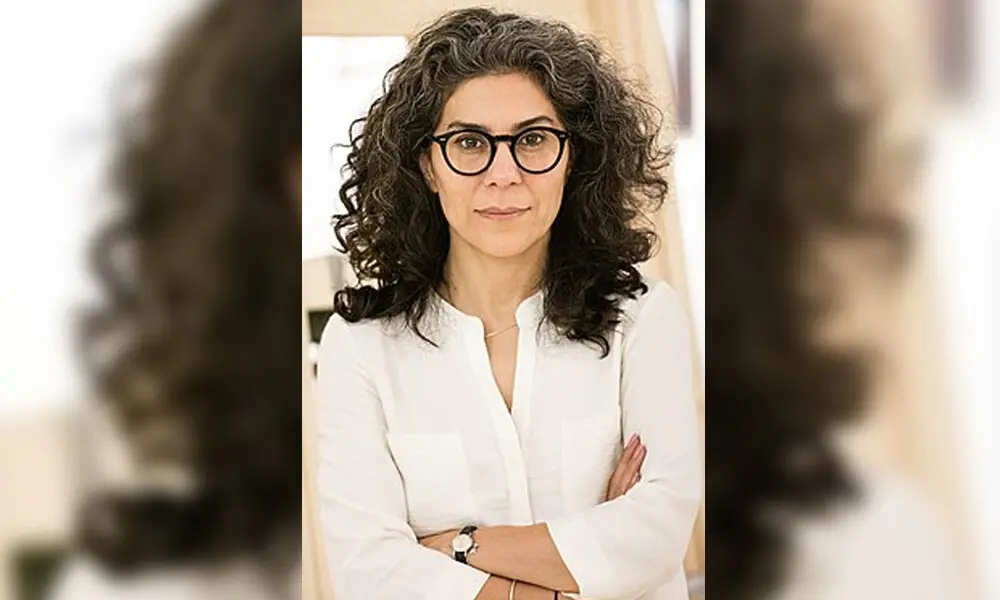

BERLIN: Iranian documentary filmmaker and women’s rights activist Mahnaz Mohammadi said she had to turn to fiction to be able to confront and share her own experiences of torture in Tehran’s notorious Evin prison.
Her film “Roya”, which will be premiered at the Berlin Film Festival on Wednesday, tells the story of a fictional teacher detained in Evin, but it is also a deeply personal film for Mohammadi, who has been arrested multiple times in Iran on charges of endangering national security and propaganda.
“If I wanted to make my personal story, it couldn’t be showable. I censored a lot (for the film) to be a little bit bearable to watch,” she told Reuters in an interview.
“I couldn’t go to a totally classic narration. I have to find a language for this film to tell the story because I wanted to give the audience this chance to experience it,” she said, speaking English.
Mohammadi has not been permitted to make films in Iran since her first fiction feature “Son-Mother” in 2019 and she shot “Roya” underground.
The film opens with a first-person perspective of what it is like to be held there - the flickering lights, the screams of other prisoners, the interrogators’ tactics, the cramped cell - before shifting to the eponymous woman, played by Melisa Sozen.
As if in a dream, Roya drifts through her past and present experiences, which have taken on a distorted, unsettling quality as they flash back to her out of place and time.
Movies can change the world, but not politically, says Berlin Film Festival juror Wim Wenders
Evin, where many political prisoners, intellectuals, dual nationals, and others are held, has long been a symbol of the Islamic Republic’s intolerance of dissent, and human rights organisations have condemned what they say is its systematic use of torture.
‘Painful’
Mohammadi said it was difficult to return to making films after her prison experiences but that she forced herself to do so to give voice to “the silenced”.
“Actually for me to be in front of the camera is one of the most painful things because, when they torture you, you sit in front of the camera,” Mohammadi said.
Mohammadi declined to give details of her own incarceration, partly because “Roya” is not intended as a personal testimony but reflects a broader “shared experience”.
Her film is screening at a time when Iran is again the focus of international attention after clerical authorities there suppressed nationwide protests in the bloodiest crackdown since the 1979 Islamic Revolution.
Mohammadi said the latest campaign of mass arrests and intimidation showed how unliveable conditions in Iran had become.
Despite the uncertainty now gripping her country, Mohammadi said she hoped to return after finishing work on a project.
“My home is Iran, but now … I have no home. I’m kind of a nomad just travelling until finishing my project,” she said.




















Comments
Comments are closed for this article.