


‘Cross-border terrorism persists despite outreach to Taliban govt’
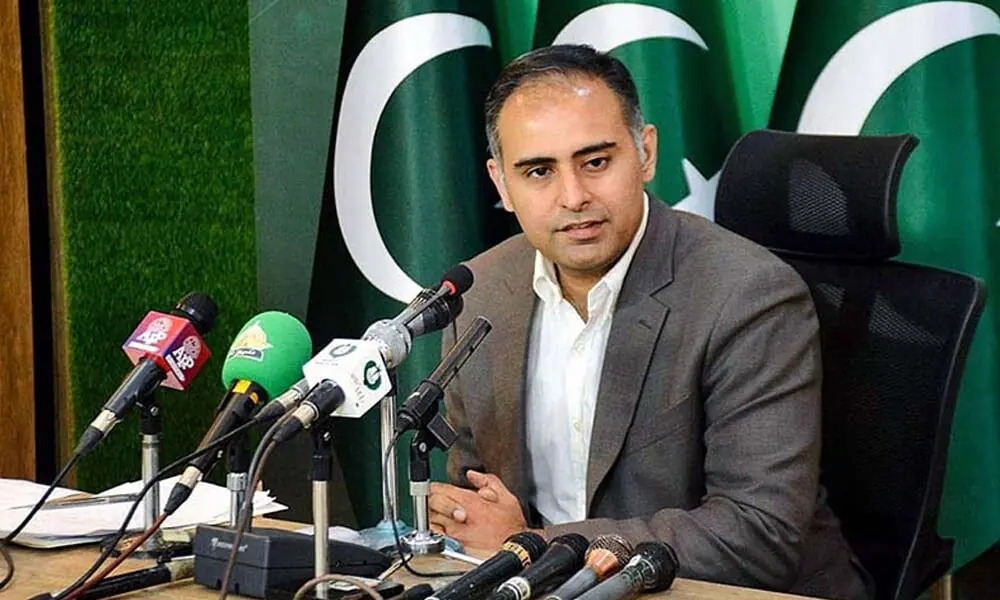

LAHORE: Minister of State for Finance, Bilal Azhar Kayani, has said that despite Pakistan’s repeated diplomatic efforts to engage the Taliban government, cross-border terrorism from Afghanistan has not stopped, posing serious security challenges for Pakistan.
He was addressing the final session of the two-day Asma Jahangir Conference, held under the theme “Democracy and Rule of Law”, on Sunday in Lahore.
Bilal Azhar Kayani stated that Pakistan made every possible effort at the diplomatic level to resolve issues with the Taliban authorities, including sending high-level delegations to Afghanistan over the past year. However, he regretted that Afghanistan failed to take serious and effective measures to curb terrorism.
“The clear and consistent position of Pakistan has been that Afghan soil must not be used for terrorism against Pakistan,” he said, adding that facilitation provided to Tehreek-e-Taliban Pakistan (TTP) and the Balochistan Liberation Army (BLA) from across the border has led to a rise in terrorist incidents in Khyber Pakhtunkhwa and Balochistan, resulting in the martyrdom of Pakistani security personnel.
The minister emphasized that cross-border terrorism is not a diplomatic failure, but rather a result of the lack of seriousness on the part of Afghan authorities. He stressed that every state has the right to take all necessary measures to protect its citizens, and therefore Pakistan is now adopting tougher steps to ensure its security.
Bilal Azhar Kayani reiterated that Pakistan remains open to result-oriented dialogue in the future, but this would only be possible if the Afghan government takes positive and sustainable actions to eliminate terrorism. He also expressed concern that humanitarian aid provided to Afghanistan may be strengthening the Taliban regime instead of reaching the needy.
He disclosed that more than 20 terrorist organizations are currently operating from Afghan territory, posing a threat not only to Pakistan but to the entire world. He added that many terrorists killed in various operations inside Pakistan were Afghan nationals.
Highlighting Pakistan’s long history of hosting Afghan refugees, the minister said that Pakistan kept its doors open for Afghan citizens for four decades, providing support with generosity and compassion. However, he said that under the present circumstances, it is no longer possible to continue this arrangement.
He explained that Afghan nationals are being repatriated in phases, as no country can allow foreign citizens to stay without proper documentation or registration. “Pakistan is still ready to extend humanitarian assistance, but only if the Afghan government takes concrete steps to stop terrorism,” he said, adding that peace remains Pakistan’s top priority and its zero-tolerance policy against terrorism will continue.
Earlier, Bilal Azhar Kayani reiterated that Pakistan has consistently tried to stop cross-border terrorism, but Afghanistan has failed to respond with the required seriousness. He again warned that the presence of multiple militant groups in Afghanistan is a global security concern.
Meanwhile, former Deputy Speaker of the Afghan Parliament, Fawzia Koofi, also addressed the conference and strongly criticized the current political system in Afghanistan. She said that there is no improvement in human rights under the Taliban rule, and that the Taliban’s policies and vision are incapable of running a modern state.
“The Taliban govern through coercion and intimidation,” Koofi said, adding that women in Afghanistan have been deprived of their most basic rights. She emphasized that only democracy in Afghanistan can ensure stability and better relations with Pakistan and the wider world.
Koofi further stated that Pakistan-Afghanistan relations have been linked to conflict for the past five decades. She also raised concerns about the safety of Afghan refugees being repatriated, saying that some of those being sent back are individuals whom even the Taliban want returned, and that their lives could be in serious danger once they are back in Afghanistan.
Meanwhile, leader of the Opposition in National Assembly, and Pashtunkhwa Milli Awami Party (PkMAP) chief Mehmood Khan Achakzai, strongly criticised military interference in politics and called for strengthening Parliament, equitable distribution of resources, and recognition of Pakistan’s diverse ethnic identities.
Speaking as the chief guest at the closing session of a political gathering, Achakzai said that Pakistan’s long-term instability began when certain communities were denied their identities after 1947. “We were living peacefully on our lands, but after 1947 we were told: you are not Baloch, you are not Bengali,” he said, questioning how such exclusion came into being.
He maintained that resistance to this denial of identity marked the beginning of the country’s downward trajectory. Achakzai warned against what he termed the “engineering” of political leadership, stating that leaders cannot be invented through funding or pressure but must emerge organically from the people, regardless of language or ethnicity.
The opposition leader urged security agencies to refrain from political involvement and avoid creating divisions on ethnic or religious grounds. Addressing major political parties, including the PPP and PML-N, he called for a collective commitment to strengthening Parliament and ending reliance on directions from the military establishment. “Promise us one thing — do not take directions from the military and the establishment — and Pakistan will be saved,” he said.
Achakzai also raised concerns over under-representation of Sindhi, Seraiki and Baloch citizens in state institutions, particularly the armed forces, and demanded equal participation in governing the country. “We also want to rule this land — give us our right,” he said.
Calling for economic justice, he proposed that ownership of natural resources should belong first to the people of the regions where those resources are located. He argued that such a step would significantly reduce terrorism. “A poor Baloch does not even have the means for a third set of clothes. We are not asking for charity,” he said, adding that a parliamentary decision on resource rights could offer a lasting solution to unrest.
Referring to former prime minister Imran Khan, Achakzai endorsed the view that the true spirit of freedom promised in 1947 has yet to be realised.
He also recalled the imposition of Pakistan’s first martial law, noting that judges who declared it unconstitutional were sidelined and forgotten. He urged future leaders, including Imran Khan, to recognise and honour those judges, while calling for the removal of portraits of judges who validated military rule under the Provisional Constitutional Order (PCO).
The Asma Jahangir Conference concluded with calls for democracy, human rights, regional peace, and a rule-based international order.
Copyright Business Recorder, 2026

























Comments
Comments are closed for this article.