


Superior courts’ verdicts: SC directs FBR to review all pending cases
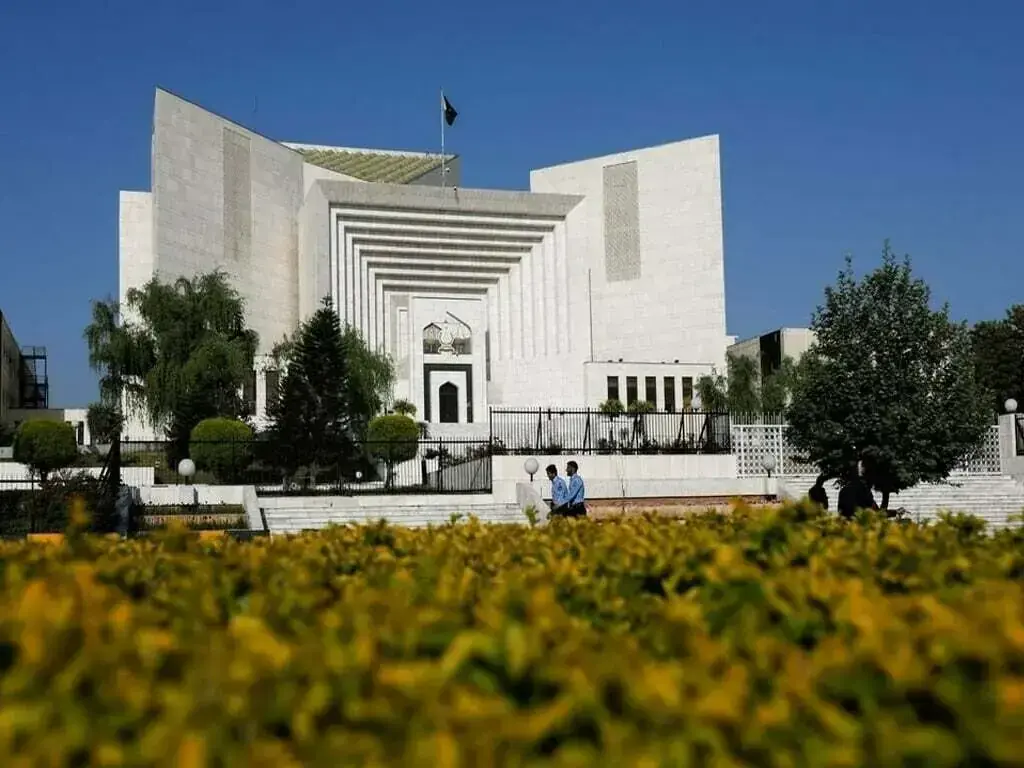

ISLAMABAD: The Supreme Court asked the Federal Board of Revenue (FBR) to review all the pending cases in order to determine whether the questions of law sought to be agitated therein already stand settled by judgments of superior courts.
The judgment, authored by Justice Miangul Hassan, said that time and again the apex court held the requirement of passing an order within a period of 120 days from the issuance of the show cause notice to be mandatory and not directory.
He noted that in the instant matter the show cause notice was issued on 15.11.2023 whereas the Order-in-Original was passed on 20.03.2024 (which is beyond the prescribed period of 120 days), therefore dismissed the Assistant Commissioner Inland Revenue Unit III, Rawalpindi petition.
He wrote that despite the law laid down by the apex court judgments (Super Asia & Messrs WAK Ltd), which are binding on the department in terms of Article 189 of the Constitution, the petitioners (Assistant Commissioner, Rawalpindi and others) attempted to reinvent the wheel by agitating the ground that the time limit of 120 days prescribed in the first proviso to section 11(5) substituted and replaced by section 11G(2) of the 1990 Act for passing an order is directory and not mandatory.
Repeated appeals/petitions on settled law weaken respect for Article 189 of the Constitution, the doctrine of stare decisis, and judicial discipline within the executive branch.
READ MORE: ‘Discrepancies’ in FBR reward schemes: LHC issues notices to tax officials
When the State itself disregards binding precedents, it sends the wrong signals to subordinate courts, tribunals, and litigants. Such appeals/petitions result in unavoidable litigation costs, consumption of public funds for counsel, court fees and administrative processing.
When government departments routinely file appeals/petitions (often up to the High Courts and the Supreme Court) on questions of law that have already been authoritatively settled, the practice results in serious institutional harms. The most immediate consequence is the clogging of court dockets.
Courts are compelled to spend scarce judicial time revisiting issues that are no longer res integra at the cost of undecided legal and constitutional questions, criminal appeals involving personal liberty, and civil disputes pending for years. This undermines the constitutional mandate of speedy justice.
He said that the apex court in various judgments has deprecated the practice and tendency within government departments to file appeals/petitions mechanically, particularly when the outcome is foreseeable in light of settled law.
It is imperative for there to be internal accountability by government departments and careful legal scrutiny before filing appeals/petitions. Had such scrutiny taken place before the filing of the instant petition, it would have been realized that the primary question of law sought to be agitated by the petitioners already stands authoritatively settled by a number of judgments of this Court referred to herein above.
The brief facts of the case are that the respondent (Umer Tariq Khan) challenged the decision of the Commission before the Lahore High Court that the Order-in-Original was barred by time having been issued after a period of 120 days from the date of the issuance of the show cause notice.
The Lahore High Court held that the first proviso to section 36(3) of the Act [and the first proviso to the erstwhile section 11(4) and the current section 11(5) of the Act] is/was mandatory in nature. Aggrieved by the decision the department filed an appeal before the Supreme Court against the LHC verdict.
Copyright Business Recorder, 2026


























Comments
Comments are closed for this article.