


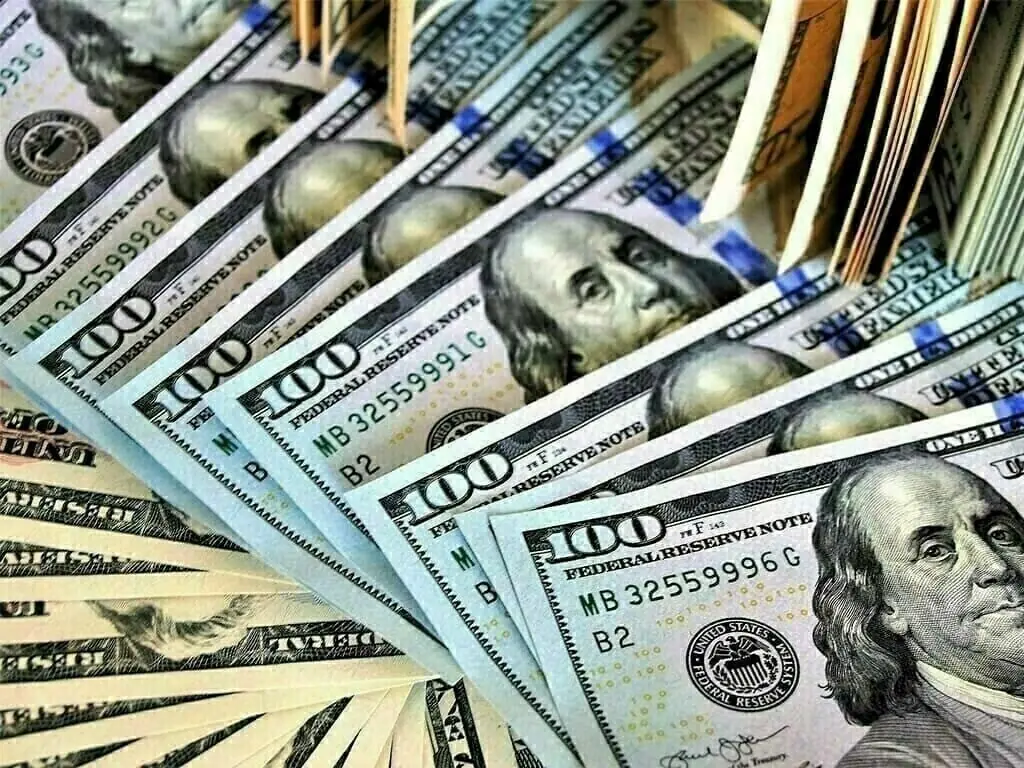

NEW YORK: The dollar rose against a basket of currencies on Wednesday, rebounding from a four-year low touched in the prior session, after Treasury Secretary Scott Bessent reaffirmed the United States’ preference for a strong dollar.
The United States has a strong dollar policy and that means setting the right fundamentals, Bessent said on Wednesday, while denying that the US was intervening in currency markets to support the Japanese yen.
The dollar index, which measures the US currency’s strength against a basket of peers, rose 0.5 percent to 96.391. The index sank as low as 95.86 on Tuesday, its weakest since February 2022, after US President Donald Trump brushed off this month’s slide, emboldening dollar bears. The dollar index is down nearly 2 percent for the year, after falling 9.4 percent last year.
Trump said on Tuesday the value of the dollar was “great”, when asked if he thought it had declined too much. Traders took this as a signal to intensify dollar selling, ahead of a Federal Reserve policy decision later on Wednesday.
“The retracement/rebound in the USD is pretty logical, really, given that Bessent pushed back about as hard as you can imagine on the idea that the Trump Administration are seeking to engineer a softer USD, as well as putting to bed the market chatter that the Treasury were also seeking to prop up the yen,” said Michael Brown, market analyst at online broker Pepperstone in London.
“I suppose this puts US back to the ‘status quo’ really, which it must be said is still the ‘sell America’ trade, as participants trim US exposures amid continued policy volatility on the trade front,” Brown said.
The dollar has been under pressure due to several factors: expectations of continued Federal Reserve rate cuts, tariff uncertainty, policy volatility including threats to Fed independence and rising fiscal deficits, all of which have eroded investor confidence in US economic stability.
“The dollar’s latest move reflects a broader reassessment of the US and global macro outlook. At the same time, several major currency pairs have broken key multi-year technical levels, which has accelerated flows and reinforced the trend,” Joel Kruger, market strategist at LMAX Group, said.
On Tuesday, the euro topped USD1.2 for the first time since 2021, the pound hit 4-1/2-year highs, while the yen is set for its strongest monthly performance against the dollar since April, supported by speculation of joint Japanese-US official intervention to support the Japanese currency.
The dollar’s recent weakness may offer some respite to Japanese officials, but it is already a source of concern for others. Two European Central Bank officials said on Wednesday the strength of the euro could influence monetary policy. Austrian central bank governor Martin Kocher told the Financial Times the ECB may have to consider another interest-rate cut if the strength of the euro starts to affect the outlook for inflation.
Bank of France Governor François Villeroy de Galhau said in a LinkedIn post that policymakers were “closely monitoring the appreciation of the euro and its potential impact on lower inflation.” The euro was last down 0.8 percent at USD1.1942.




















Comments
Comments are closed for this article.