


OPINION: Pakistani agricultural sector is one of the most wasteful water users on the planet
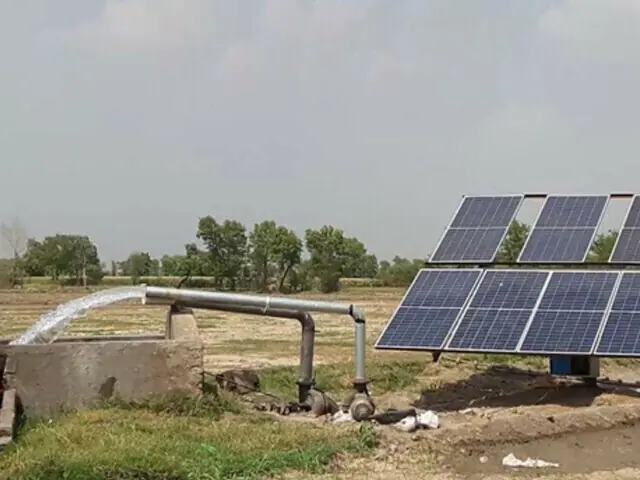

Go to a village in Rahim Yar Khan or Kasur in Punjab, or anywhere in the deep agricultural belt of Sindh, and ask a farmer why his tube-well is running when the field is already ankle-deep in water. He will look at you with the weary patience one reserves for city folk.
“The solar is free,” he will say, gesturing to the panels glinting in the heat. “The sun is out. If I turn it off, I lose the energy. Why should I leave the water in the ground?”
This simple, rational economic calculation is currently driving the environmental suicide of Pakistan.
It is a crisis that isn’t happening in the sterile policy papers of the World Bank, nor in the hysterical, chest-thumping debates about the Indus Waters Treaty on prime-time talk shows. While we scream that India is stealing our water, and while we lament the melting glaciers, we conveniently ignore the uncomfortable truth: the Pakistani agricultural sector is one of the most wasteful water users on the planet. We do not face a water shortage; we face a governance collapse.
For years, the high cost of diesel and the unreliability of WAPDA were the only things regulating groundwater extraction. A farmer only ran the pump when he absolutely had to, because every hour cost money. That financial “brake” is gone.
READ MORE: ‘Ticking time bomb’: agriculture, industry, and Pakistan’s growing population
The unregulated explosion of solar-powered tube-wells has turned groundwater extraction into a free-for-all. We are witnessing the tragedy of the commons in real-time. In parts of Punjab, the water table is dropping by feet, not inches, every year. We are sucking up fossil water—ancient aquifers that took millennia to fill—to grow crops that have no business being grown in these zones.
We are a water-stressed country but acting like a water-surplus superpower. We are obsessed with growing sugarcane and rice—two of the thirstiest crops known to man.
Why do we grow sugarcane in semi-arid districts? When we export sugar and Basmati rice, we are not just exporting commodities. We are exporting billions of liters of our non-renewable groundwater to the Gulf and Europe for a few dollars. At the same time, we spend valuable foreign exchange importing daal (pulses) and oilseeds—crops that require a fraction of the water and actually fix nitrogen in the soil.
Then there is the canal system itself, a crumbling relic of the British Raj governed by the Warabandi system. It operates on a rigid time-roster. If your turn for water is Tuesday at 3:00 AM, you take it. It doesn’t matter if it rained Monday night. It doesn’t matter if your crop doesn’t need it.
Because the farmer doesn’t trust the Irrigation Department—and why should he, given the corruption at the tail-end?—he hoards water. He floods the field because he doesn’t know if the canal will run dry next week. This “panic irrigation” drowns the roots and, worse, brings salts to the surface. We are salinating our own soil, turning fertile land into barren crusts, all while using double the water required.
Meanwhile, the development sector loves to sell us dreams. They come with glossy presentations about drip irrigation and sensors. These are fantastic technologies, but in the context of a subsistence farmer with five acres and no technical support, they are a pipe dream.
Drip irrigation systems clog. They require maintenance, pressurized water, and capital. A farmer who relies on the Aarthi (middleman) for his seeds and fertilizer cannot afford a million-rupee system.
We don’t need to turn Punjab into California overnight. We need low-tech, high-impact fixes.
-
Laser leveling: If a field is uneven, you have to over-water the high parts to reach the low parts. Laser leveling alone saves 30 percent of water. It should be mandatory and heavily subsidized.
-
Lining the watercourses: Half our water is lost to seepage in the kacha (unlined) watercourses between the canal outlet and the farm gate. Fix the plumbing before you fix the tap.
We refuse to price water. The Abiana (water tax) costs the government more to collect it than the revenue it generates.
As long as water is financially invisible, it will be wasted. If a farmer had to pay a metered rate for groundwater, the sugarcane in South Punjab would vanish, replaced by cotton or sunflowers. But no political party wants to touch the “rural vote bank.” They prefer populism over survival.
We are sleepwalking into a drought. The Indus is struggling to reach the sea, the Delta is dying, and the aquifers are emptying. And yet, we stand at the naka, watching the free solar power pump water into a flooded field, thinking we are getting a good deal.
We aren’t. We are just selling our children’s future, one cusec at a time.
Copyright Business Recorder, 2026
The writer is Director, Centre for Agriculture, Climate Change & Rural Economy (CACCRE), PIDE. He can be reached at [email protected]
















Comments