


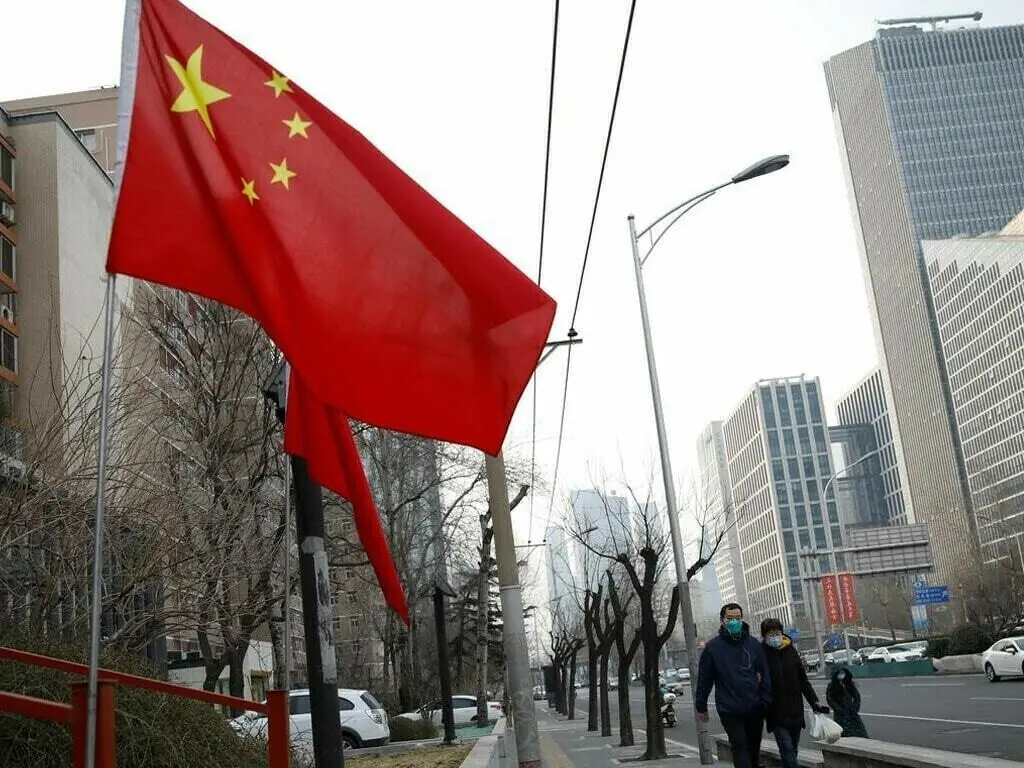

China’s Five-Year Plans have long served as the backbone of its economic and social transformation. Since the launch of the first plan in 1953, these policy blueprints have guided the country from socialist industrialization to export-led growth and mass urbanization.
Uniquely, China remains the only major economy to have successfully completed every Five-Year Plan with broadly achieved objectives. As Beijing prepares for the 15th Five-Year Plan (2026–2030), the shift underway carries profound implications not only for China’s future development but also for the global political economy.
For much of the reform era, particularly during the 11th and 12th Five-Year Plans, China pursued high-speed growth driven by heavy investment, industrial expansion, and exports. This model delivered extraordinary results, including sustained double-digit GDP growth and China’s rise as the world’s manufacturing hub.
The 13th Plan began acknowledging a “new normal” of slower growth, yet quantitative expansion remained central. By the late 2010s, however, structural constraints—overcapacity, environmental degradation, declining investment returns, demographic pressures, and intensifying geopolitical competition—made a strategic recalibration unavoidable.
The turning point came with the 14th Five-Year Plan (2021–2025), which marked a decisive move away from growth at all costs. Notably, it avoided setting a rigid GDP growth target and instead elevated the concept of “high-quality development.”
Innovation, technological self-reliance, environmental sustainability, and social equity replaced sheer expansion as policy priorities. The emphasis on supply-chain security and the “dual circulation” strategy reflected China’s response to global uncertainty and external pressures.
The forthcoming 15th Five-Year Plan builds on this transformation. Covering the period from 2026 to 2030, it represents a critical phase in China’s long-term goal of basically achieving socialist modernization by 2035. The plan is expected to consolidate China’s shift toward an innovation-led, resilient, and people-centered economy, focusing on quality rather than speed of growth.
Technological self-reliance will be a central pillar. China aims to strengthen indigenous innovation in strategic sectors such as artificial intelligence, semiconductors, quantum technology, bio manufacturing, hydrogen energy, and space industries. This drive is designed to reduce vulnerability to external shocks and foreign restrictions, but it also has global implications, particularly as technological competition with Western economies intensifies.
Equally significant is the plan’s strong commitment to green development. China has already emerged as the world’s largest investor in renewable energy, accounting for a substantial share of global solar and wind capacity additions. The 15th Plan is expected to further integrate ecological protection, clean energy, and low-carbon industrial systems into economic planning, aligning growth with climate responsibility.
Social modernization is another defining feature. Building on the vision of “common prosperity,” the plan emphasizes rural revitalisation, urban renewal, demographic resilience, and improved social welfare. By strengthening domestic consumption and reducing regional disparities, China seeks to create a more balanced and inclusive development model.
Beyond its domestic agenda, the 15th Five-Year Plan carries wide international significance. It reinforces China’s intention to remain engaged with the global economy while reshaping globalisation through initiatives such as the Belt and Road Initiative and the Global Development, Security, Civilisation, and Governance Initiatives.
For developing regions in South Asia, Southeast Asia, Latin America and Africa, the plan signals a shift toward higher quality, sustainable, and innovation-oriented cooperation.
For countries like Pakistan, this presents both opportunities and challenges. Chinese investment can support infrastructure development, industrial upgrading, and energy transition. At the same time, it underscores the need for careful policy choices to ensure economic sustainability, strategic balance, and long-term national interests.
Ultimately, China’s 15th Five-Year Plan symbolizes a historic transition—from rapid catch-up growth to qualitative, innovation-driven, and environmentally conscious modernization. Its success will shape not only China’s internal resilience and technological leadership but also the future contours of global trade, innovation, and development. As such, the plan deserves close attention well beyond China’s borders.
Copyright Business Recorder, 2026
The writer has served as Pakistan’s first Consul General, at Shanghai and speaks fluent Mandarin. He runs a think tank, “Understanding China”


























Comments
Comments are closed for this article.