


Wall St drops as JPMorgan’s warning on credit card rate-cap proposal hurts financials
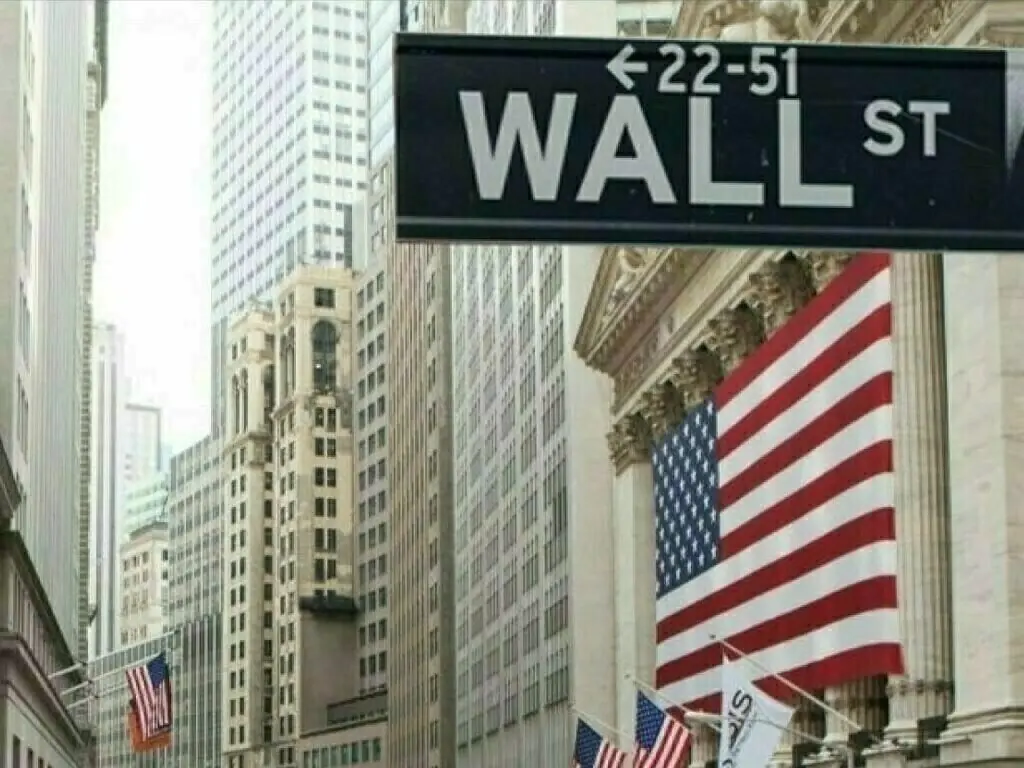

NEW YORK: US stock indexes fell on Tuesday, pressured by financials after JPMorgan cautioned that a planned cap on credit-card rates would weigh on consumers, while an expected increase in inflation kept bets alive for interest rate cuts this year.
Shares of Visa slumped 4.7 percent and Mastercard fell 5.3 percent as JPMorgan Chase CFO Jeremy Barnum’s comments revived a selloff on concerns over a proposed 10 percent one-year cap on credit card interest rates.
JPMorgan dropped 2.5 percent as a drop in investment banking fees also overshadowed its better-than-expected quarterly profit.
The S&P 500 banking index fell about 1 percent. Other big banks, due to report their quarterly numbers later this week, are widely expected to post stronger results, helped by a pickup in dealmaking.
With the S&P 500 and the Dow near record highs, investors once again rotated away from richly valued growth stocks toward overlooked areas of the market, continuing a pattern seen since the beginning of the year.
Tech stocks slipped 0.2 percent, while energy, consumer staples and industrials gained.
Ryan Detrick, chief market strategist at Carson Group, said the shift from tech to other sectors is encouraging, stressing that “the lifeblood of a bull market is rotation” in sectors.
The Russell 1000 value index was about flat, while the growth counterpart fell 0.5 percent.
The small-cap Russell 2000 is up 6.2 percent in the first seven trading days of this year, while the S&P 500 rose 1.9 percent, as of Monday’s close.
At 11:28 a.m. ET, the Dow Jones Industrial Average fell 338.22 points, or 0.68 percent, to 49,251.98, the S&P 500 lost 19.98 points, or 0.29 percent, to 6,957.29 and the Nasdaq Composite lost 50.62 points, or 0.21 percent, to 23,683.28.
December’s US consumer price increase came broadly in line with forecasts, reinforcing traders’ bets on rate cuts this year. Headline and core CPI each rose 2.6 percent from a year earlier, the same pace as in November.
Investors are pricing in at least two more 25-basis-point interest rate cuts between June and December, with a small chance of a third, per LSEG data.
“The Fed is likely to take its time and absorb more data, especially given the noise we’ve seen in the recent data as a result of the government shutdown,” said Skyler Weinand, chief investment officer, Regan Capital.
Investors have largely brushed off geopolitical flashpoints, from Washington’s saber-rattling in Iran to talks of Greenland and Venezuela, choosing instead to ride the wave of artificial intelligence optimism and upbeat earnings expectations that have powered major indexes to fresh highs.
Meanwhile, Intel shares and AMD gained about 5.5 percent each after KeyBanc upgraded both the chipmakers’ shares to “overweight.”
Delta Air Lines shares fell 2.4 percent as the mid-point of its 2026 profit forecast fell short of analysts’ expectations.
Declining issues outnumbered advancers by a 1.04-to-1 ratio on the NYSE and by a 1.59-to-1 ratio on the Nasdaq.
The S&P 500 posted 41 new 52-week highs and four new lows, while the Nasdaq Composite recorded 110 new highs and 74 new lows.


























Comments
Comments are closed for this article.