


Venezuela to export $2 billion worth of oil to US in deal with Washington
- The agreement is a strong sign that the Venezuelan government is responding to Trump's demand
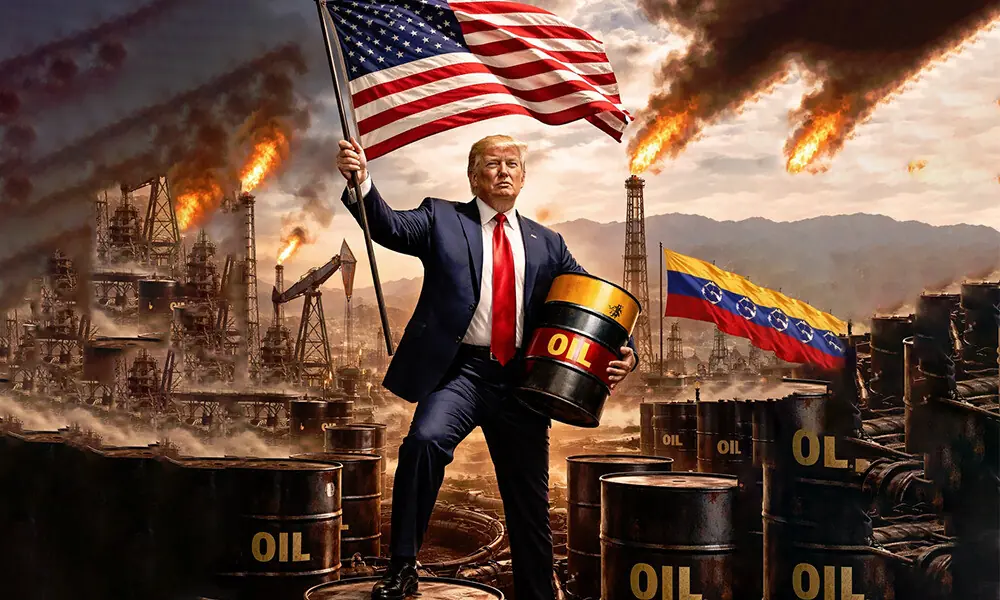

HOUSTON/WASHINGTON: Caracas and Washington have reached a deal to export up to $2 billion worth of Venezuelan crude to the United States, US President Donald Trump said on Tuesday, a flagship negotiation that would divert supplies from China while helping Venezuela avoid deeper oil production cuts.
The agreement is a strong sign that the Venezuelan government is responding to Trump’s demand that they open up to US oil companies or risk more military intervention. Trump has said he wants interim President Delcy Rodriguez to give the U.S. and private companies “total access” to Venezuela’s oil industry.
Venezuela has millions of barrels of oil loaded on tankers and in storage tanks that it has been unable to ship due to a blockade on exports imposed by Trump since mid-December.
The blockade was part of rising U.S. pressure on the government of Venezuelan President Nicolas Maduro that culminated in U.S. forces capturing him this weekend. Top Venezuelan officials have called Maduro’s capture a kidnapping and accused the U.S. of trying to steal the country’s vast oil reserves.
Venezuela will be “turning over” between 30 and 50 million barrels of “sanctioned oil” to the U.S., Trump said in a social media post.
“This Oil will be sold at its Market Price, and that money will be controlled by me, as President of the United States of America, to ensure it is used to benefit the people of Venezuela and the United States!,” he added.
U.S. Energy Secretary Chris Wright is in charge of executing the deal, Trump said, adding that the oil will be taken from ships and sent directly to U.S. ports.
Supplying the trapped crude to the U.S. could initially require reallocating cargoes originally bound for China, two sources had told Reuters earlier on Tuesday.
The Asian country has been Venezuela’s top buyer in the last decade, and especially since the United States imposed sanctions on companies involved in oil trade with Venezuela in 2020.
“Trump wants this to happen early so he can say it is a big win,” an oil industry source said.
Venezuelan government officials and PDVSA did not provide a comment.
Chevron in control of Venezuelan oil flows to US
U.S. crude prices fell more than 1.5% after Trump’s announcement, with the agreement expected to increase the volume of Venezuelan oil exported to the U.S.
That flow of oil is currently controlled entirely by Chevron, PDVSA’s main joint venture partner, under a U.S. authorisation.
Chevron, which has been exporting between 100,000 and 150,000 barrels per day (bpd) of Venezuelan oil to the U.S., is the only company that has been loading and shipping crude without interruption from the South American country in recent weeks under the blockade.
It was not immediately clear if Venezuela would have any access to proceeds from the supply. Sanctions mean PDVSA is excluded from the global financial system, its bank accounts are frozen, and it is blocked from executing transactions in US dollars.
Venezuela has been selling its flagship crude grade, Merey, at around $22 per barrel below Brent for delivery at Venezuelan ports, giving a value for the deal at up to $1.9 billion.
Rodriguez, sworn in as interim president on Monday, is herself under U.S. sanctions imposed in 2018 for undermining democracy.
Talks involve possible auctions with US buyers
Venezuelan and U.S. officials this week discussed possible sales mechanisms, including auctions to allow interested U.S. buyers to bid for cargoes, and issuing U.S. licenses to PDVSA’s business partners that could lead to supply contracts, two sources told Reuters.
Those licenses have in the past allowed PDVSA’s joint venture partners and customers, including Chevron, India’s Reliance, China National Petroleum Corporation (CNPC) and European Eni and Repsol, to have access to Venezuelan oil to refine or to resell to third parties.
This week, some of those companies have begun making preparations for receiving Venezuelan cargoes again, two separate sources said.
The U.S. and Venezuela have also discussed whether Venezuelan oil can be used in the U.S. Strategic Petroleum Reserve in the future, one of the sources said. Trump did not refer to this possibility.
Increased oil flows would be ‘great news’
U.S. Interior Secretary Doug Burgum said on Tuesday that an increased flow of Venezuelan heavy oil to the U.S. Gulf would be “great news” for job security, future gasoline prices in the U.S. and for Venezuela.
“Venezuela has an opportunity now to actually have capital come in and rebuild their economy and take advantage,” he told Fox News, when asked about talks between the governments on oil exports. “With American technology, American partnership, Venezuela can be transformed.”
U.S. refineries on the Gulf Coast can process Venezuela’s heavy crude grades and were importing some 500,000 barrels per day (bpd) before Washington first imposed energy sanctions on Venezuela.
PDVSA has already had to cut production due to the embargo, because it is running out of storage for the oil. Without a way to export oil soon, it would have to cut production more, one of the sources said.
Oil traders reacted to news of the deal talks on Tuesday. Differentials for some heavy oil grades in the U.S. Gulf slipped around 50 cents per barrel on Tuesday on the prospect of more Venezuelan supplies.























Comments
Comments are closed for this article.