



ISLAMABAD: The National Assembly Standing Committee on Commerce has directed the Ministry of Commerce to take necessary measures to address operational, logistical, and regulatory challenges in order to facilitate balanced, transparent, and lawful trade between Pakistan and Iran.
During a recent meeting, the committee was briefed by the Ministry of Commerce on the overall state of bilateral trade, highlighting both recent progress and persistent challenges. The Ministry informed the committee that although permission has been granted for the import of steel from Iran, domestic steel units have been adversely affected, with several facing closure.
The Ministry further noted that trade with Iran remains a highly sensitive issue due to prevailing US sanctions and the associated risks of smuggling and undocumented transactions.
READ MORE: Dar underscores importance of stronger Pakistan-Iran engagement
Members were cautioned to interpret trade figures carefully, as a significant volume of trade continues to take place outside formal banking channels. Large sums are reportedly being routed through informal means, bypassing Customs checkpoints, SRO requirements, and the oversight of the Trade Development Authority of Pakistan (TDAP).
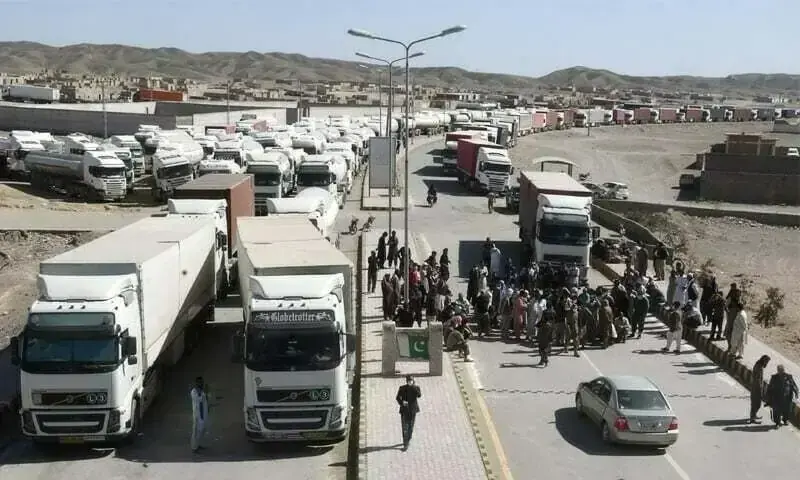
The Committee was informed that bilateral trade is currently conducted largely through barter arrangements. Despite recent political improvements and enhanced diplomatic engagement, tariff and non-tariff barriers continue to hinder trade. Iran has reportedly imposed restrictive measures affecting Pakistan’s exports of rice and mangoes, while logistical constraints persist, with Pakistani transporters permitted to operate only up to Taftan.
Over the past three months, the Ministry stated, commercial diplomacy efforts have been intensified. A total of 150 Pakistani businessmen, including 35 led by the Minister for Commerce, participated in bilateral engagements representing 17 sectors, including rice, fruits, vegetables, plastics, and polymers.
However, export and import permissions remain restricted to a single designated individual, an issue raised by the Quetta Chamber of Commerce and Industry. An amended proposal is under consideration, pending approval by the Economic Coordination Committee (ECC).
The Ministry also apprised the Committee that the Pakistan-Iran Joint Economic Forum has been reactivated. According to Iranian customs data for 2024, Pakistan’s exports to Iran stood at USD 2.706 billion, while imports from Iran amounted to USD 2.422 billion.
Pakistan’s major imports include petroleum, iron and steel, vegetables, plastics, petroleum products, chemicals, and dairy items, while exports to Iran comprise cement, glass, ceramics, and other industrial materials.
The Committee was informed that banking channels for these transactions have now been formally approved, with data verified through official sources in Tehran.
The Chairman of the Standing Committee emphasized that all imports and exports must be conducted strictly through formal channels.
He directed that the State Bank of Pakistan and the Ministry of Foreign Affairs be consulted, given the continued impact of US sanctions on banking operations. Security concerns for traders along the Quetta–Taftan route were also highlighted.
It was further noted that Iranian tariffs remain significantly higher than those of Pakistan. While the number of Pakistani export trucks stands at around 49, Iran reportedly dispatches approximately 400.
Border markets on the Pakistani side operate only three days a week, while remaining largely non-functional in Iran. Additionally, Iran’s stringent sanitary and phytosanitary (SPS) measures continue to impede trade in agricultural commodities.
The panel reiterated its advice to the Ministry of Commerce to take concrete steps to address these operational, logistical, and regulatory challenges to ensure balanced, transparent, and lawful bilateral trade between Pakistan and Iran.
Copyright Business Recorder, 2026




















Comments
Comments are closed for this article.