



Proposed amendments to the draft of National Electric Power Regulatory Authority (Prosumer) Regulations, 2025 are aimed at effectively reducing the tariff currently paid to rooftop solar energy producers from Rs 25.98 to Rs 9.67 per Kwh.
This is being done despite the prime minister’s earlier instruction to avoid disincentivizing green energy and in particular solar installations. Despite these instructions a 10 percent levy in the form of customs duty was applied in the last budget.
To better understand how this regulation is going to impact the rooftop solar producers we need to segment the users into the following:
-
Solar IPPs that are typically on 25-year contracts get rate as high as Rs 48/Kwh in the case of Crest Energy but averaging to a tariff rate of Rs 26.73/Kwh for all solar IPPs payable in dollars at the current rate of exchange with payments secured by a governmental sovereign guarantee. This segment remains unaffected due to the change in this regulation.
-
The second big solar energy installer is Industry which is driven to this course of action to reduce its total cost of energy. Typically, it installs Solar for approximately 40 percent of its total energy need to maintain power factor and grid stability. This segment will remain completely unaffected by this regulation because it is not net exporter of energy and consumes all its produce.
-
The affected segment is Rooftop Residential Customers, which represents a very tiny fraction of the total solar installations in the country. This very small group should be provided with the same tariff as being provided to the Solar IPPs at an average rate of Rs 26.73/Kwh. Why this discrimination?
-
What exactly is this intended regulation supposed to achieve. As already explained it will achieve very little as the targeted segment is very small, may be 7-8 percent of the total installed solar installation base. If the intention is to force these customers back onto the grid, this will not happen for reasons explained below.
Consequences of this regulation on Rooftop Residential Customers can be summarized as follows:
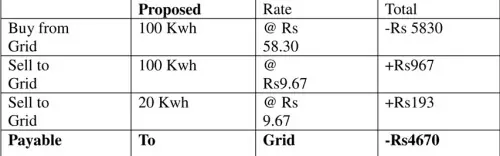
-
Batteries storage costs have fallen substantially over the last couple of years and are now below Rs 2,000 per amp hour. Based on this pricing, customers will not switch back to the grid, but the switch will be to off-grid battery solutions. Based upon my calculations the switch to battery off-grid solution becomes commercially viable at NEPRA’s tariffs below Rs 15/Kwh. To counter this, NEPRA may as a next step propose regulations, imposing a ban on the import of solar energy installations. While the world goes green, we initiate actions in the opposite direction.
-
Lower tariffs will result in extended payback periods discouraging future investment in green alternative energy. This is contrary to the government policy.
-
Solar energy is an ideal substitute for imported fuels.
-
Now coming to Section 14 of the proposed draft which reads as follows:
“net billing arrangement” means an arrangement under which electricity generated by distributed generation facility of prosumer is purchased by the licensee and the licensee raises the bill against the prosumer for his consumption at the applicable tariff, after giving credit for electricity supplied by prosumer to the licensee at the national average energy purchase price.
The draft starts with the definition of all terms used except the definition of the national average energy purchase price (NAEP). This is deliberate and intentional to camouflage and hide the real intention of this regulation.
What is the national average energy purchase price (NAEP)?
My understanding is that it is the sum of
Weighted Average Fuel Cost of All Energy Sources = Rs 9.08/Kwh
Operating & Maintenance cost = Rs 0.59/Kwh
Total Rs 9.67/Kwh
Conceptually, there are no fuel costs that are related to Solar Energy. So why have the regulators chosen to use Fuel Cost as the base figure to calculate an energy charge to be paid to rooftop net metering customers? The answer is simple: the regulator is passing on the cost of capacity charges which amount to Rs 16.32/Kwh to the rooftop solar generators.
The sum of Rs 9.67 + Rs 16.32 = Rs 25.98, which is the current national average purchase price (NAEP) at which current purchases are made.
Why is this regulation necessary? The answer is that the real villain, the IPPs, is untouchable and carries a lot of political and bureaucratic clout. The next option is simply to squeeze those who offer the least resistance or the have-nots.
Even the existing NEPRA’s 7-year licence holders have not been spared by this draft amendment. I refer to 21(2) in the draft regulations where it states the following:
“except the billing shall be in accordance with regulation 14 commencing from the billing cycle subsequent to the month in which these regulations come into effect.”
This wording used is in direct conflict with the 7-year NEPRA licensees where they must be honoured, according to 2015 net metering guidelines.
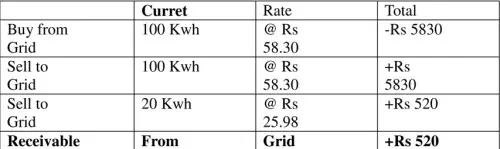
This can be better explained with an example where total export to grid is 120 Kwh.
What will this regulation achieve? It will achieve very little as roof top solar energy represents only a small fraction of 5-6 percent of the total installed solar installation base. Rather than switching to the grid the exact opposite will happen. They will go off grid to battery storage solutions.
This raises a serious question: why bring in an unpopular regulation to take negative feedback to the extent of the Prime Minister getting involved and for minimal returns. The question is what does equity demand? The answer is: pay rooftop solar energy producers what you pay Solar IPPs on average.
Copyright Business Recorder, 2026


























Comments
Comments are closed for this article.