


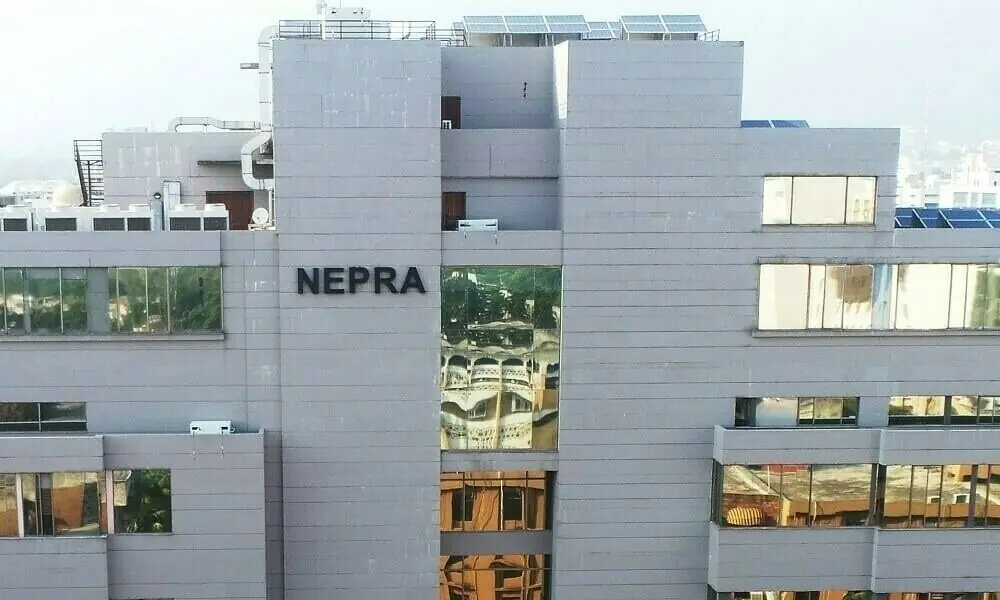

ISLAMABAD: The National Electric Power Regulatory Authority (Nepra) on Wednesday quizzed the Central Power Purchasing Agency–Guaranteed (CPPA-G) for using re-gasified liquefied natural gas (RLNG) for power generation in November 2025 in violation of the Economic Merit Order (EMO), despite RLNG being more expensive than imported and local coal.
The issue was raised during a public hearing on CPPA-G’s request for fuel cost adjustment (FCA) for November 2025.
The hearing was chaired by Nepra Chairman Waseem Mukhtar, with Member (Development) Maqsood Anwar Khan and Member (Law) Amina Ahmed attending via Zoom.
READ MORE: Dues owed by CPPA-G: PQEPC urges Aurangzeb to facilitate payment
CPPA-G sought a negative adjustment of 72 paisa per unit for November 2025 to refund Rs 5.61 billion to electricity consumers across the country, including those in Karachi, excluding lifeline consumers.
Chief Executive Officer (CEO) CPPA-G, Rihan Akhtar, informed the Authority that the FCA impact of 88 paisa per kWh for October 2025, which was recovered in December 2025, would be replaced with a negative adjustment of 72 paisa per kWh in January 2026, resulting in a net impact of 16 paisa per kWh. He said hydel generation stood at 39.2 percent in November 2025 against the reference of 31.9 percent, which led to a negative FCA projection.
Nepra’s Member (Development) sought clarification on the increased use of expensive RLNG-based power plants instead of cheaper imported and local coal.
The CEO stated that RLNG generation was assumed at 5.2 percent for November 2025, while actual usage stood at 21.59 percent. He explained that RLNG plants were used more due to their location near load centers, their role in grid stabilization, and contractual “take-or-pay” obligations. Reference RLNG generation was 0.43 million units, whereas actual generation reached 0.70 million units.
He further said CPPA-G had requested 180 MMCFD of RLNG for November but consumed 150 MMCFD, accounting for 83 percent of total demand. The SNGPL, he added, had repeatedly written letters regarding lower gas offtake, which created line-pack issues for the gas utility.
Sharing consumption trends, the CEO stated that domestic electricity consumption declined by 2.8 percent from July–November 2024 to July–November 2025. Commercial consumption increased by 1.7 percent, general services declined by 2.5 percent, while industrial consumption rose by 26.4 percent due to the incremental package. Agricultural consumption declined by 1.7 percent during July–November 2025 compared to a 2.6 percent increase in the same period last year, possibly due to weather conditions.
On the financial impact of K-Electric’s (KE) drawl from the national grid, the CEO said that had KE not been supplied electricity, consumer costs would have increased by Rs 3.28 per kWh, including 28 paisa per kWh FCA and Rs 3.00 per kWh capacity purchase price for November 2025.
Tanveer Barry, representing the Karachi Chamber of Commerce and Industry (KCCI), pointed out that local coal power cost Rs 13.10 per kWh in October 2025 but increased to Rs 17.77 per kWh in November, questioning the justification for the hike. He also stated that Federal Board of Revenue (FBR) data showed a 30 percent decline in tax collection from electricity bills in Karachi from July to November 2025, indicating falling industrial consumption.
He added that despite Nepra conducting a load-shedding survey in Karachi, the city continued to face outages. Inefficiencies of distribution companies (DISCOs), he said, were being passed on to law-abiding consumers, while electricity theft continued during non-load-shedding hours. He also criticized the approval of the incremental package, stating that a 60 percent load factor did not reflect actual industrial operations, which typically ranged between 16 and 30 percent.
Another intervener, Rehan Jawed, asked about the impact of shifting captive power plants (CPPs) from gas to the national grid on electricity consumption. The CPPA-G CEO said the data was not immediately available but promised to share the analysis later.
Aamir Sheikh also expressed concern over higher RLNG generation compared to imported coal and questioned the rising cost of local coal.
In response, the CPPA-G CEO explained that Thar’s coal pricing consisted of fixed and variable cost components. During the winter months, reduced electricity demand increased the fixed cost burden, pushing prices higher. He added that higher consumption would have lowered the per-unit cost of local coal.
The expenditure of Rs 1.8 billion by the Power Planning and Monitoring Company (PPMC) also came under discussion. The Nepra stated it had not approved such costs through DISCOs’ annual tariff petitions and sought clarification from the Power Division. As no Power Division representative attended the hearing, the Nepra decided to issue a letter expressing dismay over the absence.
Nepra officials also informed the hearing that the forensic audit of Halmore Power Company had not yet been completed. Responding to another query, they said the Authority had shelved its plan to hire consultants for a third-party audit of DISCOs and CPPA-G data, stating that audits were being conducted internally, by the Auditor General of Pakistan and M/s Ferguson.
Copyright Business Recorder, 2026




















Comments
Comments are closed for this article.