


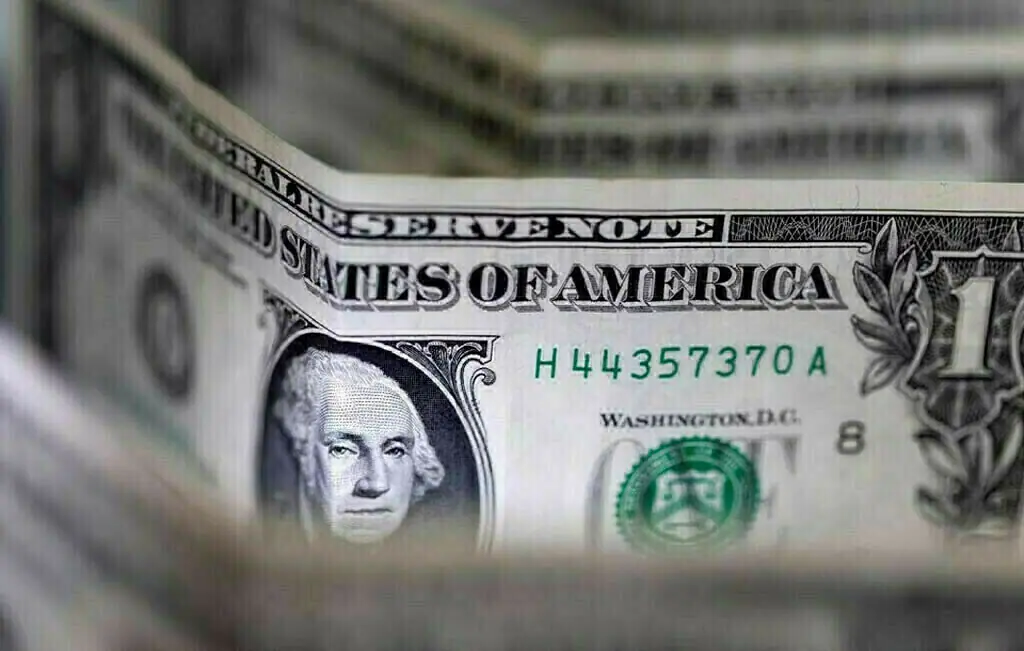

NEW YORK: The US dollar advanced on Wednesday, erasing earlier declines after a stronger than expected labor market reading, but it was still set for its biggest annual drop since 2017 after a year of interest rate cuts, fiscal worries and erratic US trade policy under President Donald Trump.
Those themes are likely to play out again in 2026, suggesting the dollar’s weak showing could continue and influence some of its peers, including the euro and sterling, which have made significant gains this year.
However, the Labor Department said on Wednesday that weekly initial jobless claims dropped by 16,000 to a seasonally adjusted 199,000, the lowest in a month, and below the 220,000 estimate of economists polled by Reuters.
“Claims data are noisy, but especially around the holidays, despite the noise, it is the best data we have for the health of the labor market,” said Brian Jacobsen, chief economist at Annex Wealth Management in Menomonee Falls, Wisconsin.
The dollar index, which measures the greenback against a basket of currencies, rose 0.27 percent to 98.50, with the euro down 0.21 percent at USD1.1721.
For the year, the dollar is down more than 9 percent while the euro has rallied more than 13 percent.Sterling weakened 0.45 percent to USD1.3401 but is up more than 7 percent on the year against the dollar.
Adding pressure on the greenback this year, concerns have swirled about the Federal Reserve’s independence under the Trump administration, which has pushed for an aggressive reduction in interest rates.
Trump said he plans to announce his pick for the next Fed chair sometime in January, replacing Jerome Powell whose term ends in May and who has faced constant criticism from the president. However, some of the new voting members next year have recently expressed doubts about continued rate cuts.
Minutes from the Fed’s December 9-10 meeting showed the central bank agreed to reduce rates only after a deeply nuanced debate about the risks facing the US economy right now.
New projections issued after the December meeting show the Fed only expects one rate cut next year, while language in the new policy statement indicated the Fed would likely remain on hold for now until new data shows that either inflation is again falling or unemployment is rising more than anticipated.
Markets are currently pricing in about 50 basis points of cuts next year.
Other European currencies have also rallied in 2025. Switzerland’s franc is up 14 percent while Sweden’s crown is up 20 percent.
The Japanese yen is one of the few currencies that failed to capitalize on the weak dollar in 2025, remaining roughly flat even as the Bank of Japan raised rates twice during the year, once in January and then earlier this month.
On Wednesday, the yen weakened 0.34 percent against the greenback to 156.96 per dollar, remaining relatively close to levels that prompted statements from officials in Tokyo about supporting the currency and increased market expectations of a possible intervention by the Bank of Japan.
In cryptocurrencies, bitcoin fell 0.21 percent to USD88,021.45 and was down more than 6 percent on the year, poised for its first yearly drop since 2022.




















Comments
Comments are closed for this article.