


Delegated Legislation: Senate body reviews reforms in CSS exams, rules under Archives Act
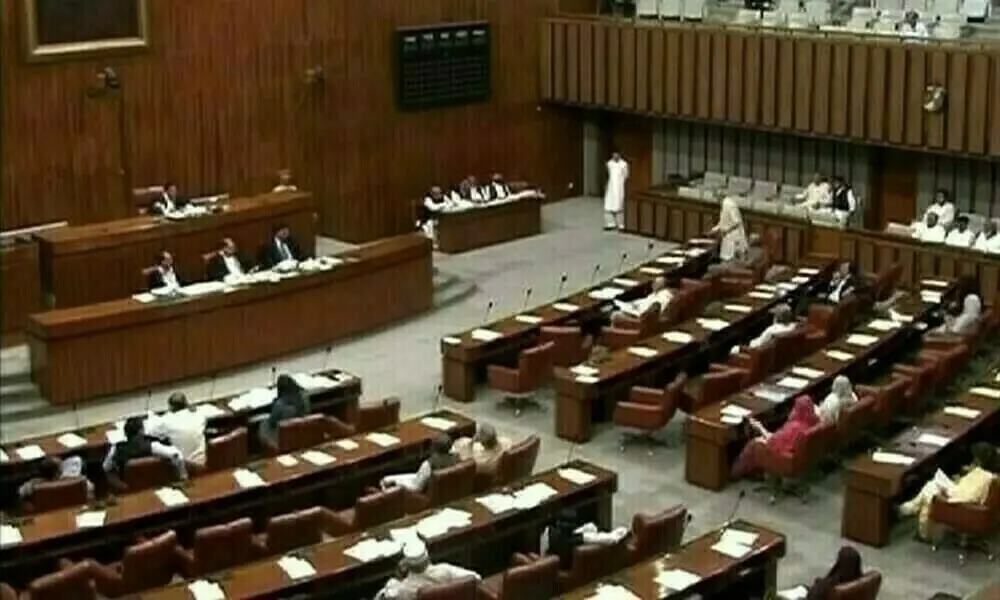

ISLAMABAD: The Senate Committee on Delegated Legislation reviewed reforms in the Central Superior Services (CSS) and general recruitment examinations, as well as rules under the National Archives Act, 1993, and the Archival Material (Preservation and Export Control) Act, 1975, highlighting delays in recruitment, age relaxation for candidates, women-friendly policies, and the preservation and digitization of historical archival material.
The Committee met with Senator Naseema Ehsan in the chair at the Parliament House on Monday.
Members expressed concern over the lengthy general recruitment process through the Federal Public Service Commission (FPSC), which currently takes a minimum of two years.
The committee unanimously reiterated its recommendations regarding age relaxation and the number of attempts, urging the authorities to reconsider.
The meeting was attended by Senator Bushra Anjum Butt and Senator Rubina Qaim Khani.
The committee was briefed on reforms in the civil servants’ evaluation mechanism and the historical background of recruitment reforms through the CSS competitive examination.
The Secretary FPSC informed the committee about initiatives to reduce this duration through the introduction of computer-based testing (CBT), which is in process. He further stated that FPSC has changed the test pattern for general recruitment by introducing two MCQ-based tests instead of subjective papers, and assured that the recruitment process would be finalized within one year in the future.
The Chairperson directed FPSC to expedite implementation so that recruitment processes may be completed in a shorter time.
The committee also discussed age relaxation and the number of attempts for the CSS examination. It reiterated its earlier recommendations to increase both the upper age limit and the number of attempts.
However, the Secretary Establishment and FPSC stated that such changes were not feasible due to service length considerations and potential attitudinal issues arising from the induction of older candidates.
The Chairperson emphasized that age relaxation and additional attempts would benefit educated youth from remote areas, particularly Balochistan, where access to education is limited, and schooling is often delayed.
The Secretary Establishment suggested facilitating youth from underprivileged areas through CSS preparatory courses at the Civil Services Academy (CSA) instead of age relaxation. He also informed the committee about the growing induction of women through CSS.
Senator Bushra Anjum Butt and Senator Rubina Qaim Khani raised concerns regarding women-friendly policies to retain the female workforce.
The Chairperson directed that such policies be ensured, including posting female officers at stations where their husbands are residing to promote family stability.
On the question of introducing new subjects in the CSS syllabus, FPSC informed the committee that the syllabus is under review and will be refined.
Regarding mid-career induction of senior officers in the federal bureaucracy, it was informed that entry into the Pakistan Administrative Service (PAS) is possible through an induction examination conducted by the FPSC, but only for Provincial Management Service (PMS) officers.
The Chairperson also highlighted the anomaly in FPSC rules regarding the separate mention of Buddhists from minorities, as well as the use of the term “scheduled castes,” and directed that a detailed briefing be given on the matter in the next meeting. She emphasized the need to revisit outdated laws and rules to align them with contemporary requirements.
Copyright Business Recorder, 2025

























Comments
Comments are closed for this article.