


BR100 Increased By (1.02%)
BR30 Increased By (1.71%)
KSE100 Increased By (0.58%)
KSE30 Increased By (0.65%)
BECO 6.03 Increased By ▲ 0.26 (4.51%)
BML 52.61 Decreased By ▼ -0.39 (-0.74%)
BOP 34.23 Increased By ▲ 0.24 (0.71%)
CNERGY 8.16 Increased By ▲ 0.05 (0.62%)
DCL 12.23 Increased By ▲ 0.03 (0.25%)
FCCL 53.80 Increased By ▲ 0.97 (1.84%)
FCSC 5.24 Increased By ▲ 0.17 (3.35%)
FFL 18.03 Increased By ▲ 0.08 (0.45%)
FNEL 1.30 Increased By ▲ 0.01 (0.78%)
HUMNL 11.00 Increased By ▲ 0.12 (1.1%)
KEL 8.07 Increased By ▲ 0.05 (0.62%)
KOSM 5.39 Decreased By ▼ -0.13 (-2.36%)
MLCF 87.90 Increased By ▲ 1.39 (1.61%)
NBP 186.60 Increased By ▲ 1.44 (0.78%)
PACE 10.75 Increased By ▲ 0.17 (1.61%)
PAEL 39.95 Increased By ▲ 0.53 (1.34%)
PIAHCLA 26.19 Decreased By ▼ -0.03 (-0.11%)
PIBTL 17.32 Increased By ▲ 0.65 (3.9%)
PPL 233.49 Increased By ▲ 5.31 (2.33%)
PRL 34.98 Increased By ▲ 0.30 (0.87%)
PTC 67.71 Increased By ▲ 2.38 (3.64%)
SEARL 90.90 Increased By ▲ 0.77 (0.85%)
SSGC 27.20 Increased By ▲ 0.60 (2.26%)
TELE 8.57 Increased By ▲ 0.29 (3.5%)
THCCL 60.85 Increased By ▲ 2.35 (4.02%)
TPLP 8.78 Increased By ▲ 0.56 (6.81%)
TREET 24.65 Increased By ▲ 0.12 (0.49%)
TRG 71.50 Increased By ▲ 1.79 (2.57%)
WAVES 10.01 Increased By ▲ 0.07 (0.7%)
WTL 1.27 Decreased By ▼ -0.01 (-0.78%)
World

Iran says launches three satellites into space from Russia

  • The satellites to be used for "observation" and were designed by "the private sector"
Published December 28, 2025 Updated December 28, 2025 09:29pm
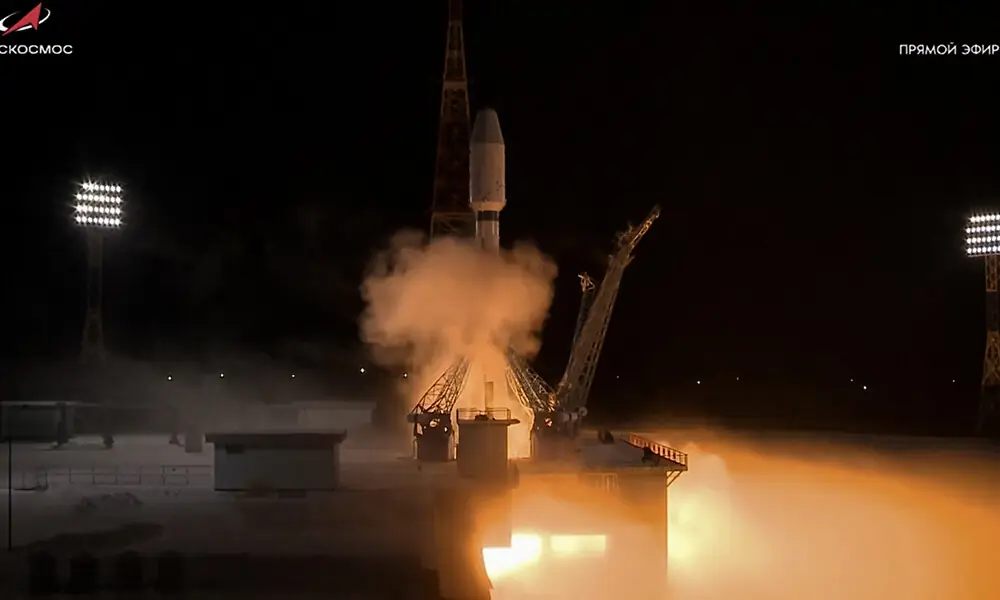
In this grab from a live broadcast run by the Russian space agency Roscosmos on December 28, 2025, a Soyuz-2.1b rocket booster with a number of satellites blasts off from the Vostochny cosmodrome outside the city of Uglegorsk, about 200 kilometres from the city of Blagoveshchensk, in the far eastern region of Amur. Photo: AFP
By

TEHRAN: Iran launched three domestically built observation satellites into space from Russia on Sunday, state television reported, marking a new step for Tehran’s space programme despite Western sanctions.

The country maintains that its aerospace industry is peaceful and complies with UN Security Council resolutions imposed over its nuclear programme.

“Three Iranian satellites, Zafar-2, Paya and Kowsar 1.5, were launched into space by a Soyuz rocket from the Vostochny Cosmodrome in Russia,” Iranian television reported.

The satellites were to be used for “observation” and were designed by “the private sector”, the official IRNA news agency said.

Paya is Iran’s most advanced domestically produced imaging satellite, using artificial intelligence to improve image resolution, IRNA said.

Iranian satellites to be launched from Russia on 28th

It said the satellite would focus on water resource management, environmental monitoring and mapping.

The Russian Soyuz launcher was chosen because it is one of the most reliable in the world for transporting sensitive satellites, according to the Fars news agency.

Iran has carried out 10 satellite launches in the last two years, including one in July from the same launch site in Russia.

Western countries fear that these satellite launch systems incorporate technologies interchangeable with those used in ballistic missiles, potentially capable of carrying a nuclear warhead.

Tehran denies those accusations and refutes that it is trying to acquire nuclear weapons.

Comments

200 characters remaining





















