


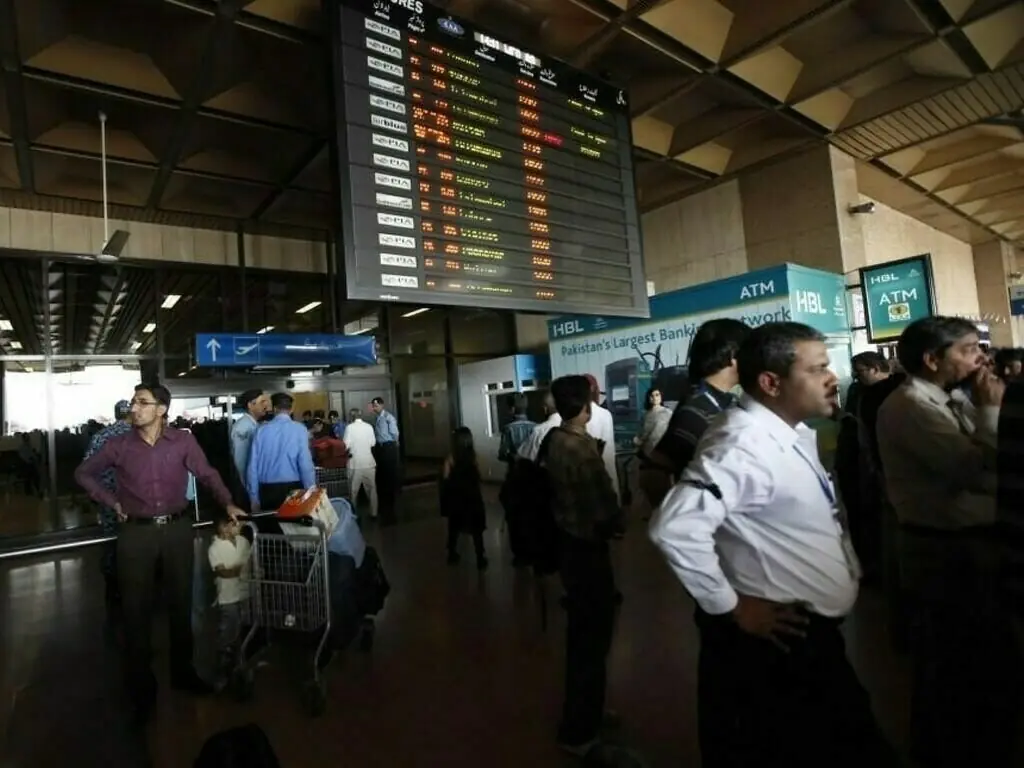
EDITORIAL: The recent disclosure before the National Assembly’s Standing Committee on Overseas Pakistanis and Human Resource Development regarding the offloading of passengers from international flights has drawn attention to a deeply troubling yet complex issue.
While possession of valid travel documents should ordinarily guarantee a citizen’s right to depart, the alarming rise in offloading cases points to serious governance challenges linked to illegal migration, organised begging networks, and weak regulatory oversight.
The FIA Director General informed the committee that 66,154 passengers were stopped from travelling abroad this year—almost double the number recorded in the previous year. This sharp increase reflects the growing reach of illegal migration rings that exploit vulnerable citizens by luring them with false promises of education or employment in Europe and Africa.
The deportation of 56,000 Pakistani nationals involved in organised begging from Saudi Arabia and the UAE further underscores the extent to which these activities have damaged Pakistan’s international reputation.
The UAE’s imposition of visa restrictions is a particularly troubling consequence, as it directly affects law-abiding citizens seeking legitimate opportunities abroad. The FIA’s explanation that most offloaded passengers were unable to provide sufficient or verifiable documentation highlights deeper systemic weaknesses.
Many outbound travellers lacked complete information regarding their universities, study programmes, or employment arrangements, raising legitimate concerns for immigration authorities.
In this context, stricter scrutiny at airports is understandable and, to a degree, necessary. Preventing illegal migration is not only a matter of domestic law enforcement but also a diplomatic imperative, as Pakistan’s credibility with host countries is undermined by its inability to regulate outbound travel effectively.
Enforcement alone, however, cannot be the solution. The fact that thousands of individuals are being stopped despite holding valid documents raises serious questions about transparency, consistency, and procedural fairness. Genuine travelers — students, workers, and tourists — often face humiliation, financial loss, and emotional distress when wrongly offloaded.
Such experiences erode public trust in state institutions and reinforce perceptions of arbitrary authority.
The Standing Committee’s call for a clear, publicly available standard operating procedures (SOPs), along with an airport-visible complaints and redressal mechanism, is therefore both timely and essential.
An effective redressal system would allow wrongly offloaded passengers to seek immediate clarification and relief. Clearly-defined SOPs would also ensure uniform application of rules, reducing discretionary abuse and confusion among both passengers and officials.
The government’s crackdown on fraudulent migration and organised begging rings is a necessary step to protect Pakistan’s international standing and prevent the exploitation of its citizens.
However, enforcement must be balanced with transparency and accountability. Without accessible remedial channels and clear procedures, well-intentioned measures risk punishing innocent citizens alongside offenders. A fair, rule-based system that safeguards both national interests and individual rights is essential for restoring public confidence in Pakistan’s migration management framework.
Copyright Business Recorder, 2025




















Comments
Comments are closed for this article.