


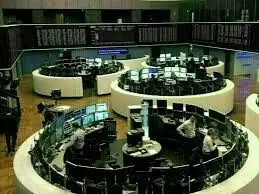

FRANKFURT: European shares gave up early gains to end lower on Friday, influenced by Wall Street due to renewed concerns over a potential AI bubble, erasing the week’s earlier advance on optimism over the US Federal Reserve’s interest rate cut. The pan-European STOXX 600 was 0.53 percent lower at close, a day after logging its biggest one-day jump in more than two weeks. For the week, the index was flat.
Major regional bourses also closed in the red, with Britain’s FTSE 100 down 0.5 percent and Germany’s DAX 0.34 percent lower.
A risk-averse sentiment gripped markets after Broadcom’s profit margin warning aggravated worries about the viability of the AI-fueled rally and ambitious spending in the sector - concerns that were initially sparked by Oracle’s disappointing forecast late Wednesday.
“What we see today is a very clear loss of appetite for technology stocks,” said Ipek Ozkardeskaya, senior market analyst at Swissquote Bank, adding that the relatively smaller losses in Europe are due to its more limited exposure to tech.
Regional AI-exposed stocks such as ASML and Schneider Electric fell 5 percent and 4.2 percent, respectively. Wall Street’s main indexes fell sharply, with tech-heavy Nasdaq sliding more than 2 percent.
“The sentiment right in the market is pretty much moving from the fear of missing out to the AI rally toward the fear of a bubble.”
In Europe, Basic Resources led sectoral losses on Friday, down 1.3 percent, with a broader risk-off mood spilling over to commodity-focussed assets. Copper prices dropped more than 3 percent.
Banks were also bruised, down about 1.3 percent, after four straight days of gains. Still, the index was among the top performer for the week, rising 2.2 percent.
UBS rose 2.5 percent to hit a more than 17-year high after Swiss lawmakers floated a compromise on new capital rules for the bank to ensure it remains internationally competitive.
The day’s losses on the STOXX effectively erased the notable gains made earlier in the week due to the much-anticipated Fed rate cut on Wednesday, accompanied by a policy outlook statement that was widely viewed as less hawkish.
“Markets are very much looking at 2026 … any sign that businesses and consumers feel more confident to borrow money - naturally that’s a good backdrop for the financial sector,” Daniel Coatsworth, investment analyst at AJ Bell, said.
Investors also favour a likelihood of White House economic adviser Kevin Hassett becoming the next Fed chair, a scenario that could lead to more cuts next year.



















Comments
Comments are closed for this article.