


EXCLUSIVE: Interview with Pak-Qatar Asset Management Company’s CIO

‘Pakistan’s Takaful and retirement savings ecosystem needs simpler, faster, and Shariah-compliant solutions’
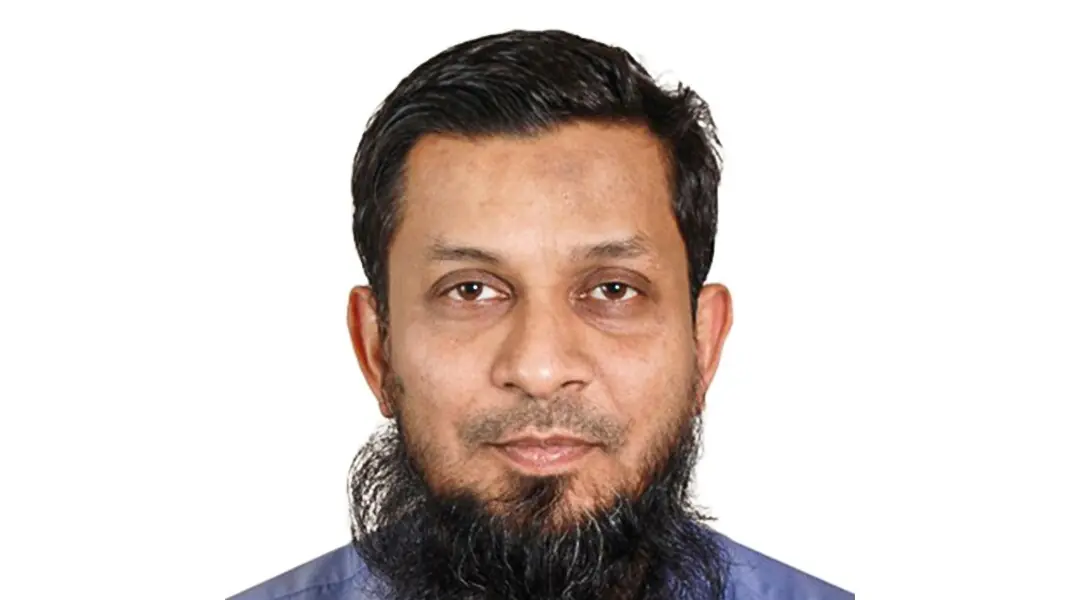
Meraj Uddin Mazhar is a seasoned investment professional and thought leader in the field of asset management and Islamic finance in Pakistan. With over a decade of extensive expertise, he has played a pivotal role in shaping investment strategies and developing Shariah-compliant financial products that cater to evolving market needs. Holding prestigious qualifications such as the Chartered Financial Analyst (CFA) and Financial Risk Manager (FRM) designations, along with an MBA in Finance, Meraj combines rigorous academic grounding with practical industry insights.
Currently serving as the Chief Investment Officer at Pak-Qatar Asset Management Company Limited (PQAMCL), Meraj is responsible for overseeing the company’s overall investment philosophy, portfolio management, and product innovation. His deep knowledge spans Islamic finance, equity markets, risk management, and retirement solutions, making him a key influencer in advancing ethical and sustainable investment practices in Pakistan. Meraj is also actively engaged with regulators and policymakers to promote the growth of Shariah-compliant financial instruments, contributing significantly to the development of Pakistan’s capital markets and insurance sectors.
The following are edited excerpts from a recent conversation BR Research had with Meraj.
BR Research: Where does the insurance and Takaful industry stand today, and how do you see its current direction?
Meraj Uddin Mazhar: Pakistan’s insurance industry has a long history, but its penetration remains extremely low. As a percentage of GDP, insurance penetration is below 1 percent, and relative to banking assets, the entire sector accounts for only around 5 to 7 percent. The industry is driven entirely by retail business, with no corporate capital involved. All assets have been built from retail.
When Takaful entered the market in 2006, expectations were high that it would grow as rapidly as Islamic banking. However, the industry adopted the same high-cost, long break-even model used by conventional insurance. Customers typically needed five to six years to break even, even though operators recovered costs much earlier. This discouraged participation. About three and a half years ago, we revisited this model. We realized that mutual funds succeed because of low front-end charges and quick break-even. We applied similar thinking to Takaful and introduced a hybrid single-contribution model where break-even takes only a few months—and in some cases, from day one. The impact was immediate. In three years, progress matched more than fifteen years of previous growth. Today, even large players like State Life and EFU are introducing similar products.
Another major gap existed in pensions. Although pension products were available, their long break-even periods made them unattractive. This motivated us to design and launch the Lifetime Kafalat Plan, Pakistan’s first Shariah-compliant pension plan that breaks even from day one.
BRR: Pension products are for retirement. Is break-even speed really that important in this category?
MUM: In pension savings, the customer’s primary objective is to build retirement income, not to pay high upfront charges. When life coverage is not the main objective, there is no reason for break-even to take years. A customer contributing toward retirement should see immediate value. That is why we introduced a pension structure with day-one break-even, making the Lifetime Kafalat Plan accessible, efficient, and far more attractive. Since reducing costs and eliminating delays, our penetration has grown significantly.
BRR: Why was it needed, and what makes it unique?
MUM: Pakistan’s pension landscape is undergoing a major transformation. Traditional, state-backed pension systems are becoming unsustainable, and most private sector employees lack structured post-retirement income. This gap highlights the critical need for long-term, contribution-based, Shariah-compliant retirement solutions—an area where we have taken the lead.
The Lifetime Kafalat Plan is designed to provide a lifelong income stream after retirement. The plan starts monthly income payments at age 60, guaranteed for life, with accessibility from as low as Rs500 per month. It includes a continuation feature, so if the participant passes away, income continues for their spouse or nominee, ensuring family security. Participants also receive complimentary Takaful coverage of up to Rs30 million, combining protection with peace of mind. Linked with our Islamic Voluntary Pension Scheme (VPS), individuals can enjoy up to 20% tax savings, creating a holistic, ethical, and sustainable retirement solution.
BRR: Has this shift in product structure resulted in growth in your customer base and assets?
MUM: Yes, both have risen sharply. In the first fifteen years of operations, the company accumulated roughly 500,000 customers. But in the last three years alone, we have onboarded nearly 50,000 new customers every year. Earlier, a contribution of Rs100,000 annually was considered substantial. Today, customers willingly contribute Rs5 million and receive coverage of up to Rs25 million from day one. The break-even period has fallen from six years to six months or less. This has transformed customer sentiment and allowed real growth in Takaful-based savings.
BRR: How do you calculate returns, and how do you ensure the process remains Shariah-compliant?
MUM: Takaful investment works like the mutual fund model with high-, medium-, and low-risk funds. Unit prices are calculated daily. Income funds accrue daily income even if the cash arrives after months because rates are fixed at KIBOR-based levels. As assets grow, unit prices increase. This is the same investment mechanism used across the mutual fund industry, and the entire process is monitored by our Shariah Board.
BRR: Equity markets can be volatile. Does this create concerns for customers, especially within a Shariah-compliant universe that is relatively limited?
MUM: Customers choose their risk level at the start. Those who opt for aggressive allocations understand the nature of equity markets. Over the past twenty-five years, equities in Pakistan have delivered average returns of more than 18 percent, which is consistent with the long-term benefits of ownership. Since Takaful policies are long-term in nature, we usually recommend a blend where around 20 percent goes into high-risk funds and the remaining 80 percent into conservative income funds.
As for Shariah compliance, we invest only in companies screened through the same criteria used for the KMI All Share Index. Our research team reviews the companies, and allocations are approved through our Investment Committee and Shariah Board. If a stock becomes non-compliant, we sell it.
BRR: Does Pak-Qatar maintain its own Shariah Board for this oversight?
MUM: Yes, we have a dedicated Shariah advisor as well as a full Shariah Board that supervises our investment process, conducts audits, and ensures compliance at all levels.
BRR: What engagement do you have with SECP or policymakers regarding Shariah-compliant instruments?
MUM: Three years ago, the industry faced a shortage of Shariah-compliant investment instruments, especially in the short-term category. The situation has improved because regulators and the State Bank have supported the development of Sukuk, and the government has also increased its focus on Islamic financing. More short-term Sukuk are expected, which is encouraging for the industry.
However, Pakistan’s debt capital market is still underdeveloped. The main challenge is not the ability to assess credit risk but weak enforcement and recovery mechanisms. Without reliable credit reporting, timely legal action, and stronger institutional support, debt markets cannot scale. These reforms are essential for sustainable growth.
BRR: If market-based instruments are cheaper than bank lending, why do companies still prefer banks?
MUM: Banks primarily lend to large, established corporations because it is easy and profitable, especially when they earn large spreads from government securities. SMEs and startups struggle to obtain financing and are often unaware that Sukuk and market-based debt options exist. For us, the challenge is different: one default affects the entire investor pool, so we have to be extremely cautious. The ecosystem needs stronger enforcement and awareness before market-based financing can compete effectively.
BRR: Is the main issue lack of awareness?
MUM: Awareness is a major factor. Despite the presence of industry associations, outreach remains limited. Retail customers do not like long break-even periods, which is why conventional insurance has struggled to gain traction. Our low-load, fast break-even structures changed that perception significantly and allowed Takaful to expand among retail savers.
BRR: What is your view on Takaful industry growth?
MUM: Conventional insurance will grow faster due to its size, but Takaful is growing steadily and contributing to overall penetration. The more the industry adopts transparent and simple models, the faster it will grow. Competition is positive because it increases awareness and benefits everyone.
BRR: What risks exist in income payment plans?
MUM: Two major risks exist: longevity risk and interest rate risk. Longevity risk means the customer may outlive the plan period, and interest rate risk means returns may fall below projections. Both can cause early depletion of savings. This is why we introduced the guaranteed variant of the Lifetime Kafalat Plan, which offers lifelong pension regardless of age or market conditions.
BRR: What is the way forward for the industry?
MUM: The industry needs stronger regulatory support, more product innovation, and improved legal frameworks. Without the right enabling environment, even good products struggle to scale. Our voluntary pension scheme was the first launched by a Takaful company, and now others are seeking similar licenses. With supportive policies, Pakistan’s Takaful and retirement savings ecosystem can expand significantly and help address the country’s long-term financial planning needs.

























Comments
Comments are closed for this article.