


Tariff issue resolved: Kapco resumes operations, rejoins national grid
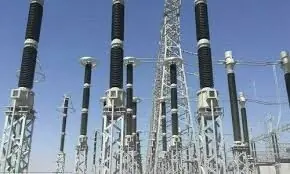

ISLAMABAD: The Kot Addu Power Company Limited (Kapco) has resumed operations and rejoined the national grid after more than 10 weeks of suspension that began on October 1, 2025. With the tariff issue resolved, Kapco’s return strengthens supply reliability in southern Punjab and restores a key Black Start–capable facility to the national system.
According to an official announcement from the Company, the interruption had occurred due to tariff limitations linked with the previously approved Indicative Generation Capacity Expansion Plan (IGCEP) and Power Acquisition Program (PAP) frameworks.
The company restarted generation following formal approval from NEPRA, despite strong reservations expressed by Member (Technical) Rafique Shaikh.
In his additional note, Member Shaikh highlighted that the installed generation capacity in the CPPA-G system stood at around 42,512 MW as of June 2024 — including approximately 25,000 MW of thermal generation—far exceeding current demand. Utilization of thermal capacity remained low in FY2023 and FY2024, at around 32% and 29% respectively. He added that much of the surplus and unused capacity is cheaper than the interim tariff proposed by KAPCO. This is also not the first request for extending Kapco’s operations; previously, Nepra granted the plant an extension of 485 days.
Shaikh noted that when Nepra renewed Kapco’s generation licence on September 8, 2022 for three years, it specifically directed NTDC and MEPCO to resolve identified technical constraints that were forcing Kapco to operate outside the Economic Merit Order (EMO). Despite this directive, and with only six months left in the licence period, he said the issues remain unaddressed.
He further pointed out that while stakeholders are striving to eliminate expensive “Take or Pay” capacity, the extension for Kapco —whose power is relatively costly—is again being proposed on a Take or Pay basis, citing transmission and grid limitations. Meanwhile, the 4,000 MW HVDC line built to transfer cheaper southern generation to the north is operating at a low utilization rate of about 37% in FY24, even though full capacity payments are being made.
Failure to rectify these systemic constraints, Shaikh warned, has prevented optimal use of cheaper, indigenous energy sources in the south. As a result, “we find ourselves reinvesting in outdated and inefficient generation capacity, further exacerbating the problem. These facts highlight significant flaws in both the planning and execution of power generation and transmission system projects,” he observed.
He stressed that electricity consumers should not bear the financial burden of these inefficiencies, which arise from inadequate planning and execution by the transmission network operators. In line with their responsibilities under the NEPRA Act, NTDC and the relevant DISCOs must ensure an unconstrained transmission system, he said.
“I am of the considered opinion that the interim tariff should be granted to this company strictly on a ‘Take and Pay’ basis,” he stated. “However, whenever this plant operates in violation of the Economic Merit Order, the differential cost between cheaper available generation and KAPCO’s more expensive generation should not be passed on to consumers. Instead, it should be borne by the entities responsible for the constrained transmission system.”
He concluded that, given the presence of surplus and more economical Take or Pay capacity, granting Kapco concurrence under the same regime would impose an unnecessary financial burden on the power sector. Therefore, any approval should be strictly on a Take and Pay basis.
In October 2025, Kapco urged the National Electric Power Regulatory Authority (Nepra) to clarify and rectify its recent tariff order to ensure regulatory consistency and safeguard grid stability, warning that ambiguity over tariff validity could disrupt system support in southern Punjab.
In a formal communication to Nepra Chairman, Kapco’s Chief Executive Officer Shahab Qader Khan had called for explicit confirmation that the company’s tariff for its 495MW Combined Cycle Power Plant (CCPP) remains valid for the full three-year period allowed under the Tripartite Power Purchase Agreement (TPPA).
Copyright Business Recorder, 2025




















Comments
Comments are closed for this article.