


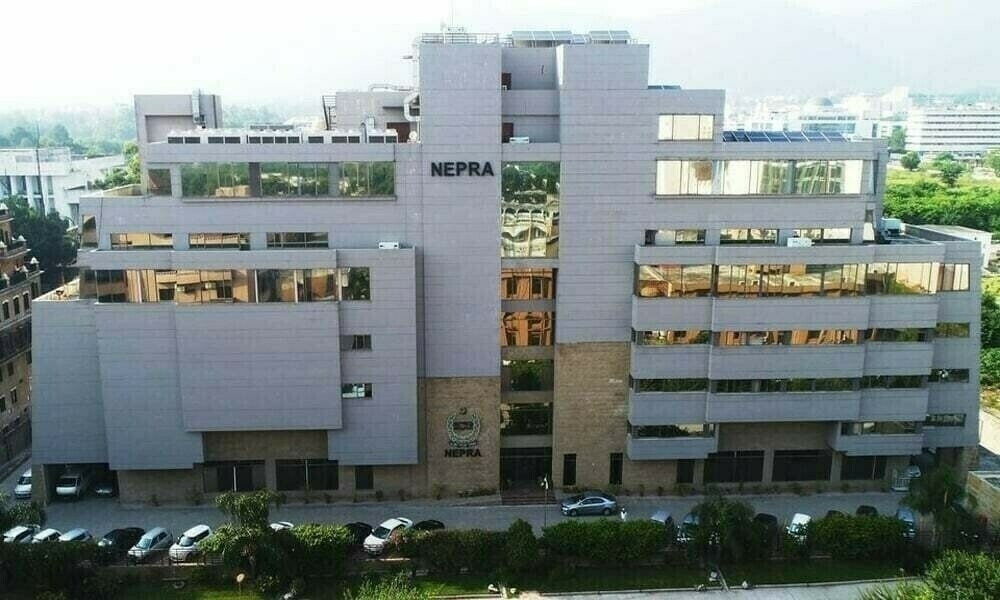

ISLAMABAD: Setting aside proposals submitted by industry, the National Electric Power Regulatory Authority (Nepra) has approved the government’s three-year concessional incremental tariff package at Rs 22.98/kWh for industrial and private agricultural consumers.
The reference period for calculating incremental consumption will run from December 2023 to November 2024, and the package will only apply to industrial and private agricultural tariff categories as per the notified schedule.
Nepra conducted a public hearing on November 11, 2025 to hear the public and private sectors on the concessional tariff package.
According to Nepra, if consumption data for a consumer is unavailable, or if a consumer has zero reference consumption, the benchmark consumption criteria for new consumers will apply. Consumers who change tariff categories or switch from non-ToU to ToU after the reference month will also be treated as new consumers. However, consumers shifting within the same category — for example, from B2 to B3 — will not be considered new, and existing benchmark formulas for load-enhanced consumers will apply.
Consumers switching categories (eg, Commercial to Industrial) will be treated as new for the purpose of availing the package. If a consumer remained disconnected or had a defective meter during the reference period, new consumer benchmarking rules will apply.
Consumers will be ineligible for the incentive in any month in which their meter is classified as defective or locked. Detection units will not be used for benchmark or incremental consumption calculations. Dial-adjustment corrections (excluding detection) will be applied for benchmark calculations.
PM Shehbaz unveils 3-year subsidised power package for industries, farmers
All Captive Power Plants (CPPs) will be treated as new consumers. If a consumer’s meter cannot record MDI, only the sanctioned load will be used for benchmark calculations. Duties and taxes will be calculated on the payable amount.
Net-metering consumers will qualify only if there is net import of electricity in the relevant month. Benchmark consumption will be based solely on imported units, and incremental units will be capped at net imported units (imports minus exports). Incremental units will be allocated across peak and off-peak periods on a prorated basis. No Tariff Differential Subsidy (TDS) will be allowed on incremental units.
Wheeling consumers will also be eligible and treated as new consumers for benchmark calculations. Nepra confirmed that K-Electric’s interpretation regarding net metering — restricting calculations to current - month imports without carry-forward adjustments — is correct.
Representatives of the business community criticised Nepra, alleging the regulator merely endorsed the Power Division’s proposal without meaningful consideration.
“Nepra has acted as a rubber stamp. Public hearings have become an eyewash and a waste of time,” said one industrialist on condition of anonymity. “This package is discriminatory, will shut down many industries, and gives undue benefits to others. Most textile units are excluded because of the 60% load-factor requirement for captive units” said Aamir Sheikh.
Responding to concerns, the Power Division said the industrial tariff has been reduced by 29%, from Rs 62.99/kWh in March 2024 to Rs 44.70/kWh in October 2025. It defended the use of a one-year benchmark period, saying industrial consumption during that window was the lowest, enabling a favorable benchmark for consumers.
It further argued that industry had already achieved 34 billion units of consumption in 2022 — over 20 percent higher than the benchmark period—and therefore should not require additional investment to benefit from the package. The Division also rejected claims of IMF resistance, stating the IMF has never opposed subsidy-neutral schemes intended to increase grid draw. Nepra acknowledged that stakeholders widely objected to the “excessive” load factors proposed by the Power Division. Nepra’s analysis showed that actual industrial load factors were significantly lower.
While Nepra said actual load factors should ideally be used to incentivize consumption, it ultimately approved the Power Division’s proposed load factors to avoid burdening other consumers through higher quarterly adjustments. Nepra also amended the formula for new consumers: instead of using the higher of the relevant month’s MDI or sanctioned load, NEPRA has simplified the criteria so that “MDI for the relevant month” reflects whichever value maximizes eligibility. Nepra upheld the inclusion of wheeling consumers, noting that excluding them would contradict Section 7(6) of the NEPRA Act and undermine the goal of increasing industrial consumption.
Copyright Business Recorder, 2025

























Comments
Comments are closed for this article.