


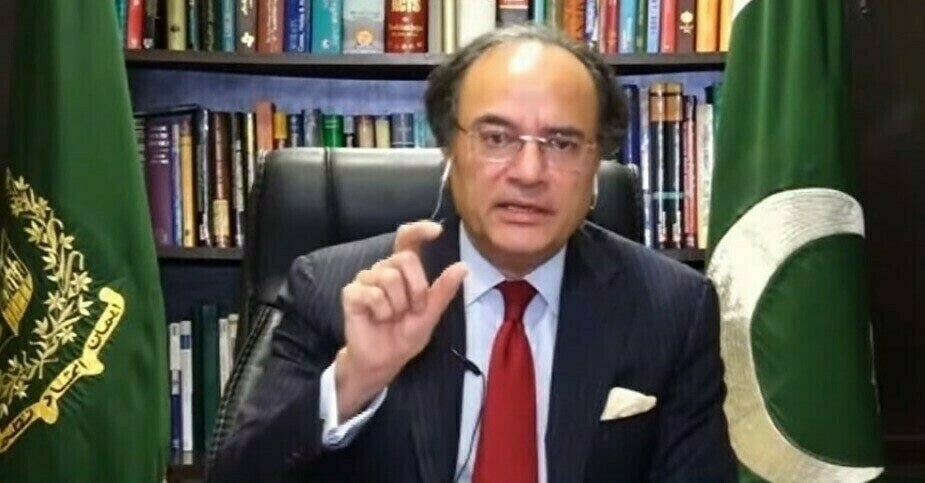

ISLAMABAD: Finance Minister Mohammad Aurangzeb cautioned that the government will keep a close eye on balance of payment and current account to ensure sustainability in growth, but ready to reduce taxes on formal sectors with the help of Tax Policy Office fully engaged to facilitate formal sector where ever fiscal space is available.
Addressing a press conference on Sunday, Aurangzeb said that the structural reform must be done at par with the institutional reforms.
He said Large Scale Manufacturing has witnessed an increase of 4.2 percent during first four months of July-October (205-26), reflecting increased local activity in terms of domestic economy and growth.
Manufacturers, cos: Govt working on 1.2pc turnover tax solution: FD official
The minister stated that activity drivers during July-October (2025-26) included cement 16 percent, fertilizer up by 9 percent, petroleum products 4 percent, automobile 31 percent and production and sales of mobile phones increased by 26 percent.
He said that the LSM has witnessed an increase of 41 percent on year to year basis during first quarter of 2025-26 as compared to same period last year. The LSM has witnessed month on month basis growth, as well as, year to year basis. Last year, there was a contraction of 0.5 percent in LSM growth. The growth needs to be sustainable by keeping a close eye on balance of payment and current account, he said.
The overall exports have witnessed an increase of 5 percent including IT services fantastic story of 20 percent increase in exports on year to year basis. Traditional sectors needs to be facilitated and assisted, he maintained.
Finance Minister emphasised upon a new economy with special focus on growth of IT services. He said the country can not be run with 8 to 9 percent tax to GDP.
The FBR has achieved 11 percent growth in tax collection during July-November 2025-36, but the FBR has paid huge refunds of Rs 250 billion during July-November (2025-26) against Rs 200 billion in same period of last fiscal year.
He stated that the remittances would cross USD41 million this year, he said.
Aurangzeb stated that the increase in imports of raw materials and inter-mediators due to changes in customs tariff regime is a positive sign for the domestic industrious. There is no sudden change in the tariff regime, but it is a 4-5 years plan for rationalisation of the whole customs tariff regime to reduce tariff protection.
He said the government is also keeping an eye on imports, results need to come out in the next three years and the government has formed working groups in this regard.
Aurangzeb said the 11th National Finance Commission (NFC) Award meeting, scheduled for this week, will be conducted with a “Pakistan-first” approach, assuring an open and constructive dialogue among the federation and provinces. He said working groups will be formed under the TORs of the NFC, adding that the government aims to carry forward the process in the same spirit in which the National Financial Compact was signed with all provinces.
He referred to the demand of the exporters to suspended Export Development Surcharge (EDS); however, the Prime Minister took a bold decision to abolish the 0.25 percent Export Development Surcharge (EDS) on exports with immediate effect, providing long-awaited relief to exporters and improving Pakistan’s competitiveness in global markets. “The summary has been moved for the federal cabinet for approval soon”. This is the reaction and response time of the government to facilitate the private sector,” he said.
Talking about the survey of the Overseas Chambers of Commerce and Industry, he said that overseas Chambers had declared Pakistan a better country for economic activities and investment. He said that the 79 percent of the OICCI members have recommended Pakistan as viable country for investment under the current economic stabilization.
He was happy that the domestic companies have started manufacturing products of the international standards. He said that local companies had started producing products and new global companies had come to the energy sector. He said that many new firms were coming to Pakistan and new investments were also expected in the coming year 2026.
He said that the government is giving huge priority to the new economy and structural and institutional reforms for a sustainable economy in the country. Along with the traditional sectors in the country’s economy, the government is now paying special attention to the new economy, in which the information technology, mines and minerals and pharmaceutical sectors are of great importance, the minister said. During the last 12 to 18 months, a lot of international firms are coming to Pakistan in energy sector (Turkish company), mining sector, construction industry and Tech telecom sector.
On the debt side, he said that the debt stock on the domestic side is constant which has been witnessed after a period of nine years. He said that debt servicing was not being talked about as much as it should be and after nine years, it has happened that the debt stock has not increased.
He said that Pakistan aims to raise USD250 million through the Yuan-denominated debt in December 2025 or before the Chinese new year. The bonds will be privately placed on China’s national interbank market and offered to qualified institutional investors.
The minister said that the government was trying to make the private sector competitive in the national economy, but the private sector must promote innovation and productivity in the industrial sector.
He said that the textile sector, especially in the private sector, should be innovated so that it can become a productive sector in the country’s economy.
We will have to increase the tax to GDP ratio, which needs to be taken further more than 9 percent, he added. Speaking at the 11th National Financial Award (NFC), the minister said that apart from this, all stakeholders would gather soon for the 11th NFC Awards and better progress was expected on this. The finance minister said that developments were taking place in institutional reforms which was necessary for competitiveness in the country’s economy.
He said, “We completed both IMF reviews, which considered the confidence of international financial institutions on the country’s economy.”
“We have also done a lot for grants on climate change and said that from July to October, the cement, petroleum, and fertilizer sector has shown improvement’ he said.
The federal minister said that production of large industries was enhanced, adding, “We have to make growth sustainable through the potential manufacturing sector.”
He said that this year he expected improvement in Balance of Payments and the Current Account would have to be monitored from all aspects.
Finance Minister stated that the Tax Policy Office has been separated from the FBR and the budget for 2026-27 would be framed by the Tax Policy Office in the Finance Division to ensure suitability in tax policy and budget for every year. The meeting of the advisory board has been held with the private sector members.
He underscored the government’s decisive shift toward an inclusive, private-sector-driven and export-led growth model, highlighting the recent abolition of the Export Development Surcharge (EDS) as a key demonstration of this commitment.
He noted that the government’s earlier decision to eliminate the decades-old levy, alongside reforms to strengthen the Export Development Fund’s governance, reflects a clear policy direction aimed at boosting competitiveness, empowering exporters, and laying the foundations for sustainable economic expansion.
Minister said that following approval by the IMF Executive Board, Pakistan will receive two tranches — one related to climate-resilience reforms under the first review, and the second under the broader lending programme.
Aurangzeb said the government is closely monitoring the balance of payments and the current account on a monthly basis, reviewing exports, remittances and imports. He announced that the financial close of the USD3.5 billion Reko Diq project has been completed, calling it a “game changer.” The government has abolished the Export Development Surcharge, and its notification will be issued soon after cabinet approval. He added that the private sector had requested its suspension, but the prime minister decided to eliminate it altogether.
The minister acknowledged key concerns of the industrial sector — high taxes, elevated energy tariffs and high interest costs — saying these issues were valid.
He said the policy rate will continue to be reduced gradually. On the tax-to-GDP ratio, Aurangzeb said Pakistan cannot operate with an 8–9 percent ratio and that both the federation and provinces must contribute more to strengthen the economy. Work is also under way to reduce taxes on salaried and formal sectors and to cut energy tariffs.
Aurangzeb said foreign companies are showing renewed interest in Pakistan, as reflected in the latest Overseas Investors Survey. Over the past 12 to 18 months, several international firms have invested in Pakistan, particularly in the energy and IT sectors, and more are expected in the near future. He clarified that Pakistan’s debt has not increased, while interest payments have declined owing to the reduction in the policy rate.
The minister said the issuance of Panda Bonds is an important milestone, and Pakistan will launch the bond in December. “China is Pakistan’s long-term partner, and we should have entered its capital market 10 years earlier,” he said, adding that the Panda Bond will help lower borrowing costs.
He said the Tax Policy Office has been established within the Ministry of Finance and is now fully operational. From next fiscal year, no policy will be formulated inside the FBR, and the federal budget will be prepared through the new Tax Policy Office. The advisory board, which includes private-sector members, has already held its first meeting.
Reflecting on past economic challenges, he said Pakistan must avoid returning to a boom-and-bust cycle. He reiterated that institutions previously privatised had improved in performance, and any future privatisation will ensure respect and fair compensation for workers. He confirmed that PWD, Utility Stores Corporation and PASSCO have already been shut down, and more loss-making entities will be closed as state-owned enterprises collectively consume around Rs1 trillion annually.
Commenting on the IMF’s governance and corruption diagnostic report, the minister said Pakistan fully facilitated the assessment, which identifies structural deficiencies. He said the report is technical and covers 30 countries, and the IMF has acknowledged Pakistan’s progress. Most recommendations are already being implemented.
Aurangzeb said the government has disbursed Rs250 billion in tax refunds over the past five months and will recover the revenue shortfall. He said Pakistan must focus on emerging economic sectors including IT, minerals and pharmaceuticals. The e-PAD digital procurement system under PPRA has been launched, linking 9,000 entities and 41,000 vendors — including 6,000 foreign vendors — with FBR, NADRA and SECP.
He emphasised that this step reflected the government’s resolve to empower exporters, improve competitiveness, and channel resources and decision-making authority toward the private sector to realise Pakistan’s export potential.
Senator Aurangzeb reiterated that the government’s medium-term economic vision rests on moving from stabilisation to durable, broad-based and inclusive growth led by exports, remittances, productivity and private investment.
The Minister highlighted that export performance had strengthened, with overall exports rising 5 percent and IT services exports growing by over 20 percent year-on-year. He stressed that the IT sector had recorded back-to-back monthly highs in September and October, establishing itself as a critical pillar of the “new economy,” alongside emerging sectors such as minerals and mining.
He noted that the $3.5 billion Reko Diq-related syndication led by IFC and now financially closed following the resolution of procedural delays, represents a transformational investment that will generate an estimated $2.8–$2.9 billion in annual exports once production commences.
The Minister reported that remittances had also shown robust strength, reaching USD38 billion last year and expected to surpass USD41 billion this year, providing a sizeable buffer to the current account.
He added that the government was managing imports carefully under a reformed tariff regime designed to support industrial competitiveness by prioritising raw materials and intermediate goods while gradually phasing out long-standing protectionism. This transition, he emphasised, will be phased over four to five years to enable domestic industries to become internationally competitive.
Senator Aurangzeb underscored that structural reforms remained central to the Government’s agenda. He confirmed that the new Tax Policy Office—now operational under the Finance Division—had conducted its first advisory board meeting and would henceforth be responsible for preparing tax policy and the national budget.
The objective, he said, was to bring consistency, analytical rigour, and private-sector input into the policy-making process while allowing FBR to focus on enforcement, compliance and technology-driven administration. He noted that work on pension, debt, SOE reform, the digital economy, taxation, energy, and rightsizing was proceeding as committed earlier.
On public finance, the Minister reported that Pakistan’s domestic debt stock had stabilised for the first time in nine years, and debt servicing costs had begun to decline with the reduction in the policy rate.
He confirmed that Pakistan’s inaugural Panda Bond supported by credit enhancement from ADB and AIIB and approved by China’s central bank would be issued before December or, at the latest, before the Chinese New Year, helping diversify Pakistan’s funding base and reduce borrowing costs.
The Minister announced that the 11th NFC Award process would begin next week, with Chief Ministers and provincial finance teams joining deliberations. He emphasised that revenue, expenditure and governance reforms require constructive federal–provincial engagement and expressed confidence that the meeting would be held in a spirit of “Pakistan First,” following the consensus approach demonstrated during the National Fiscal Pact.
Speaking on the Global Diagnostic and Corruption Report, Senator Aurangzeb clarified that the government itself had requested and facilitated the assessment to strengthen institutional reforms.
He noted that the report acknowledged significant progress in sectors including taxation and governance, and that many of its priority recommendations were already work in progress. He affirmed the government’s commitment to implementing the remaining recommendations as part of broader institutional reforms essential to sustaining Pakistan’s economic turnaround.
Copyright Business Recorder, 2025


























Comments
Comments are closed for this article.