


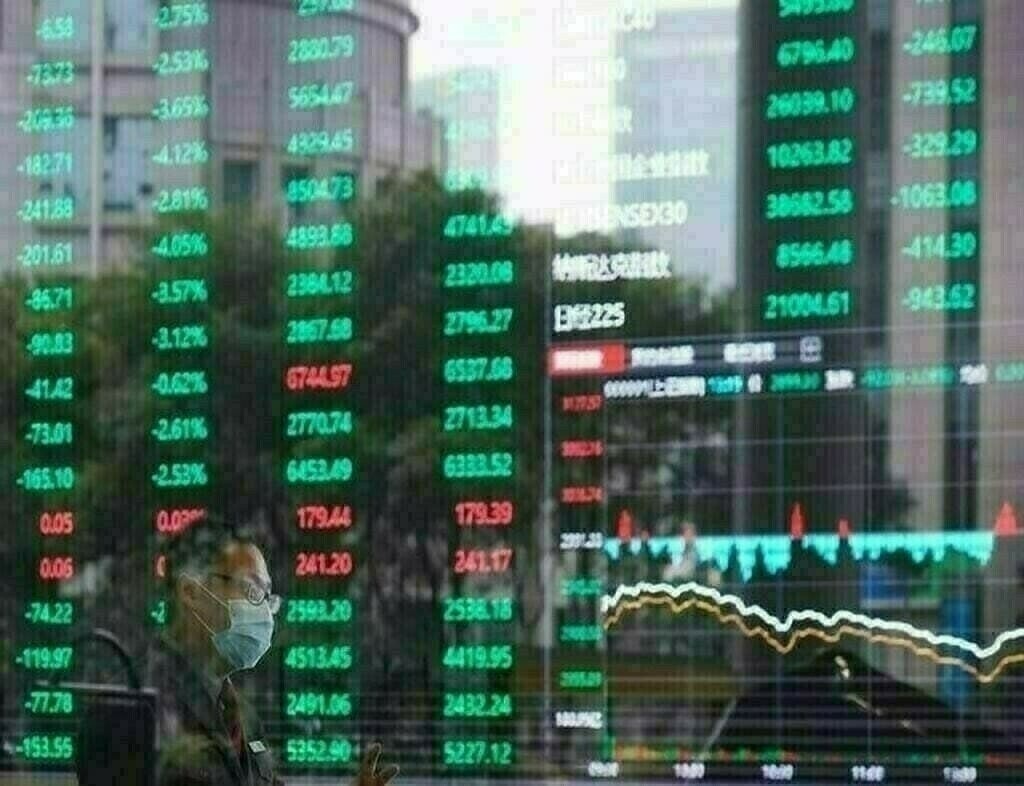

BENGALURU: Most emerging Asian equity markets rose on Wednesday, with South Korea and Taiwan leading the gains on rising expectations for a US Federal Reserve interest rate cut next month.
The MSCI emerging Asia index rose 1.2 percent in its third straight session of gains as South Korean shares advanced 2.7 percent and Taiwan shares climbed 1.9 percent.
Bets have firmed over the past few sessions for a quarter-point Fed rate cut next month, driven by weak economic data and comments from central bank officials backing monetary easing.
Fed funds futures are pricing an implied 82.9 percent probability of a 25-basis-point cut at the US central bank’s next meeting on December 10, compared to even odds a week earlier, according to the CME Group’s FedWatch tool.
Back in Asia, Malaysian, Singapore and Indonesian stocks advanced 0.6 percent each, while shares in Manila rose 0.5 percent. Meanwhile, Bangkok’s benchmark index slipped 0.2 percent.
Most stock benchmarks are set to end the year with robust gains, driven by economic growth, monetary policy easing and renewed risk appetite, particularly for artificial intelligence-related stocks.
South Korea’s KOSPI index has jumped more than 65 percent this year, making it the best performer in the region, while Indonesia, Singapore and Taiwan stocks have risen about 20 percent each.
Emerging market as an asset class has performed strongly this year, said Matthew Culley, a portfolio manager at Janus Henderson emerging market team, adding that while volatility can persist in the short term, the mid-term outlook remains bright.
Shier Lee, Convera’s lead FX and macro strategist for APAC, echoed the sentiment for currencies, saying EM Asia will enter 2026 with a cautiously constructive stance, with asset managers very overweight on high-yielding currencies.
“If the Fed cuts rates, Asian currencies, especially high-yielding ones, should appreciate more from improved capital inflows and stronger appetite,” she said.
Currencies were largely muted in the region on the day, with the Thai baht, Singapore dollar, Philippine peso , Indonesian rupiah, and Malaysian ringgit showing little changes.
The South Korean won reversed gains to trade marginally lower after the country’s finance minister vowed stern responses to excessive foreign exchange volatility as authorities closely monitor speculative trading and herd-like behaviour in the market.
The currency had hit a more than seven-month low earlier this week.
The Bank of Korea is anticipated to keep its key interest rate unchanged at 2.50 percent on Thursday amid a volatile currency and overheated housing market, according to a Reuters poll.

























Comments
Comments are closed for this article.