


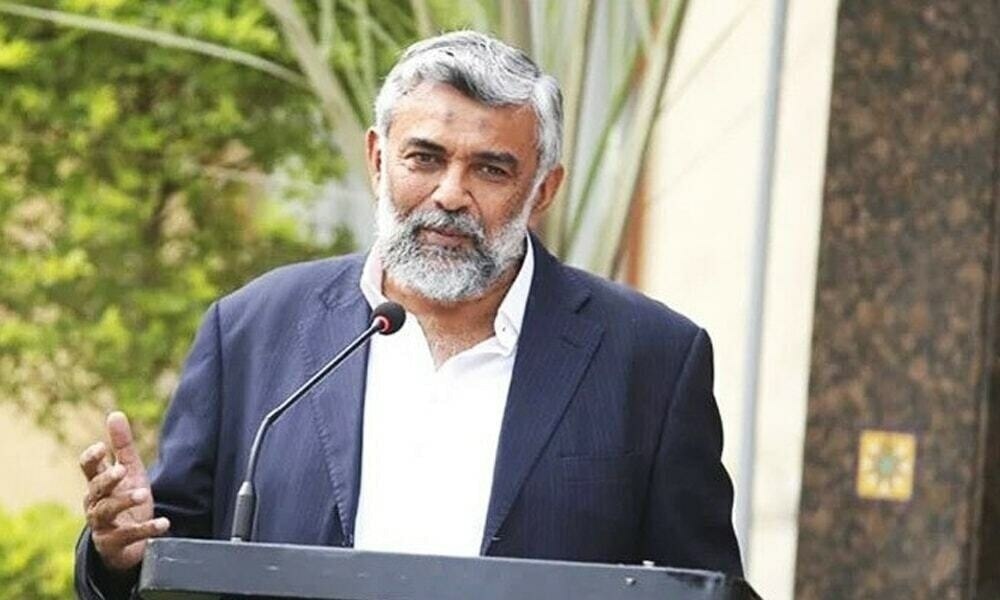

KARACHI: Widespread and deep-rooted corruption in Pakistan, as recently reported by the International Monetary Fund (IMF), is weakening the foundations of our ‘hard state,’ and the concerned quarters must take urgent and strong notice of it, said Pasban Democratic Party (PDP) Chairman Altaf Shakoor here Sunday.
He said the IMF in its recent Corruption Diagnostic Assessment (GCDA) said that corruption in Pakistan is deep-rooted and persistent. It calls corruption a “persistent and widespread” problem in Pakistan. It notes weak “control of corruption over time,” meaning corruption is not just episodic but systemic. This undermines public spending effectiveness, revenue collection, and trust in legal institutions.
He said the IMF highlights “elite capture”: powerful economic and political actors benefiting disproportionately, shaping policy in their favour.
These elites influence key sectors—such as sugar, real estate, agriculture, and energy—to secure favourable policies. For example, the IMF cites a decision in 2019 to permit sugar exports, benefiting politically connected sugar mill owners.
He said the sugar mafia even today calls shots in Pakistan, and sugar is being sold at more than Rs200 per kg, which means illegal profits of more than Rs50 per kilogram.
He said according to the IMF, Pakistan could boost its GDP by 5–6.5 percent over five years if it implements governance reforms to curb corruption.
He said the fund suggests that a significant portion of the economic damage from corruption comes not just from direct losses but from reduced investment, inefficiency in public spending, and weak institutions. He said the IMF notes that the recoveries made (e.g., via NAB) are large (Rs 5.3 trillion from Jan 2023–Dec 2024), but these represent only a fraction of the total economic cost.
Shakoor said that the IMF’s diagnostic identifies multiple institutional areas with particular corruption vulnerabilities. There are issues in budgeting, reporting, and transparency. Procurement processes are opaque, and weak oversight leads to corruption risk. State-Owned Enterprises (SOEs) are a big issue due to weak governance, political interference, and lack of accountability.
He said the IMF criticises the tax system as overly complex, with loopholes, exemptions, and weak internal controls in the Federal Board of Revenue (FBR).
The judiciary is described as “organizationally complex,” with backlogs, antiquated laws, and questions over the integrity of judges, making it unreliable for enforcing contracts and property rights. There is huge money laundering. Despite reforms, enforcement is weak and convictions are few; the IMF links this to corruption risk.
He said there’s fragmentation among accountability institutions (e.g., different regulators and oversight bodies), and many don’t have strong operational independence. Anti-corruption bodies (like NAB) are vulnerable to political influence; the IMF recommends merit-based, transparent appointment processes. He said it is necessary to strengthen the Auditor General’s office, making it more independent. There should be more transparency and monitoring gaps.
Altaf Shakoor said that our political elite, including the ruling ones, are corrupt. He said the concept of lifetime impunity is against the very idea of accountability and rule of law. He demanded of the authorities that want to make Pakistan a hard state to fight this deep-rooted widespread corruption with an iron hand.
Copyright Business Recorder, 2025




















Comments
Comments are closed for this article.