


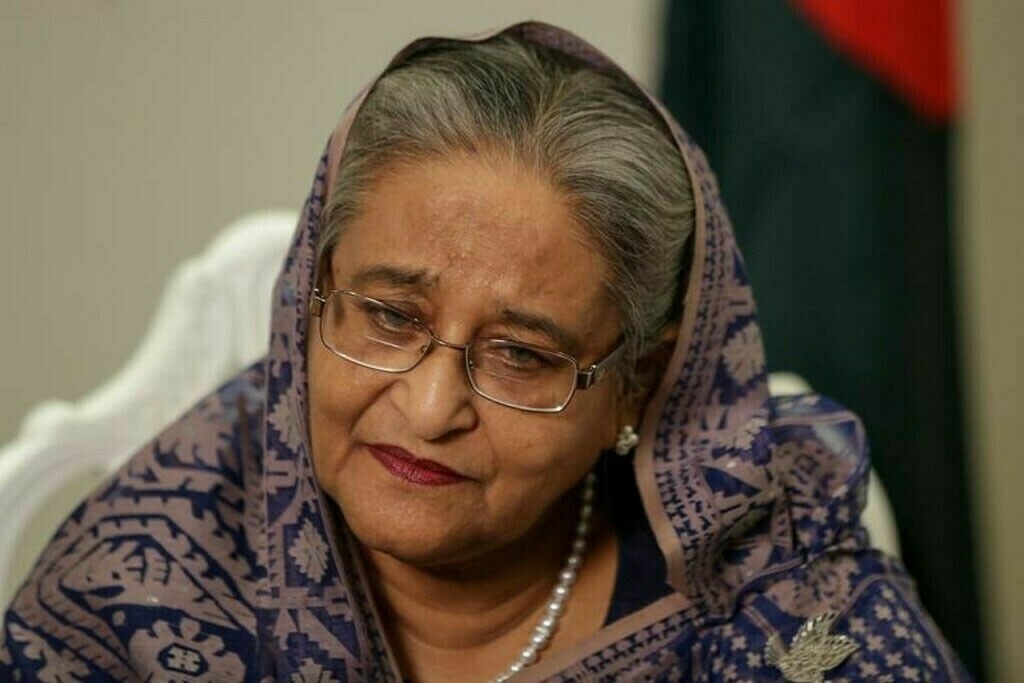
EDITORIAL: The death sentence handed down to former Bangladesh prime minister Sheikh Hasina is the dramatic culmination of years of unchecked authoritarianism that defined her 15-year rule.
Though she has denounced the verdict from the safety of exile in India, calling it “biased and politically motivated”, the record of her time in power tells a far darker story, one that cannot be obscured by claims of persecution. Her downfall began with the student-led uprising of August 2024, when public frustration over corruption, repression and economic mismanagement erupted into a mass uprising.
Instead of listening to the protesters, she unleashed the full force of the state against her own citizens. Security forces carried out a brutal crackdown, employing lethal fire against unarmed demonstrators. By the time she fled across the border into India, an estimated 1,400 people were dead. Those killings now lie at the heart of the crimes against humanity for which she has been convicted in absentia.
But the roots of Hasina’s transgressions run far deeper than her chaotic final year in office. For more than a decade, she presided over a government that hollowed out democratic institutions and criminalised dissent, creating a pervasive climate of fear. Enforced disappearances targeted activists, journalists, and political opponents.
Thousands were detained under sweeping digital security laws merely for questioning government actions. Under her watch, the space for free expression narrowed so much that even mild criticism could lead to arrest. The irony of the ousted leader’s predicament is stark.
In 2009, it was Hasina herself who established the tribunal that has now sentenced her, using it to prosecute and execute several Jamaat-e-Islami leaders for alleged crimes committed during the tragic events of 1971 involving the then West Pakistan. She sent men to the gallows without hesitation, insisting that forgiveness had no place in matters of national trauma. Today, she faces the same unforgiving standard she once championed.
The United Nations has acknowledged the importance of the verdict for victims but has rightly cautioned against the use of the death penalty.
The speed with which the case was conducted has also drawn scrutiny, raising concerns that the judicial process may have been influenced by the feverish political atmosphere following her ouster. Yet none of this diminishes the gravity of the actions she stands accused of – actions that amounted to deliberate attempts to silence dissent and cling to power at all costs. This episode is a stark reminder that power is a fickle mistress.
Leaders who wield repression often imagine themselves insulated from consequences, forgetting how swiftly political winds can turn. Hasina, now observing events from a safe distance, embodies a familiar pattern of authoritarian overreach followed by abrupt collapse.
Her removal has not brought immediate stability, though. Bangladesh remains mired in political turmoil as the country heads toward general elections expected in February 2026. Whether it can navigate this fraught transition without sliding into deeper instability will depend on whether its institutions and leaders choose accountability over vengeance, and genuine democratic renewal over the temptations of absolute control.
Copyright Business Recorder, 2025
























Comments
Comments are closed for this article.