


UNSC told: TTP receiving support from ‘de facto Afghan authorities’
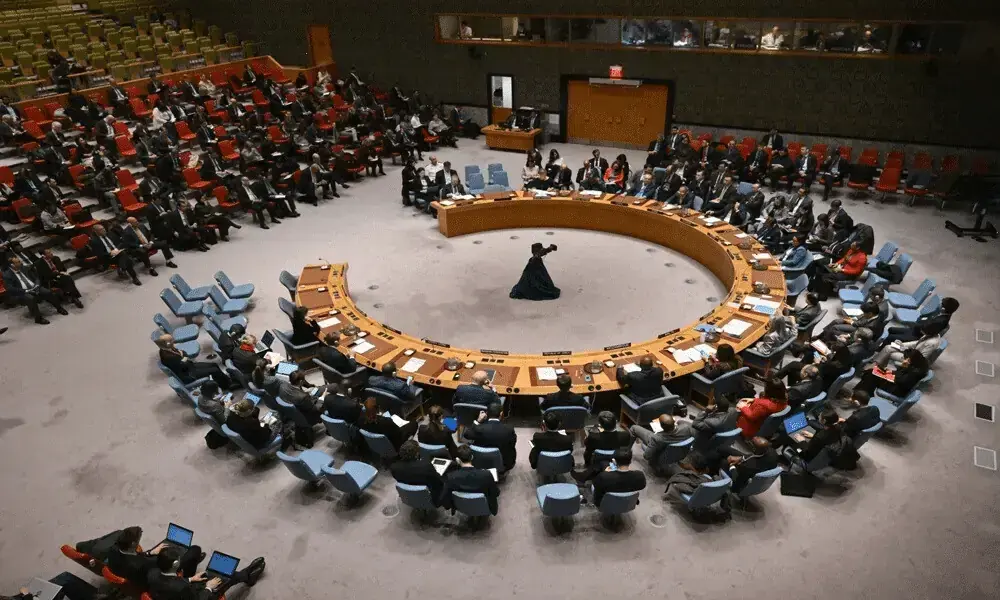

NEW YORK: The Tehreek-e-Taliban Pakistan (TTP), which has carried out mass attacks inside Pakistan, has been receiving “substantial” support from the “de facto Afghan authorities,” the Danish deputy permanent representative to the United Nations (UN) told the Security Council.
Denmark’s Deputy Permanent Representative Sandra Jensen Landi has declared the banned TTP a serious threat in Central and South Asia and said it has been receiving support from the regime.
As chair of the Security Council’s ISIL (Daesh) and Al-Qaeda Sanctions Committee, Denmark highlighted these concerns during a briefing to the UN Security Council meeting.
Tensions between Pakistan and Afghanistan’s Taliban authorities have persisted over the presence of TTP militants on Afghan soil. Since the Taliban’s takeover in 2021, Islamabad has accused them of sheltering thousands of TTP fighters who have stepped up attacks in Khyber Pakhtunkhwa and Balochistan.
Landi warned that the TTP — estimated to have around 6,000 fighters — poses a serious regional threat and benefits from “logistical and substantial support” from Afghanistan’s de facto rulers. She noted that the group has carried out numerous high-profile attacks in Pakistan from Afghan territory, many resulting in mass casualties. She also presented the latest assessment of global terrorist networks, stating that ISIL (Daesh), Al-Qaeda and their affiliates remain active and geographically dispersed, with the highest intensity of attacks now seen in Africa.
She said these groups continue to expand their propaganda on social media and increasingly use cryptocurrencies, complicating sanctions enforcement. She highlighted ISIL’s shift toward Africa and described ISIL-Khorasan as one of the most significant threats in Central and South Asia, with around 2,000 fighters targeting Shia communities, Afghan authorities and foreign nationals.
According to Landi, foreign fighter movements remain a concern, while Al-Qaeda’s central leadership is weakened but its affiliates — particularly in the Sahel — continue to exploit local instability. She stressed the need for strong multilateral cooperation under the 1267 sanctions regime.




















Comments
Comments are closed for this article.